Материал: 2016_Kaplan_USMLE_Step_1_Lecture_Notes_Pharmacology
Antiviral Agents |
3 |
Learning Objectives
Answer questions about anti-herpetics and other antiviral agents
Describe the appropriate treatment of HIV
Solve problems concerning fusion inhibitors
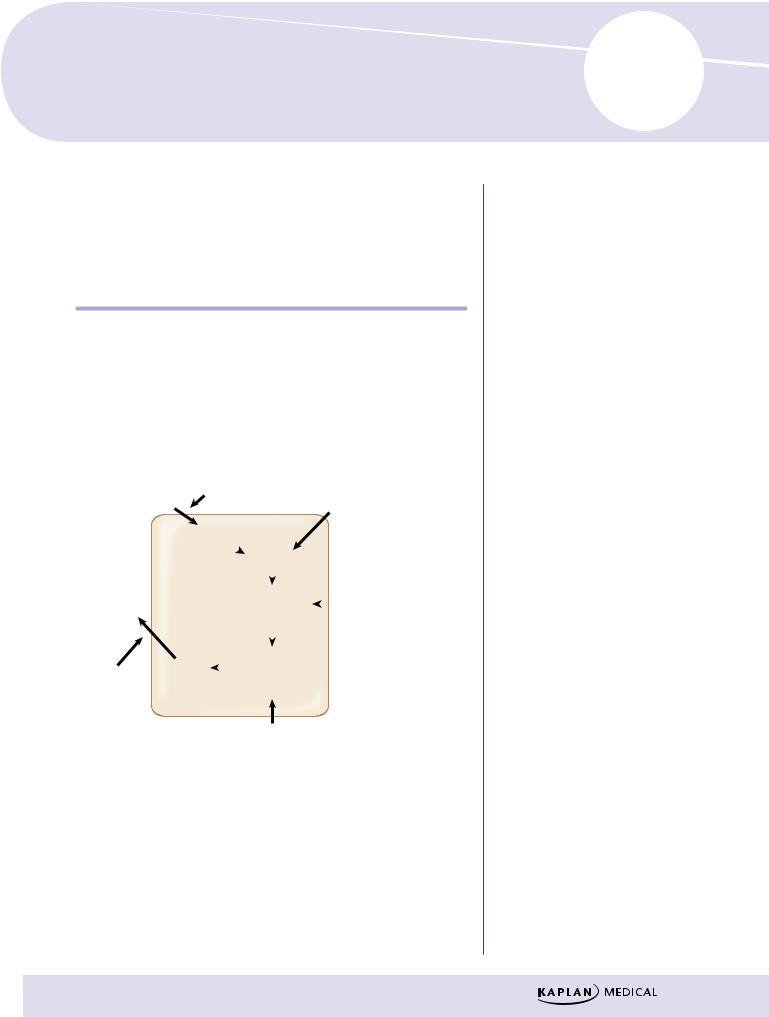
Many antiviral drugs are antimetabolites that resemble the structure of naturally occurring purine and pyrimidine bases or their nucleoside forms. Antimetabolites are usually prodrugs requiring metabolic activation by host-cell or viral enzymes—commonly, such bioactivation involves phosphorylation reactions catalyzed by kinases.
λ Site of action:
Viral |
Enfuvirtide |
|
|
|
|||||
adsorption |
Maraviroc |
Amantadine |
|||||||
|
Penetration |
|
|
|
|||||
|
|
|
|
Uncoating |
|
|
|
||
Viral |
|
|
|
|
|
|
|
|
Polymerase |
|
|
|
Nucleic acid |
|
|
||||
release |
|
HOST |
|
synthesis |
|
|
inhibitors |
||
|
|
CELL |
|
|
|
|
|
Reverse |
|
|
|
|
|
|
|
|
|||
|
|
|
|
|
|
|
|
transcriptase |
|
|
|
|
|
|
Protein |
|
|||
|
Viral |
|
|
|
|
inhibitors |
|||
Neuraminidase |
|
|
synthesis |
|
|
|
|||
assembly |
|
|
|
|
|||||
inhibitors |
and processing |
||||||||
Protease inhibitors
Figure V-3-1. Sites of Antiviral Drug Actions
199
Section V λ Antimicrobial Agents
Table V-3-1. Mechanism of Action of Antiviral Drugs
Mechanism of Action |
|
Major Drugs |
Block viral penetration/uncoating |
|
Amantadine, enfuvirtide, maraviroc |
Inhibit viral DNA polymerases |
|
Acyclovir, foscarnet, ganciclovir |
Inhibit viral RNA polymerases |
|
Foscarnet, ribavirin |
Inhibit viral reverse transcriptase |
|
Zidovudine, didanosine, zalcitabine, |
|
|
lamivudine, stavudine, nevirapine, |
|
|
efavirenz |
Inhibit viral aspartate protease |
|
Indinavir, ritonavir, saquinavir, nelfinavir |
Inhibit viral neuraminidase |
|
Zanamivir, oseltamivir |
ANTIHERPETICS
Acyclovir
λMechanisms of action:
–Monophosphorylated by viral thymidine kinase (TK), then further bioactivated by host-cell kinases to the triphosphate
–Acyclovir-triphosphate is both a substrate for and inhibitor of viral DNA polymerase
–When incorporated into the DNA molecule, acts as a chain terminator because it lacks the equivalent of a ribosyl 3′ hydroxyl group
–Resistance possibly due to changes in DNA polymerase or to decreased activity of TK
–>50% of HSV strains resistant to acyclovir completely lack thymidine kinase (TK– strains)
NNRTIs |
|
– |
DNA Polymerase (DNAor RNA-directed) |
|||||||||||
|
|
|
||||||||||||
Foscarnet |
|
|
|
|
|
|
|
|
|
|
|
|
||
|
|
|
Host |
|
|
|
|
|
– |
|
|
|||
|
|
|
kinases |
|
|
|
|
|
Lacks |
|
Chain |
|||
|
Drug |
|
|
|
Drug |
|
|
|||||||
|
|
|
|
|
|
|
|
|
3’– OH |
|
termination |
|||
|
|
|
|
|
|
|
|
|
|
|
|
|||
(inactive) |
|
|
|
|
|
|
|
|
|
|||||
|
|
|
|
|
|
|
|
|
|
|
|
|||
|
|
|
|
P P |
P |
|
|
|||||||
|
“ovirs” |
|
|
|
|
|
|
|||||||
|
|
|
|
|
|
|
|
|
|
|
|
|
||
|
NRTIs |
|
Viral- |
|
specific |
|
|
|||||||
|
|
|
|
|
|
|
||||||||
|
|
|
kinase (herpes) |
|
|
|||||||||
Figure V-3-2. Common Mechanism for “ovirs” and NRTIs
λActivity and clinical uses:
−Activity includes herpes simplex virus (HSV) and varicella-zoster virus (VZV)
−There are topical, oral, and IV forms; has a short half-life
200

Chapter 3 λ Antiviral Agents
−Reduces viral shedding in genital herpes; ↓ acute neuritis in shingles but has no effect on postherpetic neuralgia
−Reduces symptoms if used early in chickenpox; prophylactic in immunocompromised patients
λSide effects:
−Minor with oral use, more obvious with IV
−Crystalluria (maintain full hydration) and neurotoxicity (agitation, headache, confusion—seizures in OD)
−Is not hematotoxic
λNewer drugs—famciclovir and valacyclovir are approved for HSV infec-
tion and are similar to acyclovir in mechanism. They may have activity against strains resistant to acyclovir, but not TK– strains. They have a longer t1/2 than acyclovir.
Ganciclovir
λMechanisms of action:
−Similar to that of acyclovir
−First phosphorylation step is viral-specific; involves thymidine kinase in HSV and a phosphotransferase (UL97) in cytomegalovirus (CMV)
−Triphosphate form inhibits viral DNA polymerase and causes chain termination
−Resistance mechanisms similar to acyclovir
λActivity and clinical uses:
−HSV, VZV, and CMV
−Mostly used in prophylaxis and treatment of CMV infections, including retinitis, in AIDS and transplant patients—relapses and retinal detachment occur
λSide effects:
−Dose-limiting hematotoxicity (leukopenia, thrombocytopenia), mucositis, fever, rash, and crystalluria (maintain hydration)
−Seizures in overdose
Foscarnet
λMechanisms and clinical uses:
–Not an antimetabolite, but still inhibits viral DNA and RNA polymerases
–Uses identical to ganciclovir, plus > activity versus acyclovir-resistant strains of HSV
λSide effects:
–Dose-limiting nephrotoxicity with acute tubular necrosis, electrolyte imbalance with hypocalcemia (tremors and seizures)
–Avoid pentamidine IV (→↑ nephrotoxicity and hypocalcemia)
201