Материал: 2016_Kaplan_USMLE_Step_1_Lecture_Notes_Pharmacology
Anticoagulants 1
Learning Objectives
Compare the use and toxicities of heparin and warfarin
OVERVIEW
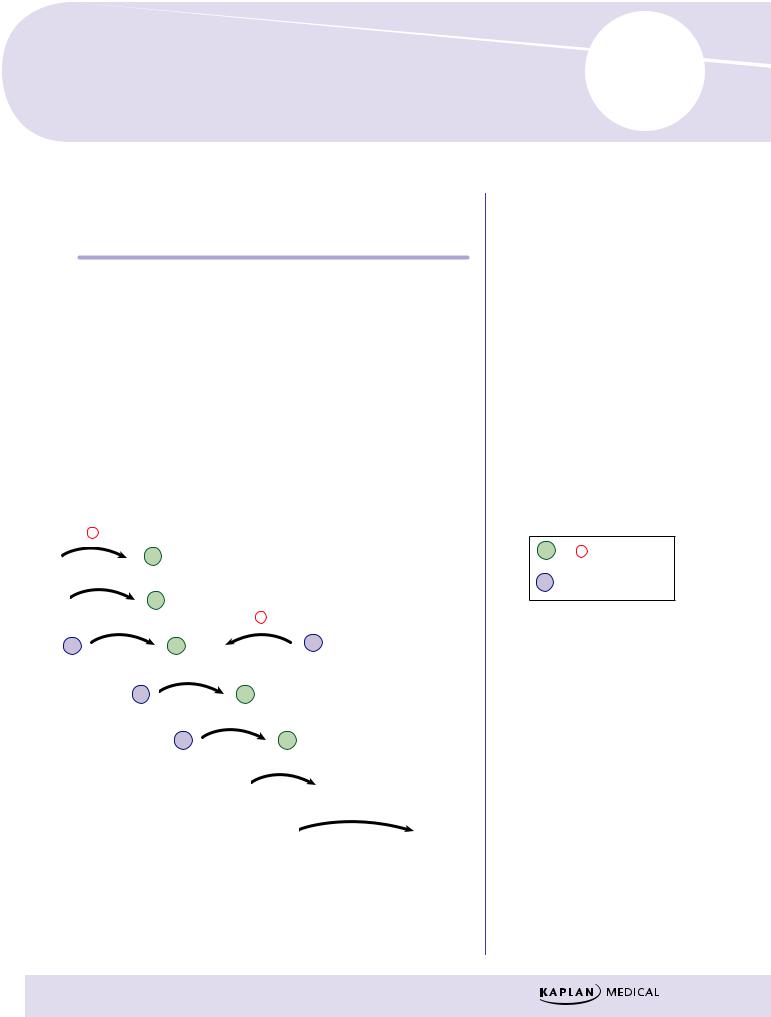
Blood coagulates by transformation of soluble fibrinogen into insoluble fibrin. Circulating proteins interact in a “cascade,” where clotting factors undergo limited proteolysis to become active serine proteases. Anticoagulants are drugs that decrease the formation of fibrin clots. Oral anticoagulants (e.g., warfarin) inhibit the hepatic synthesis of clotting factors II, VII, IX, and X. Heparin inhibits the activity of several activated clotting factors (especially factors IIa and Xa) via its activation of antithrombin III. The endogenous anticoagulants, protein C and protein S, cause proteolysis of factors Va and VIIIa.
Collagen kinins |
|
|
|
|
|
+ |
|
|
H = |
– by heparins |
|
XII |
XIIa H |
|
|||
|
W |
= synthesis inhibited |
|||
|
XIa H |
|
|
by warfarin |
|
XI |
Tissue factor |
|
|
||
|
|
+ |
|
|
|
W IX |
IXa H |
VIIa |
VII W |
|
|
|
W |
Xa H |
|
|
|
|
W II |
IIa |
H |
|
|
|
|
Fibrinogen |
Fibrin |
|
|
Plasminogen Plasmin
(activated by streptokinase and alteplase)
Figure VII-1-1. Actions of Blood Drugs
259


Chapter 1 λ Anticoagulants
Warfarin
λDrug interactions:
–Acidic molecule: oral absorption ↓ by cholestyramine
–Extensive (but weak) plasma protein binding: displacement by other drugs may increase free fraction →↑ PT (e.g., ASA, sulfonamides, phenytoins)
–Slow hepatic metabolism via P450:
ºInducers (barbiturates, carbamezepine, rifampin) →↓ PT
ºInhibitors (cimetidine, macrolides, azole antifungals) →↑ PT
λProtein C deficiency:
Thrombomodulin (transmembrane protein)
+
Thrombin
|
|
|
|
+ |
|
|
|
|
|
|
Protein C |
|
|
|
|
|
C-activated protein |
|
|||
|
|
|
||||||||
|
|
|
|
|
|
|
+ |
|
|
|
|
|
|
|
|
|
|
Protein S |
|
||
|
|
|
|
|
|
|
|
|
|
|
|
|
|
|
|
|
|
|
inactivates |
||
|
|
|
|
|
|
|
||||
|
|
|
|
|
|
|
Factors Va & VIIIa |
|
||
↓ protein C → hypercoagulation |
|
|
||||||||
Figure VII-1-2. Activation and Role of Protein C
–Transient protein C deficiency can be induced when initiating treatment with warfarin because factors VII and protein C have the shortest half-lives of the coagulation factors (Table VII-1-2).
Table VII-1-2. Coagulation Factor Half-Lives
Factor |
IIa |
VIIa |
IXa |
Xa |
C |
Half-life (h) |
60 |
8 |
24 |
40 |
14 |
–Consequently, the extrinsic pathway and protein C system are inactivated, whereas the intrinsic system remains active for a few days. Hypercoagulability occurs (Figure VII-1-2), which may result in dermal vascular thrombosis and skin necrosis.
261

Section VII λ Drugs Used in Blood Disorders
Direct Activated Clotting Factor Inhibitors
Direct thrombin inhibitors
λDirectly inhibit thrombin and do not require antithrombin III
λDrugs
–Argatroban
ºDoes not interact with heparin-induced antibodies
ºUsed in HIT
–Dabigatran
ºOral anticoagulant that does not require monitoring of PT or INR
ºUsed in atrial fibrillation as an alternative to warfarin
–Bivalirudin
ºUsed with aspirin in unstable angina when undergoing percutaneous transluminal coronary angioplasty (PTCA)
Direct Factor Xa Inhibitors: Rivaroxaban and Other “-xabans”
λFactor Xa inhibitor, does not require monitoring of PT or INR
λUsed to prevent DVTs after knee/hip surgery; prevention of stroke and systemic embolism in non-valvular atrial fibrillation
Chapter Summary
λTable VII-1-1 summarizes the properties of heparin and warfarin (a coumarin).
λLow-molecular-weight heparin derivatives (e.g., enoxaparin) and danaparoid, a heparan with heparin-like properties, have potential advantages over heparin itself.
λThe drug interactions of warfarin are given.
λThe activation and role of protein C in the clotting cascade are illustrated in
FigureVII-1-2.Transient protein C deficiency can be induced by treatment with warfarin, which promotes hypercoagulation through the action of the intrinsic pathway.
λDirect thrombin inhibitors and direct Factor Xa inhibitors do not require antithrombin III or therapeutic monitoring of PT or INR
262
Thrombolytics 2
Learning Objectives
Describe the clinical features of commonly used fibrinolytic agents
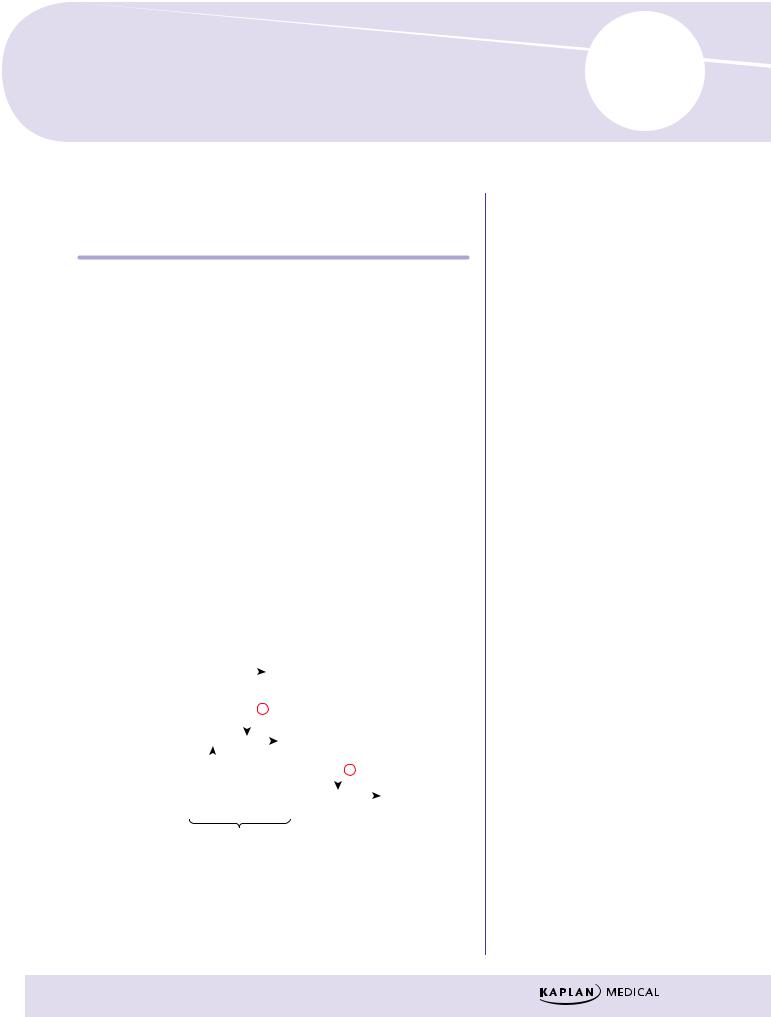
Also called fibrinolytics, these agents lyse thrombi by catalyzing the formation of the endogenous fibrinolytic plasmin (a serine protease) from its precursor, plasminogen.
λThrombolytics include tissue plasminogen activator (tPA, recombinant) and streptokinase (bacterial). They are used intravenously for shortterm emergency management of coronary thromboses in myocardial infarction (MI), deep venous thrombosis, pulmonary embolism, and ischemic stroke (tPA).
λDrugs:
–Streptokinase
ºActs on both bound and free plasminogen (not clot specific), depleting circulating plasminogen and factors V and VIII
ºIs antigenic (foreign protein derived from β-hemolytic strepto-
cocci); may cause a problem if recent past use or infection—strep antibodies may ↓ activity
–Alteplase (tPA)
ºClot specific, acting mainly on fibrin-bound plasminogen, the natural activator, so no allergy problems
|
|
|
SK-plasminogen |
|
|
|
|
|
|
|
|
|||||||
Streptokinase (SK) |
|
Conformational |
|
|
||||||||||||||
complex |
|
|
|
|
change |
|
|
|||||||||||
|
|
|
|
|
|
|
|
|
+ |
|
|
|
|
|
|
|
|
|
|
|
|
|
|
|
|
|
|
|
|
|
|
|
|
|
|
|
|
|
Plasminogen |
|
|
|
|
|
|
|
Plasmin |
|
|
|
||||||
|
|
|
|
|
|
|
|
|||||||||||
|
|
|
|
|
|
|
|
|
|
|
|
|
|
|
+ |
|
|
|
|
|
|
|
|
|
|
|
|
|
|
|
|
|
|
|
|
||
|
|
|
Alteplase |
|
+ |
|
Fibrin |
|
|
|
|
|
Degradation |
|||||
|
|
|
|
|
|
|
|
|
||||||||||
|
|
|
|
|
|
|
|
products |
||||||||||
|
|
|
|
|
|
|||||||||||||
|
|
|
|
|
|
|
|
|
|
|
|
|
|
|
|
|
|
|
Activation
Figure VII-2-1. Actions of Streptokinase and Alteplase
263