Материал: 2016_Kaplan_USMLE_Step_1_Lecture_Notes_Pharmacology
Chapter 1 λ Drugs Used in Diabetes
–Drug interactions mainly with first-generation drugs →↑ hypoglycemia with cimetidine, insulin, salicylates, sulfonamides
METFORMIN
λ“Euglycemic,” ↓ postprandial glucose levels, but does not cause hypoglycemia or weight gain
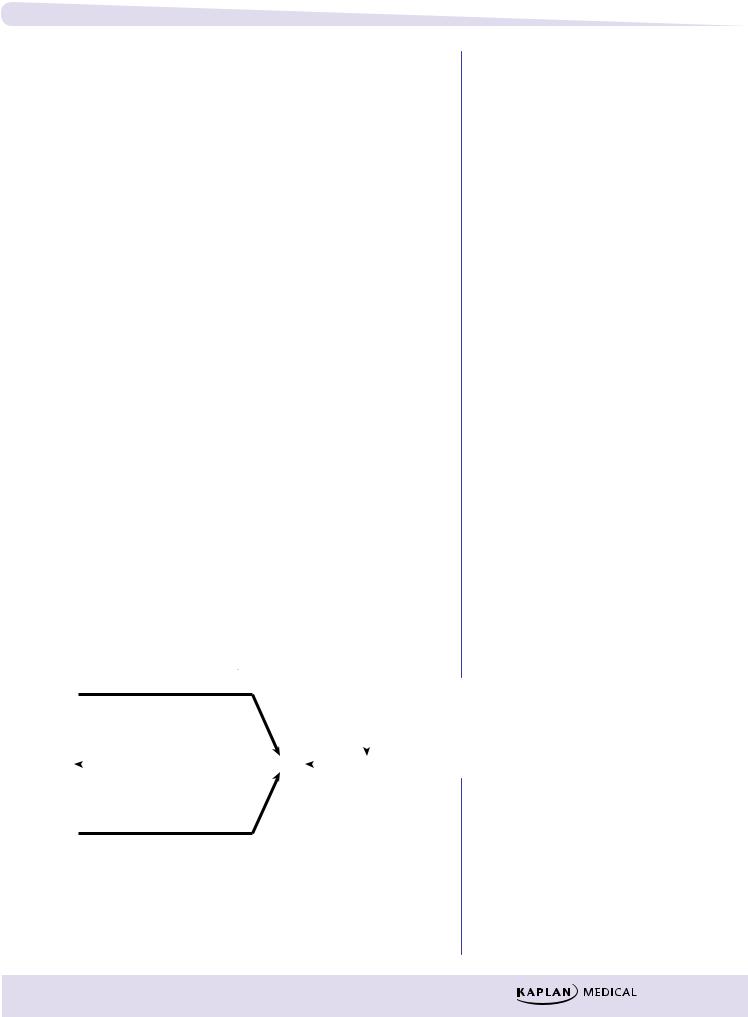
λMechanisms: may involve ↑ tissue sensitivity to insulin and/or ↓ hepatic gluconeogenesis (Figure VIII-1-2)
λUse: monotherapy or combinations (synergistic with sulfonylureas)
λSide effects: possible lactic acidosis; gastrointestinal distress is common
ACARBOSE
λNo hypoglycemia
λMechanisms: inhibits α-glucosidase in brush borders of small intestine →↓ formation of absorbable carbohydrate →↓ postprandial glucose →↓ demand for insulin (Figure VIII-1-2).
λSide effects: gastrointestinal discomfort, flatulence, and diarrhea—recent concern over potential hepatotoxicity
THIAZOLIDINEDIONES: PIOGLITAZONE AND
ROSIGLITAZONE
λMechanisms: bind to nuclear peroxisome proliferator-activating receptors (PPARγ) involved in transcription of insulin-responsive genes → sensitization of tissues to insulin, plus ↓ hepatic gluconeogenesis and triglycerides and ↑ insulin receptor numbers (Figure VIII-1-2).
λSide effects: less hypoglycemia than sulfonylureas, but weight gain and edema reported
|
|
|
|
|
|
|
|
|
GI Tract |
|
|
|
|
|
Blood |
||||
Liver |
Metformin Glitazones |
|
|
|
|
Starch |
|||
(glucose |
(inhibit production) |
|
|
|
|
|
a-glucosidase |
||
production) |
|
|
|
|
|
||||
|
|
|
|
|
|
|
|
|
Acarbose |
|
|
Glitazones Metformin |
|
|
|
|
|
(inhibits enzyme) |
|
Muscle |
|
|
|
|
|
|
|||
|
|
Glucose |
|
|
Glucose |
||||
|
(enhance uptake) |
|
|
|
|||||
|
|
|
|
|
|
|
|
||
|
|
|
|
|
|
|
|
|
|
Pancreas |
OSU* repaglinide |
|
|
|
|
|
|
||
(insulin |
(increase release) |
|
|
|
|
|
|
||
production) |
|
|
|
|
|
|
|||
|
|
|
|
|
|
|
|
||
|
|
|
|
|
|
|
|
||
*OSU = oral sulfonylureas |
|
|
|
|
|
|
|
||
Figure VIII-1-2. Modes of Action of Drugs Used to Treat Diabetes
275


Chapter 1 λ Drugs Used in Diabetes
Chapter Summary
λType 1 (IDDM) and type 2 (NIDDM) diabetes mellitus are defined at the beginning of the chapter.
λThe times of activity onset, peak activity, and duration of activity for lispro, regular, lente, and ultralente insulins are summarized in Table VIII-1-1.
λThe oral antidiabetic drugs are the sulfonylureas, metformin, acarbose, thiazolidinediones, and repaglinide.
λBy blocking K+ channels in the pancreatic cells, the sulfonylureas stimulate insulin release. The extra insulin in turn inhibits glucagon release from the cells and increases peripheral tissue sensitivity to insulin (Figure VIII-1-1).
The firstand second-generation drugs are listed. The adverse effects include weight gain and potential hypoglycemia.
λMetformin enhances tissue sensitivity to insulin and inhibits liver gluconeogenesis. The potential side effect is lactic acidosis.
λAcarbose inhibits intestinal-glucosidase, thereby slowing glucose absorption and decreasing insulin demand. The side effect is gastrointestinal distress.
λThe thiazolidinediones (glitazones) act via peroxisome proliferation activating receptors that control insulin-responsive genes. They are less hypoglycemic than the sulfonylureas, but they still induce weight gain and edema and have potential liver toxicity.
λRepaglinide, like the sulfonylureas, stimulates-cell secretion of insulin. Figure VIII-1-2 summarizes the modes of action of these drugs.
λBoth exenatide and sitagliptin increase glucose-dependent insulin secretion.
277