Материал: 2016_Kaplan_USMLE_Step_1_Lecture_Notes_Pharmacology

Anticancer Drugs |
1 |
Learning Objectives
Define the mechanisms of anti-cancer drugs
Demonstrate an understanding of the toxicity of anticancer drugs
PRINCIPLES AND DEFINITIONS
Log-Kill Hypothesis
Cytotoxic actions of anticancer drugs follow first-order kinetics: They kill a fixed percentage of tumor cells, not a fixed number → one rationale for drug combinations.
Growth Fraction
Cytotoxic drugs are more effective against tumors that have a high growth fraction (large percentage actively dividing). Normal cells with high growth fraction (e.g., bone marrow) are also more sensitive to anticancer drugs.
Cell-Cycle Specificity
λDrugs that act specifically on phases of the cell cycle are called cell-cycle specific (CCS) and are more effective in tumors with high-growth fraction (leukemias, lymphomas).
λDrugs that are cell-cycle nonspecific (many bind to and damage DNA) can be used in tumors with low-growth fraction, as well as tumors with high-growth fraction.
299
Section IX λ Anticancer Drugs
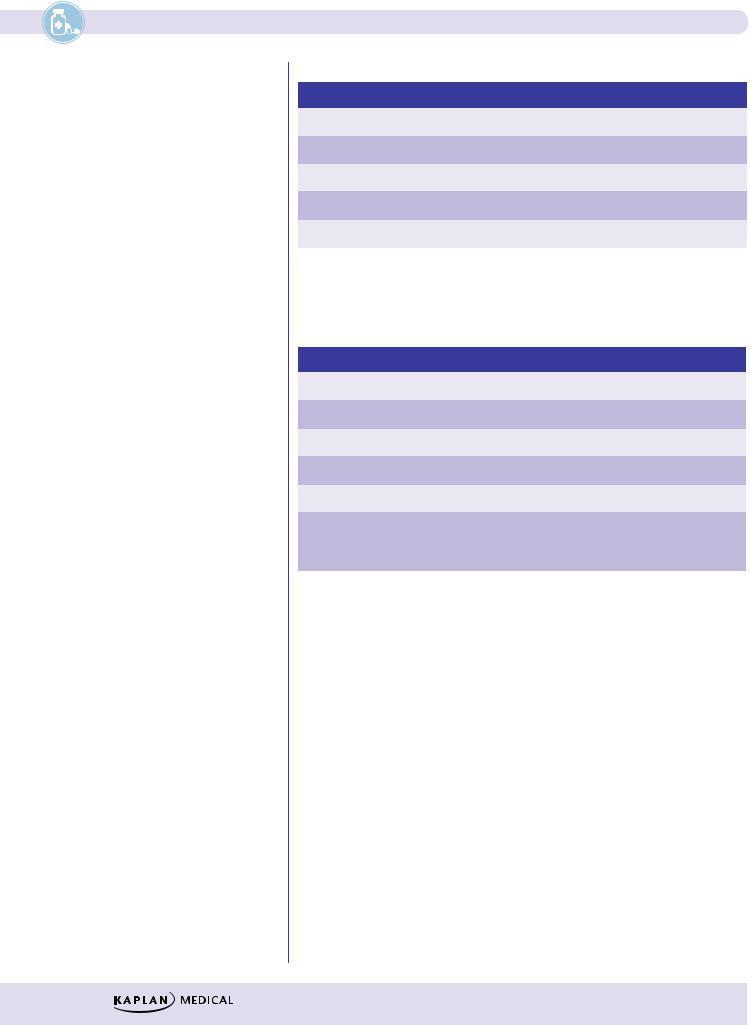
Table IX-1-2. Targeted Anticancer Drugs
Drug |
Target |
Imatinib |
BCR-ABL |
Cetuximab |
ErbB1 |
Trastuzumab |
ErbB2 (HER2/neu) |
Bevacizumab |
VEGF-A |
Sorafenib |
RAF kinase |
TOXICITY OF ANTICANCER DRUGS
Table IX-1-3. Other Dose-Limiting or Distinctive Toxicities
|
Toxicity |
|
Drug(s) |
|
Renal |
Cisplatin,* methotrexate |
|
|
Pulmonary |
Bleomycin,* busulfan, procarbazine |
|
|
Cardiac |
Doxorubicin, daunorubicin |
|
|
Neurologic |
Vincristine,* cisplatin |
|
|
Immunosuppressive |
Cyclophosphamide, methotrexate |
|
|
Other |
Cyclophosphamide (hemorrhagic cystitis); |
|
|
|
procarbazine (leukemia); asparaginase* |
|
|
|
(pancreatitis) |
|
*Less BMS—“marrow sparing” |
|
|
|
λRapidly proliferating cells, such as the bone marrow, gastrointestinal tract mucosa, hair follicles, and gonads are the most sensitive to cytotoxic drugs.
λMost often bone marrow suppression (BMS) is dose limiting.
λAnticancer drug dosage is usually carefully titrated to avoid excessive neutropenia (granulocytes <500/mm3) and thrombocytopenia (platelets <20,000/mm3).
λColony-stimulating factors, erythropoietin, and thrombopoietin can be supportive →↓ infections and need for antibiotics (see table below).
302
Chapter 1 λ Anticancer Drugs
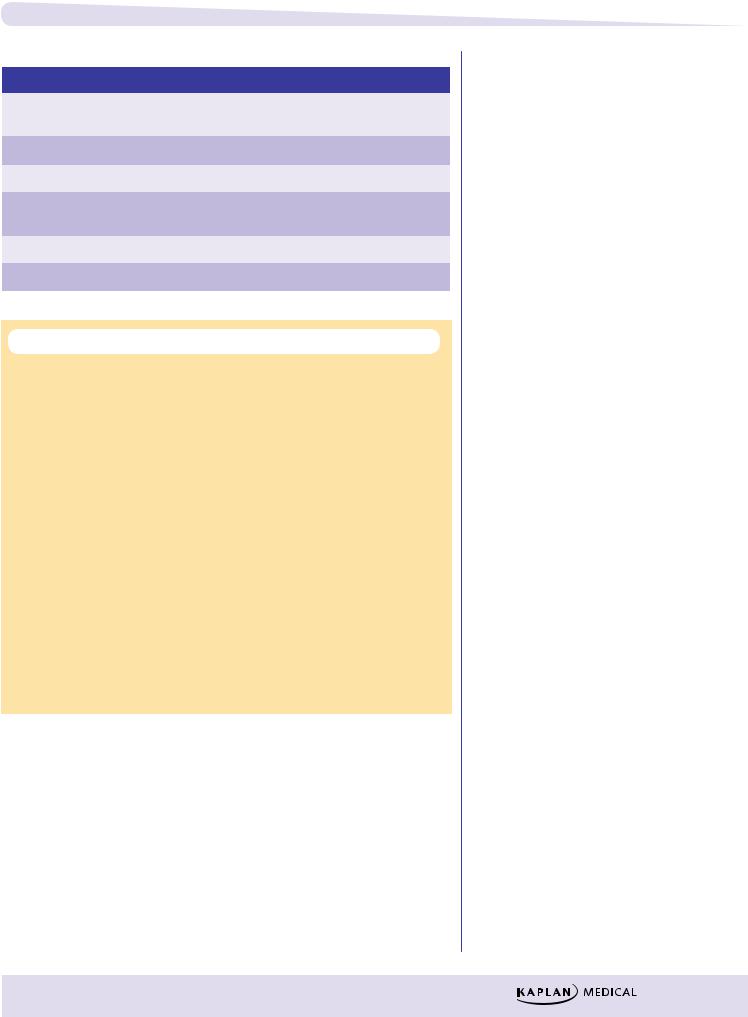
Table IX-1-4. Clinical Uses of Cytokines
Cytokine |
Clinical Uses |
Aldesleukin (IL-2) |
↑ Lymphocyte differentiation and ↑ NKs—use in |
|
renal cell cancer and metastatic melanoma |
Interleukin-11 |
↑ Platelet formation—used in thrombocytopenia |
Filgrastim (G-CSF) |
↑ Granulocytes—used for marrow recovery |
Sargramostim (GM-CSF) |
↑ Granulocytes and macrophages—used for |
|
marrow recovery |
Erythropoietin |
Anemias, especially associated with renal failure |
Thrombopoietin |
Thrombocytopenia |
Chapter Summary
λThe “log-kill” hypothesis states that cytotoxic anticancer agents kill a certain percentage, not a fixed number, of cells.
λCytotoxic drugs are most effective against rapidly dividing cells.
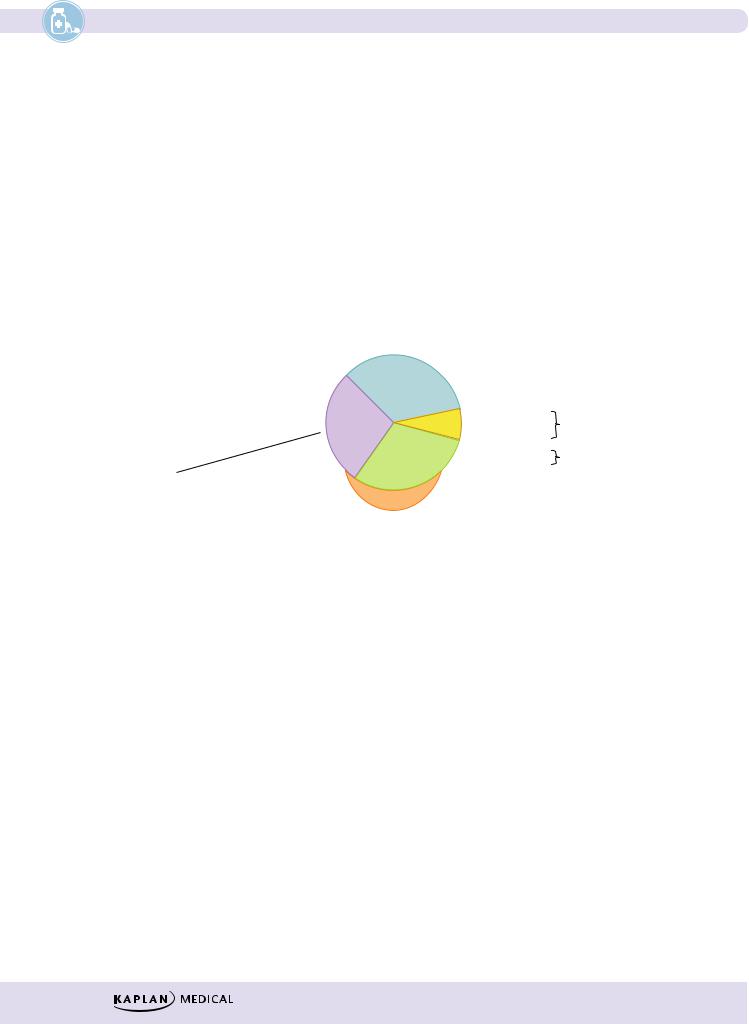
λDrugs that act on proliferating cells are cell-cycle specific and are usually also cycle-phase specific. Figure IX-1-1 illustrates the cell cycle and the drugs acting in each cycle phase.
λDrugs that act on nonproliferating cells are dose-dependent and cell-cycle– independent.
λRationales for combination drug usage are that each drug will independently kill a fixed percentage and that one drug will still kill a cancer cell that has developed resistance to a different drug in the cocktail.
λRapidly proliferating normal cells are more sensitive to cytotoxic drugs.
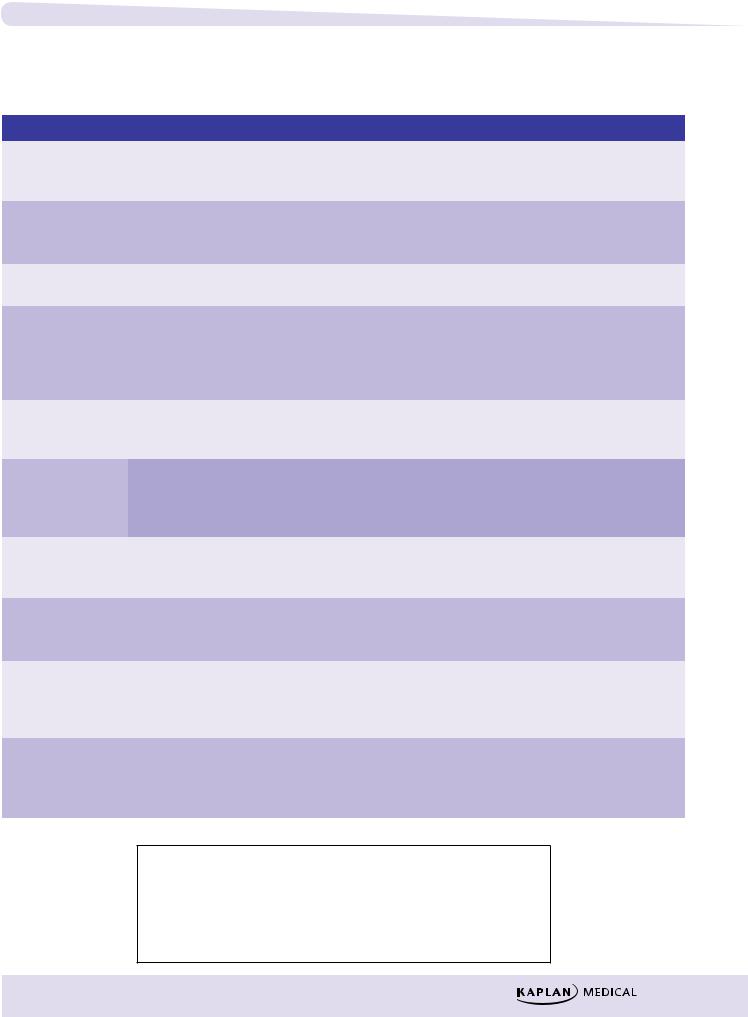
Bone marrow suppression often determines the upper limit of tolerable chemotherapy. Table IX-1-1 lists mechanisms of action, selected clinical uses, and side effects of major anticancer drugs. Table IX-1-3 shows the doselimiting and distinctive toxicities of anticancer drugs.
303