Материал: part21

DICOM PS3.21 2020a - Transformations between DICOM and other Representations |
Page 21 |
4 Symbols and Abbreviations
The following symbols and abbreviations are used in this Part of the Standard.
AIM Annotation and Image Markup
DICOMDigital Imaging and Communications in Medicine
IOD Information Object Definition
ISO International Standards Organization
NCI National Cancer Institute
NEMANational Electrical Manufacturers Association
OID Object Identifier (ISO 8824)
SR Structured Reporting
UCUMUnified Code for Units of Measure
UID Unique Identifier
XML Extensible Markup Language
XSLT Extensible Stylesheet Language Transformations
- Standard -

Page 22 |
DICOM PS3.21 2020a - Transformations between DICOM and other Representations |
- Standard -

DICOM PS3.21 2020a - Transformations between DICOM and other Representations |
Page 23 |
5 Conventions
Terms listed in Section 3 Definitions are capitalized throughout the document.
- Standard -

Page 24 |
DICOM PS3.21 2020a - Transformations between DICOM and other Representations |
- Standard -
DICOM PS3.21 2020a - Transformations between DICOM and other Representations |
Page 25 |
A Transformation Between AIM and DICOM
SR
A.1 Scope and Field of Application
NCI AIM objects that are constrained to specific use cases can be transformed to DICOM SR documents that are based on TID 1500.
NCI AIM specifies a generic model for encoding structured information about medical images. The AIM model and its XML encoding are version specific. The version transformed in this document is Version 4 [Extending AIM]. Though AIM instances can be generated according to application-specific templates [ref. AIM template builder], such templates are too use-case specific to be detailed in the transformation described in this Part. Rather, common patterns of use implemented by well known implementations (ref. CC, ref ePAD) have been abstracted and are mapped as described in this document.
DICOM SR specifies a generic model for encoding structured information about DICOM instances. DICOM TID 1500 Measurement Report specifies a basic DICOM SR report template for quantitative measurements and categorical statements for single identifiable patient subjects including regions of interest defined by spatial coordinates or segmentations.
A.2 Use Cases
The basic use case for the transformation from AIM to DICOM SR is exchange of quantitative and categorical information about DICOM images and regions of interest in DICOM images.
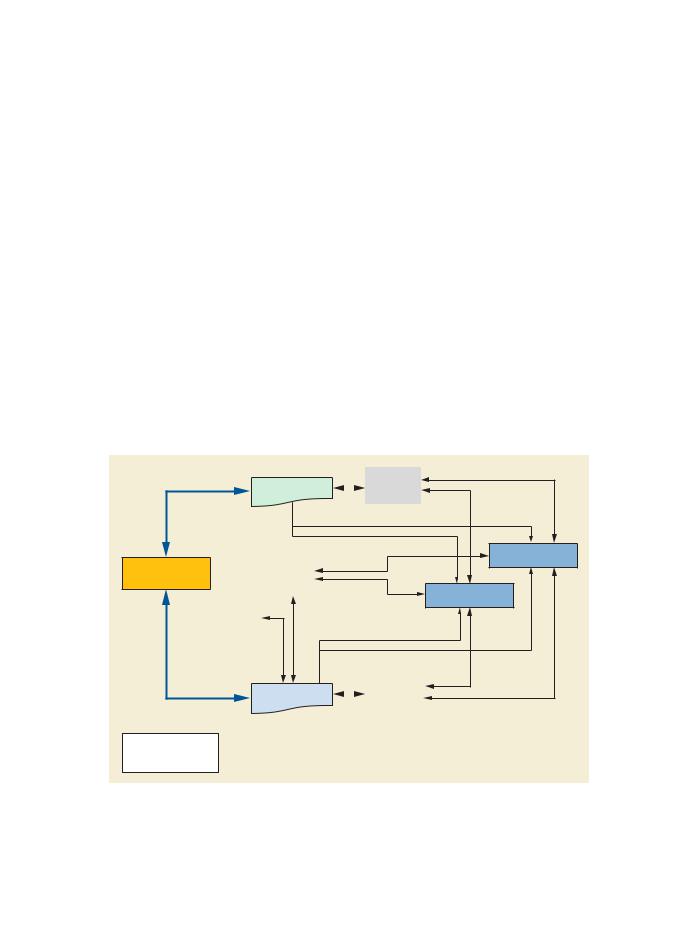
AIM and DICOM SR instances both contain references to DICOM images, and both make use of references to other types of DICOM instances such as segmentations. The flow of information between systems that might make use of a conversion between AIM and DICOM SR instances is considered in Figure A.2-1.
AIM Annotations |
|
|
AIM |
|
|
Workstation |
|
|
|||
|
|
|
|
|
|
|
|
DICOM Image
Convert AIM ↔SR |
Distribute, |
|
PACS Store, |
|
Review |
|
DICOM Segmentation |
Voice Recognition
Reporting System
DICOM SR |
|
|
DICOM SR |
|
|
Workstation |
|
|
|
||
|
|
|
|
|
|
|
|
|
|
|
|
Legend:  Convert
 Send
Send
 Reference
Figure A.2-1. Annotation Creation and Transformation
Various different transformation scenarios should be considered:
a.Transformation of a complete AIM instance to a complete DICOM SR Measurement Report. The receiver optionally selects rel- evant parts of the transformed document for further processing or static or interactive visualization by the user.
- Standard -