Материал: 2016_Kaplan_USMLE_Step_1_Lecture_Notes_Pharmacology
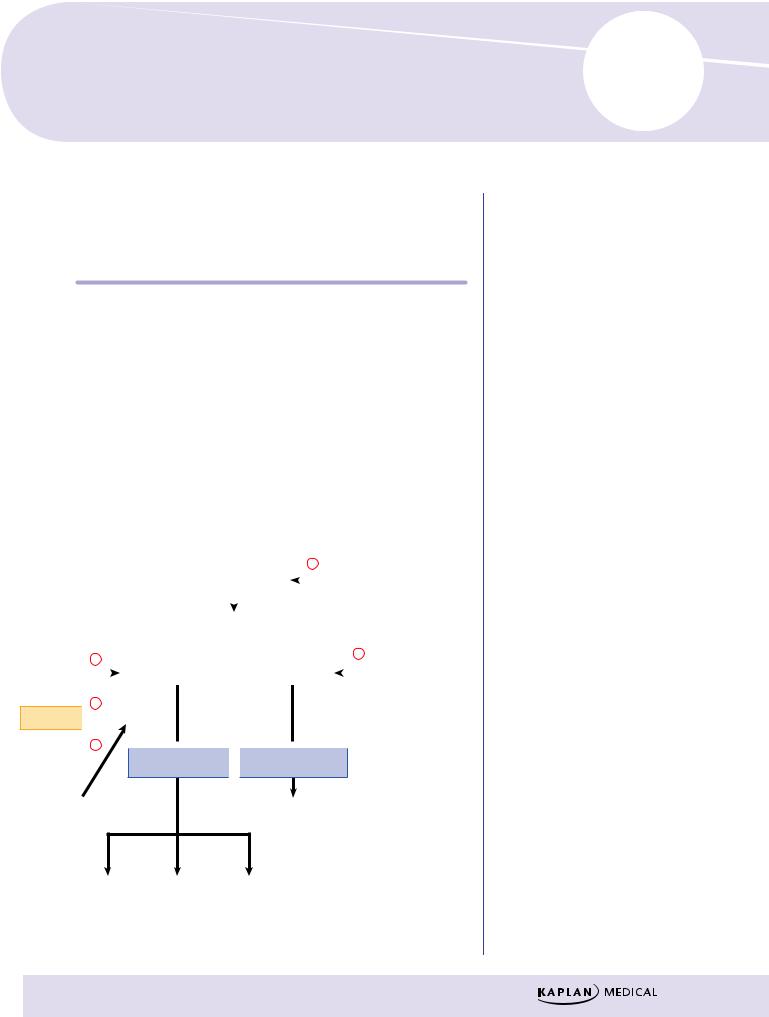

 COX2
COX2


 Hydroperoxides


Section VI λ Drugs for Inflammatory and Related Disorders
ºIn adults, this can be a stable condition; in children →↑ toxicity.
ºToxic doses: inhibits respiratory center →↓ respiration →↑ pCO2 → respiratory acidosis (↓ pH, ↓ HCO3–, normalization of pCO2) plus inhibition of Krebs cycle and severe uncoupling of oxidative phosphorylation (↓ ATP) → metabolic acidosis, hyperthermia, and hypokalemia (↓ K+).
λSide effects:
–Gastrointestinal irritation: gastritis, ulcers, bleeding
–Salicylism: tinnitus, vertigo, ↓ hearing—often first signs of toxicity
–Bronchoconstriction: exacerbation of asthma
–Hypersensitivity, especially the “triad” of asthma, nasal polyps, rhinitis
–Reye syndrome: encephalopathy
–↑ bleeding time (antiplatelet)
–Chronic use: associated with renal dysfunction
–Drug interactions: ethanol (↑ gastrointestinal bleeding), OSUs and warfarin (↑ effects), and uricosurics (↓ effects)
λAspirin overdose and management:
–Extensions of the toxic actions described above, plus at high doses vasomotor collapse occurs, with both respiratory and renal failure.
–No specific antidote. Management includes gastric lavage (+/– activated charcoal) plus ventilatory support and symptomatic management of
acid-base and electrolyte imbalance, and the hyperthermia and resulting dehydration. ↑ urine volume and its alkalinization facilitate salicylate renal elimination. (Note: ASA follows zero-order elimination kinetics at toxic doses.)
Other NSAIDs
Types
λReversible inhibitors of COX 1 and COX 2, with analgesic, antipyretic, and antiinflammatory actions, include:
–Ibuprofen
–Naproxen
–Indomethacin
–Ketorolac
–Sulindac
λComparisons with ASA:
–Analgesia: ketorolac > ibuprofen/naproxen > ASA
–Gastrointestinal irritation: < ASA, but still occurs (consider misoprostol)
–Minimal effects on acid-base balance; no effects on uric acid elimination
–Allergy: common, possible cross-hypersensitivity with ASA
–Renal: chronic use may cause nephritis, nephritic syndrome, acute
failure (via ↓ formation of PGE2 and PGI2, which normally maintain GFR and RBF)—does not occur with sulindac
232