Материал: Kaplan USMLE-1 (2013) - Anatomy

Внимание! Если размещение файла нарушает Ваши авторские права, то обязательно сообщите нам

ChapterIf • Upper Limb

Collateral Nerves

In addition to the S terminal nerves, there are several collateral nerves that arise from the brachia! plexus proximal to the terminal nerves (i.e., from the rami, trunks, or cords). These nerves innervate proximal limb muscles (shoulder girdle muscles). Table III-4-2 summarizes the collateral nerves.

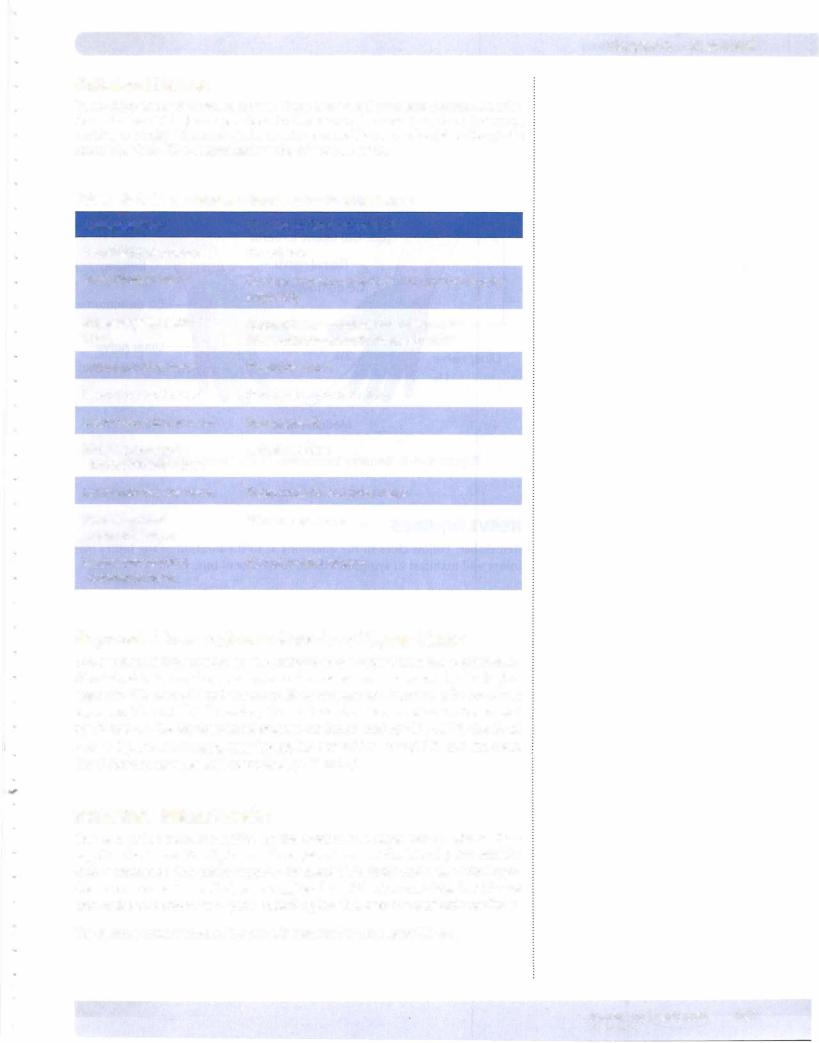
Table 111-4-2. The Collateral Nerves ofthe Brachial Plexus

Collateral Nerve

Dorsal scapular nerve

Longthoracic nerve

Muscles or Skin Innervated

Rhomboids

Serratus anterior-protracts and rotates scapular superiorly

Suprascapular nerve

Supraspinatus-abduct shoulder 0-1 5°

(5-6

lnfraspinatus-laterally rotate shoulder

Lateral pectoral nerve

Pectoralis major

Medial pectoral nerve

Pectoralis major and minor

Upper subscapular nerve

Subscapularis

Middle subscapular

Latissimus dorsi

(thoracodorsal) nerve


Lower subscapular nerve

Subscapularis and teres major

Medial brachia!

Skin of medial arm

cutaneous nerve


Medial antebrachial

Skin of medial forearm

cutaneous nerve


Segmental Innervation to Muscles of Upper Limbs

The segmental innervation to the muscles ofthe upper limbs has a proximal­ distal gradient, i.e., the more proximal muscles are innervated by the higher segments (CS and C6) and the more distal muscles are innervated by the lower

segmendtsprtwimal(C8 and Tl)forearm. Therefore,musclestheareintrinsicinnervatedshoulderby C6musclesand C7,areandinnervatedthe more by CS and C6, the intrinsic hand muscles are rvated by C8 and Tl, distal

:ll'm

distal forearm muscles are innervated by C7 and C8.

SENSORY INNERVATION

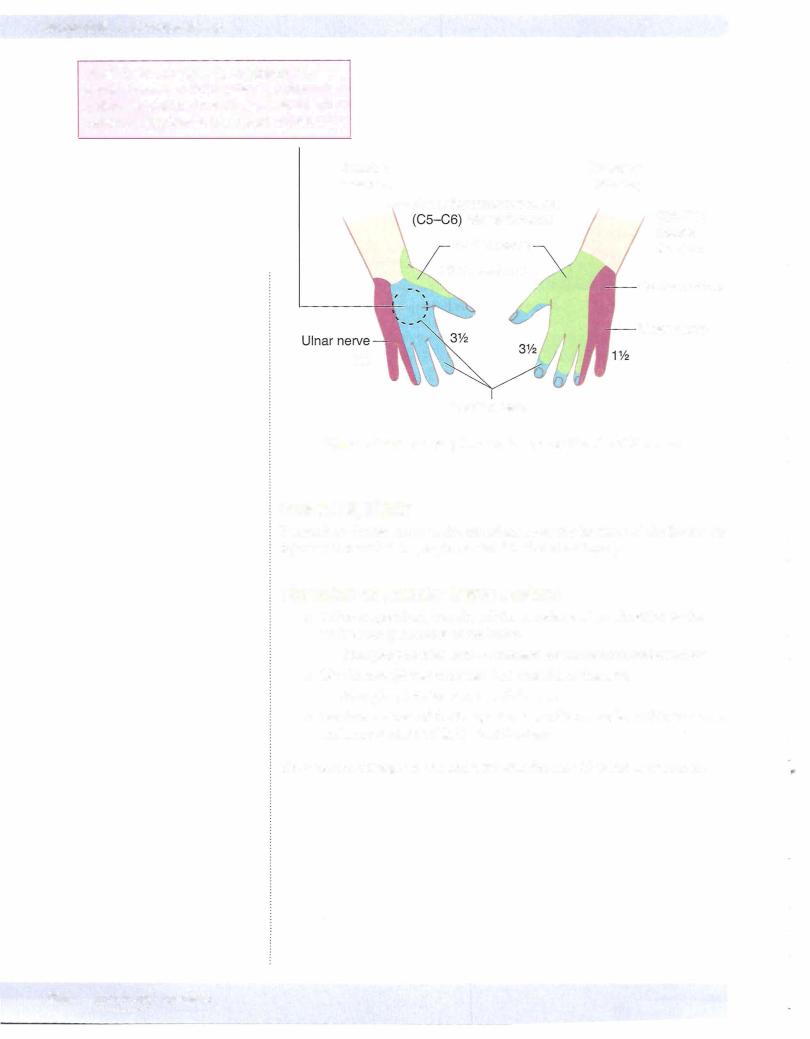
The skin of the palm is supplied by the median and ulnar nerves. The median supplies the later.,µ 3¥2 digits and the adjacent area of the lateral palm and the thenar eminence. The ulnar supplies the medial 1Yz digits and skin of the hypo­ thenar eminence. The radial nerve supplies skin ofthe dorsum ofthehand in the area of the first dorsal web space, including the skin over the anatomic snuffbox.

The sensory innervation of the hand is summarized in Figure III-4-2.

MEDICAL 287

Chapter 4 • Upper Limb

UPPER AND LOWER BRACHIAL PLEXUS LESIONS

Upper(CS and C6) Brachial Plexus Lesion: Erb-Duchenne

Palsy (Waiter'sTip Syndrome)

•Usually occurs when the head and shoulder are forcibly separated (e.g., accident or birth injury or herniation of disk)

•Trauma will damage CS and C6 spinal nerves (roots) of the upper trunk.

•Primarily affects the axillary, suprascapular, and musculocutaneous

nerveswith the loss of intrinsic muscles of the shoulder and muscles of the anterior arm(Figure III-4- 1).

•Arm is medially rotated and adducted at the shoulder: Loss of axillary and suprascapular nerves. The unopposed latissimus dorsi and pecto­ ralis major muscles pull the limb into adduction and medial rotation at the shoulder.

•The forearm is extended and pronated: loss of musculocutaneous nerve.

•Sign is "waiter's tip:'

•Sensory loss on lateral forearm to base of thumb: loss of musculocuta­ neous nerve

Lower (CS and Tl) Brachial Plexus Lesion: Klumpke's

Paralysis

•Usually occurs when the upper limb is forcefully abducted above the head (e.g., grabbing an object when falling, thoracic outlet syndrome or birth injury)

•Trauma will injure the CS and Tl spinal nerve roots of inferior trunk.

•Primarily affects the ulnarnerve and the intrinsic muscles of the hand with

a weakness of the median innervated muscles of the hand (Figure III-4-1 )

•Sign is combination of"dawhand" and "ape hand" (median nerve).

•May include a Horner syndrome.

•Sensory loss on medial forearm and medial 11/2 digits

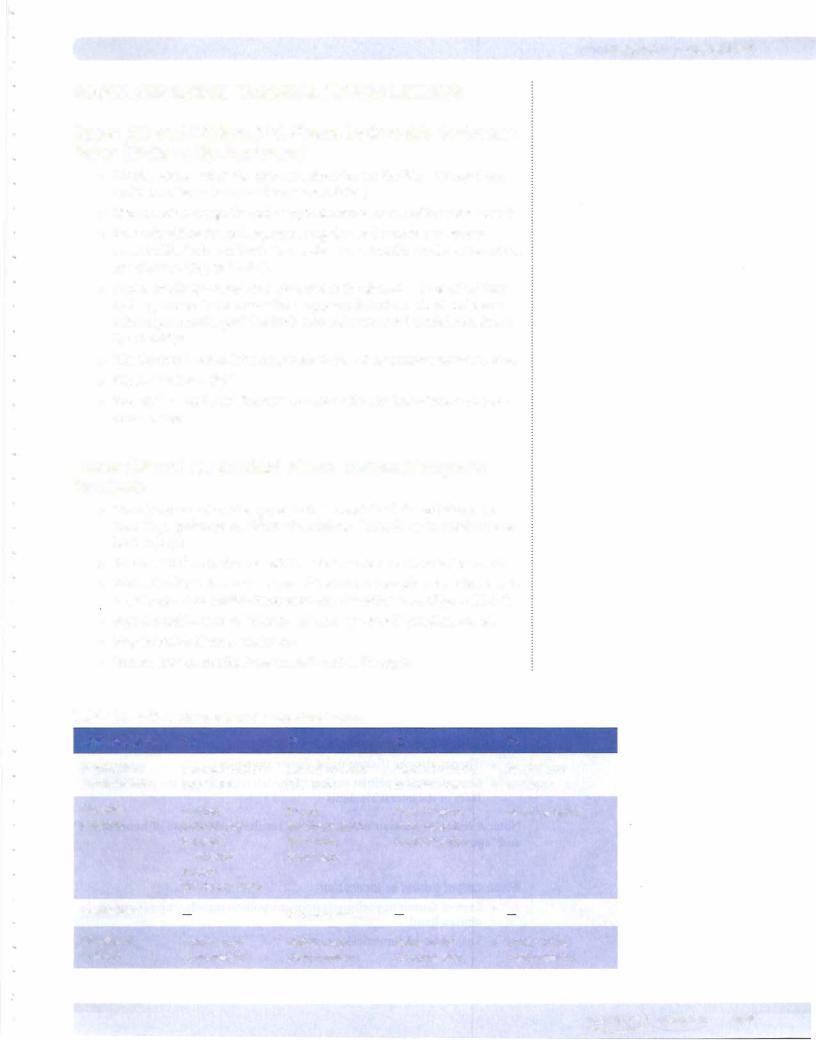
Table 111-4-3. Lesions of Roots of Brachia( Plexus

Lesioned Root

CS

C6

CS

T1

Dermatome

Lateral border of

Lateral forearm

Medial forearm

Medial arm

paresthesia

upper arm

to thumb

to little finger

to elbow

Muscles

Deltoid

Biceps

Finger flexors

Hand muscles

affected

Rotator cuff

Brachioradialis

Wrist flexors


Serratus

Brachialis

Hand muscles


anterior

Supinator


Biceps


Brachioradialis


Reflextest


Biceps tendon


Causes of

Upper trunk

Uppertrunk

Lowertrunk

Lower trunk

lesions

compression

compression

compression

compression

MEDICAL 289

Section Ill • Gross Anatomy

LESIONS OF BRANCHES OF THE BRACHIAL PLEXUS

•Sensory deficits precede motor weakness

•Proximal lesions: more signs

Radial Nerve

Axilla: (Saturdaynightpalsy orusing crutches)

•Loss of extension at the elbow, wrist and MP joints

•Weakened supination

•Sensory loss on posterior arm, forearm, and dorsum of thumb

•Distal sign is "wrist drop."

Mid-shaffofhumerus atradialgroove orlateral elbow (lateral epicondyle orradial head dislocation)

•Loss of forearm extensors of the wrist and MP joints

•Weakened supination

•Sensory loss on the posterior forearm and dorsum of thumb

•Distal sign is "wrist drop!'

Note: Lesions ofradial nerve distal to axilla, elbow extension are spared.

Wrist: laceration

•No motor loss

•Sensory loss only on dorsal aspect of thumb (first dorsal web space)

Median Nerve

Elbow: {Supracondylarfracture ofhumerus)

•Weakened wrist flexion (with ulnar deviation)

•Loss of pronation

• Loss of digital flexion of lateral 3 digits resulting in the inability to make a complete fist; sign is "hand of_benediction"

•Loss of thumb opposition (opponens pollicis muscle); sign is ape (simian) hand

•Loss of first 2 lumbricals

•Thenar atrophy (flattening of thenar eminence)

•Sensory loss on palmar surface of the lateral hand and the palmar sur­ faces of the lateral 3V2 digits

Note: A lesion of median nerve at elbowresults in the "hand ofbenediction" and "ape hand:'

Wrist: carpal tunnel orlaceration

•Loss of thumb opposition (opponens pollicis muscle); sign is ape or simian hand

•Loss of first 2 lumbricals
290 MEDICAL

Chapter 4 • Upper Limb

•Thenar atrophy (flattening of thenar eminence)

•Sensory loss on the palmar surfaces oflateral 31/2 digits. Note sensory loss on lateral palm may be spared (Figure III-4-2).

Note: Lesions ofmedian nerve at the wrist present without benediction hand andwithnormalwristflexion, digital flexion, and pronation.

Ulnar Nerve

Elbow (medial epicondyle), wrist (lacerations), orfracture ofhookof hamate

•Loss of hypothenar muscles, third and fourth lumbricals, allinterossei and adductor pollicis

•With elbow lesion there is minimal weakening of wrist tlexion with radial deviation

•Loss of abduction and adduction of digits 2-5 (interossei muscles)

•Weakened interphalangeal (IP) extension of digits 2-5 (more pro- nounced in digits 4 and 5)

•Loss of thumb adduction

•Atrophy of the hypothenar eminence

•Sign is "clawhand:'Note that clawing is greater with a wrist lesion.

•Sensory loss on medial 1 Vz digits

Axillary Nerve

Fracture ofthe surgical neck ofthe humerus orinferiordislocation ofthe shoulder

•Loss of abduction of the arm to the horizon

•Sensory lost over the deltoid muscle

Musculocutaneous Nerve

•Loss of elbow tlexion and weakness in supination

•Loss of sensation on lateral aspect of the forearm

LongThoracic Nerve

•Often damaged during a radical mastectomy or a stab wound to the lat­ eral chest (nerve lies on superficial surface of serratus anterior muscle).

•Loss of abduction of the arm above the horizon to above the head

•Sign of "winged scapula"; patient unable to hold the scapula against the posterior thoracic wall

Suprascapular Nerve

•Loss of shoulder abduction between 0 and 1 5 degrees (supraspinatus muscle)

•Weakness oflateral rotation of shoulder (infraspinatus muscle)

MEDICAL 291

Источник: https://studfile.net/preview/14638320/