Материал: Myth A Very Short Introduction by Robert A. Segal
11. C. G. Jung
The goal of the uniquely Jungian second half of life is likewise consciousness, but now consciousness of the Jungian unconscious rather than of the external world. One must return to the unconscious, from which one has invariably become severed. But the aim is not thereby to sever one’s ties to the external world. On the contrary, the aim is still to return to the external world. The ideal is a balance between consciousness of the external world and consciousness of the unconscious. The aim of the second half of life is to supplement, not abandon, the achievements of the
first half.
Just as classically Freudian problems involve the failure to establish oneself externally, so distinctively Jungian problems involve the failure to re-establish oneself internally. Freudian problems stem from excessive attachment to the world of childhood. Jungian problems stem from excessive attachment to the world one enters upon breaking free of the childhood world: the external world. To be severed from the internal world is to feel empty and lost.
psychology and Myth
103
Joseph Campbell
Jung himself allows for heroism in both halves of life, but Joseph Campbell, whose Hero with a Thousand Faces provides the classically Jungian counterpart to Rank’s Myth of the Birth of the Hero, does not. Just as Rank confines heroism to the first half of life, so Campbell restricts it to the second half.
Rank’s scheme begins with the hero’s birth; Campbell’s, with his adventure. Where Rank’s scheme ends, Campbell’s begins: with the adult hero ensconced at home. Rank’s hero must be young enough
Myth
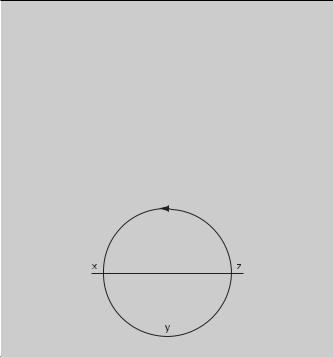
The standard path of the mythological adventure of the hero is a magnification of the formula represented in the rites of passage: separation–initiation–return: which might be named the nuclear unit of the monomyth.
A hero ventures forth from the world of common day into a region of supernatural wonder: fabulous forces are there encountered and a decisive victory is won: the hero comes back from this mysterious adventure with the power to bestow boons on his fellow man.
Campbell’s hero myth pattern, from The Hero with a Thousand Faces
104
for his father and in some cases even his grandfather still to be reigning. Campbell does not specify the age of his hero, but the hero must be no younger than the age at which Rank’s hero myth
ends: young adulthood. He must, again, be in the second half of life. Campbell does acknowledge heroism in the first half of life and even cites Rank’s Myth of the Birth of the Hero, but he demotes this youthful heroism to mere preparation for adult heroism. Antithetically to Jung, he dismisses birth itself as unheroic because it is not done consciously!
Rank’s hero must be the son of royal or at least distinguished parents. Campbell’s can be of any class. Campbell cites at least as many female heroes as male ones, even though stage two of his pattern – initiation – necessitates male heroes! Likewise some of his heroes are young, even though his pattern requires adult heroes! Finally, Campbell’s pattern commits him to human heroes, even though some of his heroes are divine! Rank’s pattern, by contrast, allows for divine as well as human heroes.
Where Rank’s hero returns to his birthplace, Campbell’s marches forth to a strange, new world, which he has never visited or even known existed:
destiny has summoned the hero and transferred his spiritual center of gravity from within the pale of his society to a zone unknown. This fateful region of both treasure and danger may be variously represented: as a distant land, a forest, a kingdom underground, beneath the waves, or above the sky, a secret island, lofty mountaintop, or profound dream state.
(Campbell, The Hero with a Thousand Faces, p. 58)
This extraordinary world is the world of the gods, and the hero must hail from the human world precisely for the worlds to stand in contrast.
In this exotic, supernatural world the hero encounters above all a
psychology and Myth
105
supreme female god and a supreme male god. The maternal goddess is loving and caring:
Myth
She is the paragon of all paragons of beauty, the reply to all desire, the bliss-bestowing goal of every hero’s earthly and unearthly quest.
(Campbell, The Hero with a Thousand Faces, pp. 110–11)
By contrast, the male god is tyrannical and merciless – an ‘ogre’. The hero has sex with the goddess and marries her. He fights the god, either before or after his encounter with the goddess. Yet with both, not just the goddess, he becomes mystically one and thereby becomes divine himself.
Where Rank’s hero returns home to encounter his father and mother, Campbell’s hero leaves home to encounter a male and a female god, who are fatherand mother-like but are not his parents. Yet the two heroes’ encounters are remarkably akin: just as Rank’s hero kills his father and, if usually only latently, marries his mother, so Campbell’s hero, even if often in reverse order, marries the goddess and fights, even if not kills, the god.
The differences, however, are even more significant. Because the goddess is not the hero’s mother, sex with her does not constitute incest. Moreover, the two not only marry but also become mystically one. And despite appearances, the hero’s relationship to the male god is for Campbell no less positive. The hero is really seeking from the father god the same love that he has just won or will soon win from the goddess. He seeks reconciliation, or ‘atonement’.
When Campbell writes that the myths accompanying initiation rituals ‘reveal the benign self-giving aspect of the archetypal father’, he is using the term in its Jungian sense. For Freudians, gods symbolize parents. For Jungians, parents symbolize gods, who in turn symbolize father and mother archetypes, which are components of the hero’s personality. The hero’s relationship to these gods symbolizes not, as for Freud and Rank, a son’s
106
relationship to other persons – his parents – but the relationship of one side of a male’s personality – his ego – to another side – his unconscious. The father and the mother are but two of the archetypes of which the Jungian, or ‘collective’, unconscious is composed. Archetypes are unconscious not because they have been repressed but because they have never been made conscious. For Jung and Campbell, myth originates and functions not, as for Freud and Rank, to satisfy neurotic urges that cannot be manifested openly but to express normal sides of the personality that have just not had a chance at realization.
By identifying himself with the hero of a myth, Rank’s male myth-maker or reader vicariously lives out in his mind an adventure that, if ever directly fulfilled, would be acted out on his parents themselves. By contrast, Campbell’s male or female myth-maker or reader vicariously lives out mentally an adventure that even when directly fulfilled would still be taking place in the mind. For parts of the mind are what the hero is really encountering. In drug lingo, Campbell’s heroic adventure amounts to ‘tripping’.
Having managed to break free of the secure, everyday world and go off to a dangerous new one, Campbell’s hero, to complete the journey, must in turn break free of the new world, in which the hero has by now become ensconced, and return to the everyday one. So enticing is the new world that leaving it proves harder than leaving home was. Circe, Calypso, the Sirens, and the Lotus Eaters thus tempt Odysseus with a carefree, immortal life.
Though often misconstrued, Jung no less than Freud opposes a state of sheer unconsciousness. Both strive to make the unconscious conscious. The ideal for both remains consciousness. Jung opposes the rejection of ordinary, or ego, consciousness for unconsciousness as vigorously as he opposes the rejection
of unconsciousness for ego consciousness. He seeks a balance between ego consciousness and the unconscious, between consciousness of the external world and consciousness of the
psychology and Myth
107