Материал: Myth A Very Short Introduction by Robert A. Segal
Chapter 7
Myth and structure
Claude Lévi-Strauss
Claude Lévi-Strauss’ contribution to the study of myth, first considered in Chapter 1, was not only the revival of a Tylorian view of myth as proto-scientific but, even more, the invention of a ‘structuralist’ approach to myth. Recall that for Lévi-Strauss myth is an instance of thinking per se, modern or primitive, because it classifies phenomena. Humans, argues Lévi-Strauss, think in the form of classifications, specifically pairs of oppositions, and project them onto the world. Not only myth and science, which LéviStrauss treats as taxonomies, but cooking, music, art, literature, dress, etiquette, marriage, and economics also evince humanity’s pairing impulse.
For Lévi-Strauss, the distinctiveness of myth among these phenomena is threefold. First, myth is seemingly the least orderly of them: ‘It would seem that in the course of a myth anything is likely to happen. There is [seemingly] no logic, no continuity.’ To be able to organize even myths into sets of oppositions would be to prove irrefutably that order is inherent in all cultural phenomena and that the mind must therefore underlie it. As Lévi-Strauss declares at the outset of Introduction to a Science of Mythology, his four-volume tome on Native American mythology:
113
Myth
The experiment I am now embarking on with mythology will consequently be more decisive. . . . [I]f it were possible to prove in this instance, too, that the apparent arbitrariness of the mind, its supposedly spontaneous flow of inspiration, and its seemingly uncontrolled inventiveness imply the existence of laws operating at a deeper level, we would inevitably be forced to conclude that when the mind is left to commune with itself and no longer has to come to terms with objects, it is in a sense reduced to imitating itself as object . . . [I]f the human mind appears determined even in the realm of mythology, a fortiori it must also be determined in all its spheres of activity.
(Lévi-Strauss, The Raw and the Cooked, p. 10)
Like Tylor, Lévi-Strauss appeals to the orderliness of the mind to prove that it stems from the scientific-like processes of observation and hypothesis rather than from unbounded imagination.
Second, myth, together with totemism, is the only exclusively primitive phenomenon among the ones that Lévi-Strauss considers. To prove that it is orderly would prove that its creator is orderly, hence logical and intellectual, as well.
Third and most important, myth alone not only expresses oppositions, which are equivalent to contradictions, but also resolves them: ‘the purpose of myth is to provide a logical model capable of overcoming a contradiction’. Myth resolves or, more precisely, tempers a contradiction ‘dialectically’, by providing either a mediating middle term or an analogous, but more easily resolved, contradiction.
Like the contradictions expressed in other phenomena, those expressed in myth are of innumerable kinds. All, however, are apparently reducible to instances of the fundamental contradiction between ‘nature’ and ‘culture’, a contradiction which stems from the conflict that humans experience between themselves as animals,
114
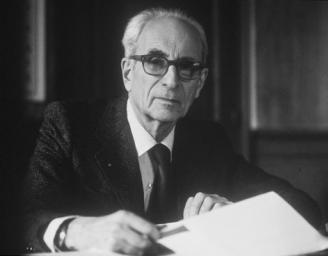
12. Claude Lévi-Strauss
and so a part of nature, and themselves as human beings, and so a part of culture. That conflict is the projection onto the world of the oppositional character of the human mind. Humans not only think ‘oppositionally’ but consequently experience the world ‘oppositionally’ as well. It might, then, seem as if Lévi-Strauss, like Freud and Jung, makes the subject matter of myth the mind rather than the world. But in fact he does not. He is not, like them, seeking to identify projections in order to withdraw them. He
is seeking simply to trace the source of them. (At the same time Lévi-Strauss maintains that the world is itself organized ‘oppositionally’, so that human projections, while remaining projections, match the nature of the world. Jung says the same in his doctrine of synchronicity.) Once Lévi-Strauss does trace the source of projections, he proceeds to deal with them as experiences of the world, so that the subject matter of myth for him, as for Bultmann, Jonas, and Camus, is the encounter with the world – but with the world experienced as contradictory, not as alien.
structure and Myth
115
The clearest examples of the conflict between nature and culture are the recurrent oppositions that Lévi-Strauss finds between raw and cooked food, wild and tame animals, and incest and exogamy. It is much less clear how other oppositions that he finds – such as those between sun and moon, earth and sky, hot and cold, high and low, left and right, male and female, and life and death – symbolize the split between nature and culture rather than a split within nature. Similarly, it is far from clear how oppositions like those
of sister versus wife and of matrilocal and patrilocal kinship symbolize other than a split within society and therefore within culture.
According to Lévi-Strauss, the Oedipus myth tempers an instance of the clash between nature and culture by noting that humans are able to tolerate a parallel case of the clash:
Myth
Although the problem [i.e., the opposition] obviously cannot be solved [i.e., resolved], the Oedipus myth provides a kind of logical tool which, to phrase it coarsely, replaces the original problem. . . .
By a correlation of this type [i.e., of the original opposition with an analogous one], the overrating of blood relations is to the underrating of blood relations [i.e., the more easily tolerated opposition] as the attempt to escape autochthony is to the impossibility to succeed in it [i.e., the opposition needing resolution].
(Lévi-Strauss, ‘The Structural Study of Myth’, p. 82)
Arranging the elements of the myth not in the chronological order of the plot but in the recurrent order of two sets of opposing pairs, Lévi-Strauss argues that the myth is ameliorating the tension within one pair by juxtaposing it with a comparable pair that is already accepted. The already accepted opposition is that between the ‘overrating’ and the ‘underrating’ of ‘blood relations’. Overrating refers to either the commission of incest (Oedipus’ marrying his mother) or the violation of a prohibition in the name of family (Antigone’s burying her brother Polynices). ‘Underrating’ refers to either fratricide (Eteocles’ killing his brother Polynices) or patricide
116
(Oedipus’ killing his father). Overrating represents nature, for it is instinctual. Underrating represents culture, for it is unnatural. In taking on the myth of Oedipus, and in focusing on familial sex
and killing, Lévi-Strauss might appear to be following Freud, but in fact he dismisses Freud’s analysis as just one more version of the myth itself rather than as even an inferior analysis of it.
In the myth of Oedipus the opposition requiring acceptance is that between the ‘denial’ and the ‘affirmation’ of ‘autochthonous origin’. Denial refers to the killing of earthborn monsters which either prevent the birth of humans (Kadmos’ killing the dragon, from the extracted teeth of which humans are born) or threaten the survival of humans (Oedipus’ killing the Sphinx, which is starving Thebes). Affirmation refers to the common mythological association of humans born from the earth with difficulty in walking (Oedipus’ name meaning ‘swollen footed’). To kill earthborn monsters is to deny the connection of humans to the earth; to name humans on basis of difficulty in walking is to affirm the connection of humans to the earth. Denial represents nature, for humans are in fact born from human parents rather than from the earth. Affirmation represents culture, for mythology maintains that humans are born from the earth. How ancient Greeks were able to tolerate the one set of oppositions more easily than the other, Lévi-Strauss never discloses.
Yet other myths fail to overcome oppositions to even this extent. They show instead that any alternative arrangement would be worse. The Tsimshian Native American myth of Asdiwal, for example, serves
structure and Myth
to justify the shortcomings [i.e., the contradictions] of reality, since the extreme [i.e., alternative] positions are only imagined in order to show that they are untenable.
(Lévi-Strauss, ‘The Study of Asdiwal’, p. 30)
Rather than resolving the contradiction between death and life, a myth makes death superior to immortality, or eternal life:
117