Материал: Myth A Very Short Introduction by Robert A. Segal
promiscuity. Conversely, Detienne links not animals but lettuce and raw meat to sterility and celibacy. For the foul smell of at least rotten, if not raw, meat – Detienne somehow equates the two – repels rather than attracts and thereby fends off sex. Not
coincidentally, the women of Lemnos were spurned by men because of their stench.
Between promiscuity on the one hand and sterility or celibacy on the other stands marriage, with which, notes Detienne, the
Thesmophoria festival was connected. Though barred to men, the festival, which was celebrated annually at Athens for three days, really celebrated marriage. If its celebrants were all female, they were also all married. Falling between the fragrance of the Adonia and the stench of Lemnos, the mildly foul smell of the festival served to fend off men during only the festival.
Detienne connects all of these levels with the life of Adonis and with the ritualistic gardens dedicated to him. At every level, argues Detienne, Adonis falls in either extreme rather than in the middle. Indeed, Adonis jumps from one extreme to the other, bypassing the middle. Adonis’ fate represents that of any human who dares to act like a god: he is reduced to an animal. Daring to be promiscuous, he proves impotent.
For Detienne, as a structuralist, the extremes on each level parallel, not symbolize, the life of Adonis. At each level the extremes are to the middle as Adonis is to normal humans. Where for Frazer the myth uses humans to symbolize impersonal forces of nature, for Detienne the myth uses impersonal forces of nature as analogues to human behaviour.
The gardens of Adonis, planted during the Adonia festival, involve little work. The plants shoot up immediately. Tending them parallels the toilless lives of the gods. In fact, the gardens are like the spices of the gods. The plants are merely gathered, not cultivated, and grow in the hottest places and times. They are carried to the
structure and Myth
123
Myth
roofs of houses at the height of summer. Where regular crops take eight months to grow, the plants take only eight days. Where regular crops demand the strength of men, the gardens are tended by women. Unlike the spices, however, the gardens die as quickly as they sprout; and unlike regular crops, they die without yielding food. Having begun above the earth, they end up below it – cast into the sea. In short, the gardens are a futile ‘get rich quick’ scheme to get food without work. Gods need not work, but humans must. When they seek ‘fast food’ instead of regular fare, they get no food at all.
Adonis himself is related to spices through his mother, Myrrha, who becomes a myrrh tree. Adonis’ gestation takes place in the tree, and his birth requires his breaking out of it. In Ovid’s version wood nymphs even bathe the infant in the myrrh formed from his mother’s tears. More important, Adonis is tied to spices through promiscuity. Unable to control her desire, Adonis’ mother commits incest with her father. Unable to control their desire, Aphrodite and Persephone, according to Apollodorus, fight for custody of the infant Adonis. Adonis himself, for Detienne, is less an innocent victim of divine seduction than a seducer of divinities.
Adonis is a precocious seducer. Like the gardens, he grows up quickly. But like the gardens as well, he dies quickly. Just as the gardens die too early to yield any food, so Adonis dies too young to marry and have children. Having begun promiscuous, he ends up sterile. Conversely, his mother, who began sterile or at least abstinent – she had spurned all males – becomes promiscuous at the least. Jumping from one extreme to the other, mother and son alike reject and, more, threaten the middle ground of marriage.
Adonis’ sterility takes the form of not only childlessness but also effeminacy. His death from the boar shows his unfitness for the masculine hunt. Instead of the hunter, he becomes the hunted: ‘The perfect antithesis of a warrior hero such as Herakles’, Adonis ‘is nothing more than a victim as weak as he is pitiable’. Adonis’ effeminacy signifies insufficient distance between male and female. His mother’s
124
initial rejection of all males signifies the opposite. The ideal lies, again, in between: males and females should be related but distinct.
Just as Detienne links Adonis’ promiscuity with spices, so he links Adonis’ sterility and death with lettuce, in which, in several variants of the myth, Adonis tries vainly to hide from the boar. Just as myrrh ‘has the power to arouse the desires of an old man’, so lettuce ‘can extinguish the ardour of young lovers’. Lettuce ‘brings impotence, which is equivalent to death’.
Put summarily, Adonis does not know his place. He does not know that he is neither god nor animal but human and that what is distinctively human is marriage. In dying before marrying, he fails to fulfil his human nature.
If the meaning of the myth for Detienne is the presentation of an almost endless series of levels, the function of the myth is social. It advocates marriage as the middle ground between promiscuity on the one hand and sterility or celibacy on the other. In the next chapter I will be arguing that the myth advocates marriage as a bulwark of the polis.
structure and Myth
125
Chapter 8
Myth and society
Bronislaw Malinowski
Where for Tylor and Frazer myth deals exclusively, or nearly exclusively, with physical phenomena – flooding, disease, death – for Bronislaw Malinowski myth deals even more with social phenomena – marriage, taxes, and, as already considered in Chapter 4, ritual. Myth still serves to reconcile humans to the unpleasantries of life, but now to unpleasantries that, far from unalterable, can be cast off. Here, too, myths spur resigned acceptance by tracing these unpleasantries – or at least impositions – back to a hoary past, thereby conferring on them the clout of tradition:
The myth comes into play when rite, ceremony, or a social or moral rule demands justification, warrant of antiquity, reality, and sanctity.
(Malinowski, ‘Myth in Primitive Psychology’, p. 107)
Myth persuades denizens to defer to, say, ranks in society by pronouncing those ranks long-standing and in that sense deserved. A myth about the British monarchy would make the institution as ancient as possible, so that to tamper with it would be to tamper with tradition. In England today fox hunting is defended on the grounds that it has long been part of country life. Social myths say, ‘Do this because this has always been done.’ In the case of physical
126
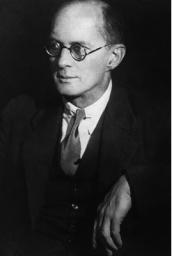
13. Bronislaw Malinowski, c.1935
phenomena the beneficiary of myth is the individual. In the case of social phenomena the beneficiary is society itself.
To say that myth traces back the origin of phenomena is equivalent to saying that myth explains those phenomena. When, then, Malinowski, railing against Tylor, declares that primitives ‘do not want to ‘‘explain,’’ to make ‘‘intelligible’’ anything which happens in their myths’, he is really asserting that myths are not, as for Tylor, explanations for their own sake. Yet explanations they must still be, for only by explaining phenomena do they serve their conciliatory function.
Malinowski never makes clear whether moderns as well as primitives have myths. As modern science provides far more control over the physical world than primitive science does, there are surely fewer modern myths of physical phenomena. If there are none, there can still be modern myths of social phenomena. If not even these remain, their place has been taken by ideology.
society and Myth
127