Материал: 2147
Pic. 37
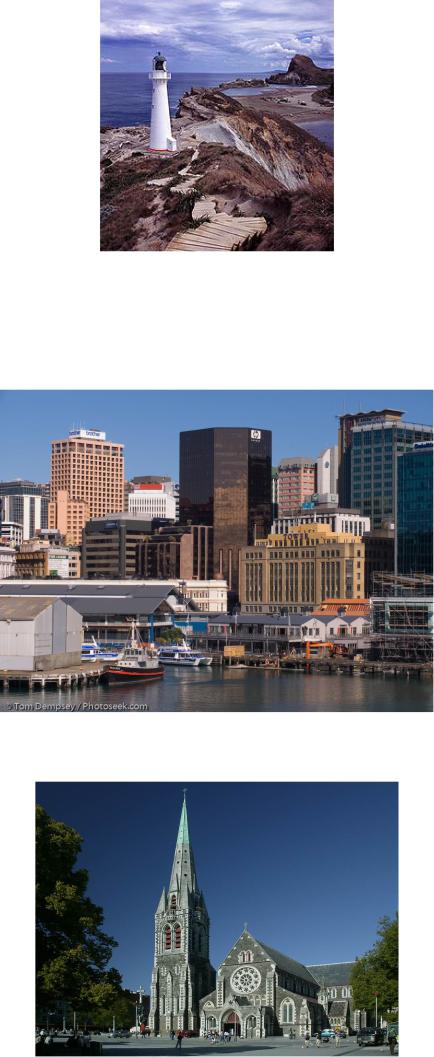
Wellington, the capital of New Zealand, stands at the south-western tip of the North Island and is the southernmost capital city in the world. It is built on high hills around a picturesque harbour. Wellington is the windiest city in New Zealand and its nickname is ‘Windy Wellington’. If you ask someone in Wellington what they dislike about Wellington, the answer will almost certainly be: ‘The wind.’ But if you ask them what they most like about the capital, the answer will be: ‘It’s a city were you can be yourself’.
Pic. 38
Christchurch is ‘the most English city outside England’. It was designed in England, and its river is called the Avon.
Pic. 39
Queenstown is a famous resort town. It is often called the ‘Adventure Capital of the World.’ In Queenstown you can do practically all kinds of sport, including extreme ones. The city of Dunedin is often called the ‘City of Firsts’. It is home to the country’s oldest university, the first newspaper and the first botanic gardens. Dunedin has strong Scottish roots. In the past it was called New Edinburgh. Later, the city’s name was changed to Edinburgh’s old Celtic name, Dunedin. Dunedin is also a unique place for nature lovers. Here you can see two very rare kinds of penguin: the yellow-eyed penguin and the blue penguin.
Pic. 40 |
|
Auckland is the biggest city in New Zealand. It is often called the |
“City of Sails” because its two harbours |
are dotted with hundreds of yachts. |
|
Pic. 41
New Zealand is a great place for sports. Thrill-seekers can go surfing, diving, rafting, zorbing and bungee jumping. Zorbing and bungee jumping were invented in New Zealand. The country’s national sports is Rugby Union, but it’s more than a game, because winning is a matter of national pride. The New Zealand team is called “The All Blacks” - they wear black shirts and shorts. Before a match they perform a haka - the traditional Maori war dance.
Pic. 42
English is the main language although Maori is an official language too. New Zealanders are very warm-hearted and hospitable, but don’t be surprised if you are greeted with a Hongi - the traditional Maori pressing of noses.
From: Speak Out/1,2007
Pic. 43
12. For questions (1 – 16), choose the correct answer (A, B, C or D).
1.The country’s nearest neighbour is
a)The USA;
b)India;
c)Australia;
d)Japan.
2.New Zealand has another name, Aotearoa, which means …
a)the land of volcanoes;
b)the land of earthquakes and living dinosaurs;
c)the land of the long white cloud;
d)the land of strange people.
3.What does Zeeland mean?
a)water land;
b)sea land;
c)beautiful land;
d)cloudy land.
4.The largest lake in New Zealand is …
a)Ritza Lake;
b)Superior Lake;
c)Lake Taupo;
d)Lake Louise.
5.How many sheep are there for every person living in a country?
a)10;
b)5;
c)20;
d)2.
6.The most unusual place in New Zealand is …
a)Lady Knox geyser;
b)Fox Glacier;
c)the White Island Volcano;
d)Rotorua.
7.Rotorua is …
a)a city;
b)a volcano;
c)a lake;
d)a famous person.
8.What did Maori use to tell stories of the past?
a)songs and carvings;
b)a written language;
c)books and manuscripts;
d)CDs and HDs.
9.The most beautiful place in the world (according to the text) is …
a)Waitomo Caves;
b)Wellington;
c)Milford Sound;
d)Lady Knox geyser.
10.The national bird and emblem of the country is …
a)a hawk;
b)a peacock;
c)a sparrow;
d)a kiwi.

11.New Zealanders like to call themselves …
a)Kiwis;
b)New Zealanders;
c)Maori;
d)Zealanders.
12.Which river in New Zealand is called like the river in England?
a)Thames;
b)Avon;
c)Nile;
d)Danube.
13.Which city has strong Scottish roots?
a)Wellington;
b)Queenstown;
c)Auckland;
d)Dunedin.
14.What is haka?
a)traditional Maori war dance;
b)traditional Maori clothes;
c)traditional Maori food;
d)nickname of Maori people.
15.What are the official languages?
a)French and English;
b)English and German;
c)English and Maori;
d)Maori and Dutch.
16.What is Hongi?
a)pressing of shoulders;
b)pressing of hands;
c)pressing of cheeks;
d)pressing of noses.
13. Fill in the correct word from the box below.
Breath-taking views; carvings; a fairy tale; peaceful lakes; traditional buildings; waterfalls; fast flowing rivers; rotten eggs; fairy-tale; kiwi; artwork.
1.This place is not from … - it is New Zealand.
2.New Zealand has got it all: snowcapped mountains, … , green forests and … with crystal clear water.
3.The whole place smells of …
4.Beautiful … , … , music, dance, and … … - all from part of the Maori heritage.
5.This is the place of … …, hundred of … , and … wildlife.
6.The … is the country’s national bird and emblem.
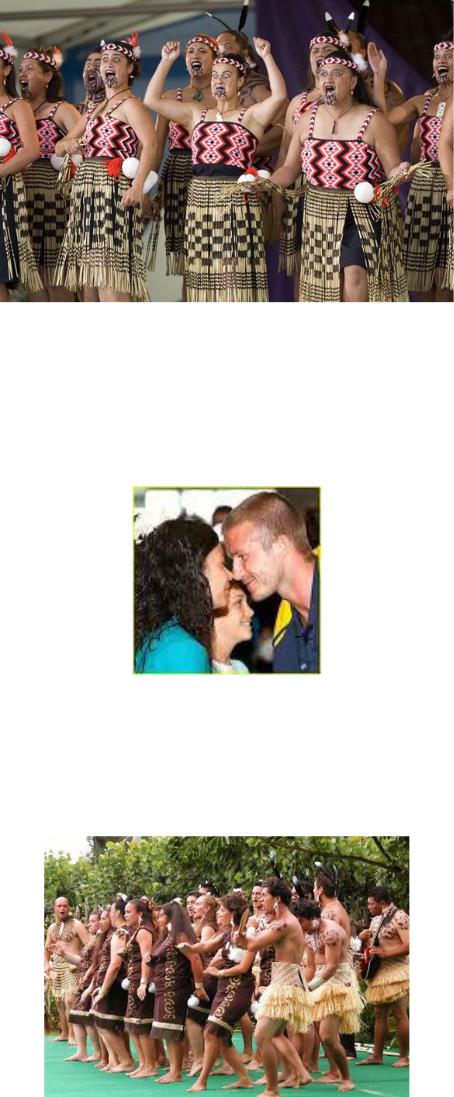
14.Look at the pictures in Ex. 15. Which one shows:
- David Beckham; - a Maori house;
- a group of Maori women; - a Maori man.
15.Read the text and find out.
1.Did the Maori people come from Polynesia?
2.What does Aotearoa mean?
3.When did Captain Cook land in New Zealand?
4.Who did they see?
5.Were they good hunters?
6.What characters did they have?
7.Did they live in wooden houses?
8.Did they have a written language?
9.What did they use to tell the stories for the young?
10.What did white people bring to New Zealand?
11.Were white people fierce to the Maori?
12.What do the Maori people do now?
13.Do the Maori teach the Maori language?
14.Do they have the tattoos?
Maori people of New Zealand
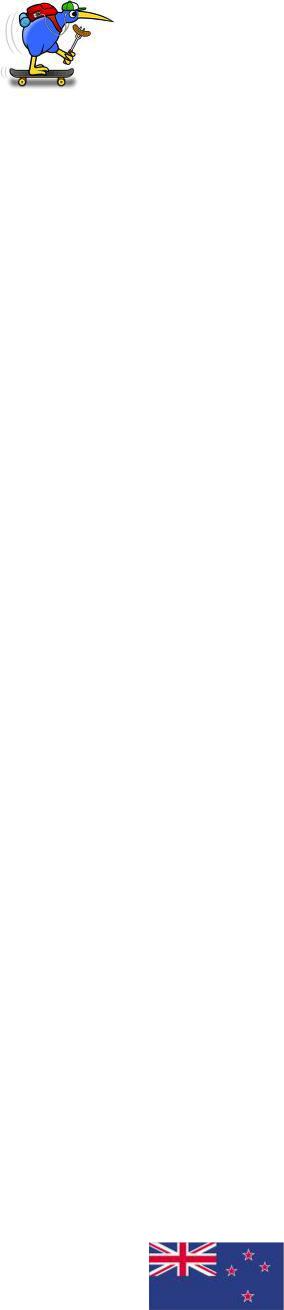
The Maori people are the original people of New Zealand. It is believed that they came from Polynesia and settled in Aotcaroa – the Land of the Long White Cloud (the Maori name for New Zealand) - about 1000 years ago.
Pic. 44
When Captain Cook and his men landed in New Zealand in 1642, they saw a group of tall, strong people with brown skin and tattooed bodies. They were good hunters and fierce warriors but they were also warm-hearted and friendly. They lived in wooden houses and had wooden boats, and they often cut beautiful shapes into the wood they worked with. They caught birds and fish and grew sweet potatoes for food. The Maori of those times had no written language, so all their traditions were handed down orally. They used songs, dances and carvings to tell stories of the past that held lessons for the young.
Pic. 45
Captain Cook created a friendly relationship with the “natives”, but it didn’t last long. When the British came, many Maori people died in fierce battles over land. The Pakeha (the Maori name for white people) also brought guns, strong drinks and cigarettes, and diseases that were new to the Maori. They killed all the whales and seals and tried to collect the heads of the Maori chiefs. All of these things brought terrible trouble to the Maori, and many of them died. By 1900 the future seemed hopeless, but after a while the population slowly began to grow again.
Pic. 46