Материал: 2249
8. Match the stages of filmmaking with their headings and put them in a logical order.
1.production
2.pre-production
3.post-production
4.sales and distribution
5.development
A)In this stage, the project's producer finds a story, which may come from a book, play, another film, a true story, original idea, etc. After identifying a theme or underlying message, the producer works with writers to prepare a synopsis. Next, a screenwriter writes a screenplay over a period of several months. The screenwriter may rewrite it several times to improve dramatization, clarity, structure, characters, dialogue, and overall style.
B)The film is released to cinemas or, occasionally, to DVD, VHS. The film is duplicated as required for distribution to cinemas. Press kits, posters, and other advertising materials are published and the film is advertised. Film companies usually release a film with a launch party, interviews with the press, press preview screenings, and film festival screenings. Most films have a website.
C)Preparations are made for the shoot, in which cast and crew are hired, locations are selected, and sets are built. In this stage, the film is designed and planned. The production company is created and a production office established. The production is storyboarded and visualized with the help of illustrators and concept artists. A production budget is drawn up to plan expenditures for the film. The producer hires a crew. The nature of the film, and the budget,determinethesizeand type ofcrew used during filmmaking.
D)The film is edited; production sound (dialogue) is concurrently (but separately) edited, music tracks (and songs) are composed, performed and recorded; sound effects are designed and recorded; and any other com- puter-graphic «visual» effects are digitally added, all sound elements are mixed into «stems». Then the «stems» are mixed and are inserted to the picture and the film is fully completed.
E)The raw elements for the finished film are recorded. In this stage, the film is created and shot. More crew will be recruited at this stage, such as the property master, script supervisor, assistant directors, stills photographer, picture editor, and sound editors. These are just the most common roles in filmmaking; the production office will be free to create any unique blend of roles to suit a particular film.
6
9. Read the text and tell about main stages of Hollywood’s history using the dates:
1929
1948
1950s
XXI century
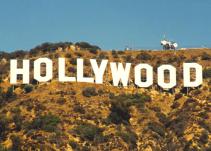
The American movie industry is known as Hollywood, because that is where it is based. In the early days of cinema, movie-makers headed for California and Los Angeles in particular because they could rely on the weather and the light. Early black and white
silent movies were a huge success, and one after the other movie-makers began making their films in the Los Angeles suburb of Hollywood. By 1929, sound had arrived. By now Hollywood was well known enough to begin awarding prizes for its movies, and the Oscars began that year.
The middle of the 20th century saw Hollywood’s golden years. The studios were owned by a small number of companies, who made the movies, employed the actors, and sold the films to movie theaters. Actors were contracted to a studio and could work for no one else. The studios controlled every aspect of the movie industry and there seemed no limit to their ability to make money. In 1948, the Supreme Court ruled that it was unfair for the studios to make the movies, own the theaters, and only permit them to show the studio’s own movies. The power of the studios was set to disappear.
Television had recently begun in the USA, and the studios began making programs for TV as well. This is the main source of income for most studios today. In fact, very few movies are now made in Hollywood. Most are made further out of Los Angeles, where there is more space to work.
In the modern industry, it is no longer the studio which controls the business. The most powerful players are the actors, the really famous actors. An Oscar winner can pick and choose the films he or she will star in. An actor who is a consistent box-office success can insist on changes to the movies that they make. Directors too have a lot of say in how the industry operates – if they are directors of money-making movies.
7

It is used to be said that you were successful in Hollywood if the audiences liked your films. Later, as the industry became larger and more organized, a successful actor was an Oscar winner. Later still, film studios considered a movie a success if it made a lot of money. The current trend is for success to be measured in independence. A really great Hollywood actor can convince people to give huge amounts of money to set up in an independent production company, and not just star in a movie, but make it too.
10. Read the text of the previous exercise and write if the statement true or false. Correct wrong statements.
1.People started making movies in Hollywood because of the weather.
2.The studios controlled the industry from the very beginning.
3.Movies are more financially important for the studios than television.
4.The actors are less important than the studios nowadays.
5.Successful directors have a lot of influence in the industry.
6.Successful actors make their own movies.
11. Read the film quotes and write down the titles of the films where they are used. Put the film quotes into reported speech and remember that the tenses move back. You will need tochange some of the pronouns.
1.«Life is like a box of chocolates». (Forrest Gump) His mother said that life was like a box of chocolates.
2.«I’m coming for you».
Freddy told the children |
. |
||
3. «I’ll be back». |
|
|
|
He told me |
|
. |
|
4. «Do not try to bend the spoon. That’s impossible. Instead…. only try to realize the truth. There is no spoon. Then you’ll see that it’s not the spoon that bends, it is only yourself».
The boy said
.
5. «What’s in a name? That which we call a rose by any other name would smell as sweet».
She asked
.
8

6. |
«Why is a raven like a writing desk? » |
|
|
|
|||||
He wanted to know |
. |
||||||||
7. |
«I’ll think about |
that tomorrow». |
|
|
|
||||
She promised |
. |
||||||||
8. |
«All for one |
and one for all». |
|
|
|
||||
They exclaimed |
|
. |
|
||||||
9. |
|
|
|
|
|
|
|
||
«I finally invent something that works! » |
|
|
|
||||||
He cried |
. |
|
|||||||
10. «May |
the force be with you! » |
|
|
|
|||||
He said |
|
. |
|
||||||
11. |
«Always remember, the ring is trying to get back to its master». |
|||||||
He reminded |
. |
|
|
|||||
12. |
«He’s got |
|
to be the best pirate I’ve ever seen». |
|
|
|
|
|
He said |
|
. |
||||||
13. |
|
|
|
|
|
|
|
|
«You are the boy who lived». |
|
|
|
|
||||
He told Harry |
|
. |
|
|
||||
12. Rewrite the texts in direct speech.
She told me that her favourite film was Titanic. She explained that she had already seen it six times and that she was going to watch it again tonight. She said that she was a great fan of Kate Winslet and that she was hoping to meet her one day. She said that she particularly liked the ending, although it always made her cry. She said that she didn’t find Leonardo diCaprio very attractive, but she thought he was a great actor.
My favourite film is Titanic. I ….
He told me that his favourite film was the Matrix. He said that he loved that film, and had to record it. He called that movie amazing. He told me that he had watched it at nine and then he was seventeen. He explained that the Wachowski brothers had shown incredible proficiency in film-making, and The Matrix trilogy would be the films by which they were remembered. He stressed that groundbreaking special effects, excellent casting, a complex and philosophical plot made that movie a breakthrough in motionpicture history.
9
My favourite film is the Matrix. I ….
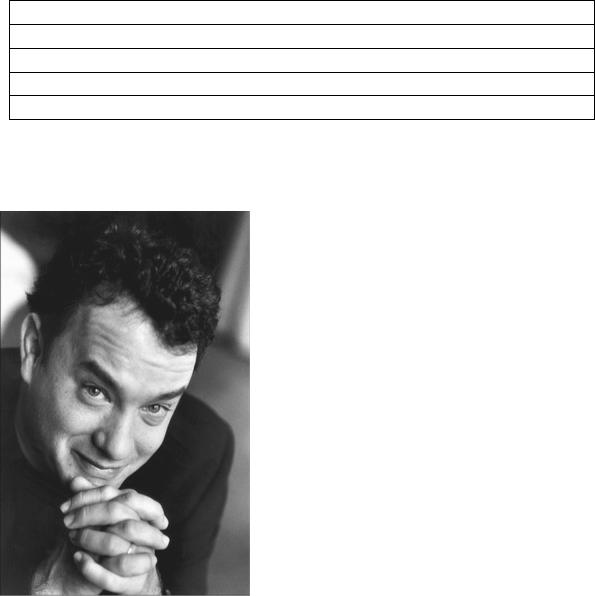
13. Read this web report of an interview with Tom Hanks. Why is he known as ‘Mr Nice Guy’?
In an online interview for Contactmusic.com, Hollywood actor, Tom Hanks, has revealed that he’s happy being known as ‘Mr Nice Guy’.
When they asked him how he felt about his nice guy persona, he told them that he was happy with it and that he felt confident that he lived up to his reputation.
They asked him where this reputation had come from, and he told them that he thought it was because he had always cooperated with the press. They asked him whether he had ever had problems with the paparazzi, and he told them that he hadn’t because he respected people, even when he didn’t like them.
Brisbanetimes.com asked the Forrest Gump star why he always played the part of the nice guy in films and never the villain. He reminded them that he had played the part of an executioner in The Green Mile, but, because of his nice guy image, the media had reported that he was a ‘nice executioner’!
Finally, Chinadaily.com asked him what his current plans were, and he said that he wanted to direct again, but that he couldn’t do that at the moment, because it would take him away from his children. What a nice guy!
10