Материал: 2249
FORREST GUMP (1994)
Pre-watching activities:
1. Do you know the author of the novel Forrest Gump? This is Winston Groom. Read the text about his biography and match his creations
with the years of publishing. |
|
As Summers Die |
1978 |
Kearny's March: The Epic Creation of the American |
|
West, 1846-1847 |
1980 |
Better Times Than These |
1982 |
Forrest Gump |
2011 |
Conversations with the Enemy |
1986 |
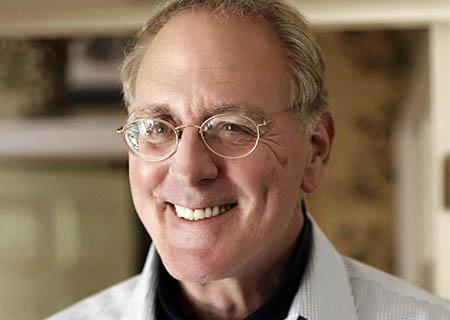
Winston Francis Groom, Jr., (born March 23, 1943) is an American novelist and non-fiction writer, best known for his book Forrest Gump, which was adapted into a film by Robert Zemeckis in 1994.
Winston Groom was born in Washington, D.C., and was raised in Baldwin County, Alabama, where he attended University Military School (now known as UMS-Wright Preparatory School). Groom's earliest ambition was to become a lawyer like his father; but, instead, while a literary editor in college, he chose to become a writer. Groom attended the University of Alabama, where he was a member of Delta Tau Del-
41
ta Fraternity and the Army ROTC, graduating in 1965. He served in the Army from 1965 to 1969, including a tour of duty in the Vietnam War.
Upon his return from Vietnam, he worked as a reporter for the Washington Star, a Washington, D. C., newspaper covering police and courtroom activities. Groom retired from journalism at age 32, and began writing his first novel Better Times Than These which was published in 1978. Better Times Than These was about a group of patriotic soldiers in the Vietnam War whose lives and patriotism both are shattered. His next novel As Summers Die (1980) received better recognition. His novel Conversations with the Enemy (1982) follows an American Vietnam War soldier who escapes from a POW camp and takes a plane back to the United States only to be arrested fourteen years later for desertion. Conversations with the Enemy was a Pulitzer Prize for General NonFiction finalist in 1984.
In 1985, Groom moved back to Mobile, Alabama, where he began to work on the novel Forrest Gump. It was published in 1986; however, it did not make Groom a best-selling author until it was adapted into a film with the same name in 1994, a film starring Tom Hanks in the title role of Forrest Gump. The film propelled the novel to best-seller status, and the novel sold 1.7 million copies worldwide.
Groom devotes his time to writing history books about American wars. He has lived most recently in Point Clear, Alabama, and Long Island, New York, with his wife Anne Clinton and daughter, Carolina. Groom was an old friend of writer Willie Morris, dating to their days together in Bridgehampton, Long Island, New York.
In November 2011, Groom introduced his latest history book, Kearny's March: The Epic Creation of the American West, 18461847. Groom describes how Kearny’s quest for westward adventure coincides with the expansionist desires of the U.S. President, James K. Polk. Anchored in mid-summer 1846, the context for both the adventures and expansionism is the Texas Annexation from Mexico, the MexicanAmerican War, and the backdrop to the American Civil War. Just as in the film adaptation of Groom’s book Forrest Gump, where Gump is introduced through the technology of production company Industrial Light & Magic to a cast of celebrities including a young Elvis Presley, President John F.Kennedy, and PresidentRichard Nixon, Groom weaves intoKearny’s Marchmountain manKit Carson,Brigham Youngand hisMormon followers, and members of the Donner party.
(http://en.wikipedia.org/wiki/Winston_Groom.)
42
2. Read the following text about Tom Hanks, famous American actor.
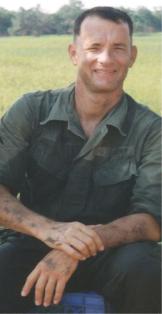
Thomas Jeffrey "Tom" Hanks (born July 9, 1956) is an American actor, producer, writer, and director. Hanks worked in television and familyfriendly comedies, gaining wide notice in 1988's Big, before achieving success as a dramatic actor in several notable roles, including Andrew Beckett in Philadelphia, the title role in Forrest Gump, Commander Jim Lovell in Apollo 13, Captain John H. Miller in Saving Private Ryan, Joe Fox in You've Got Mail, Chuck Noland in Cast Away, and voicing the character Woody in the Toy Story series. Hanks won consecutive Best Actor Academy Awards, in 1993 for Philadelphia and in 1994 for Forrest Gump. U.S. domestic box office totals for his films exceed US $4.0 billion. He is the father of actor Colin Hanks.
Tell about main facts of his life using the dates:
1986
1988
1992
1993
1994
Read more detailed information about Tom
Hanks’s career and write down his filmography.
Period of successes and failures
With Nothing in Common (1986) – about a young man alienated from his parents who must re-establish a relationship with his father, played by Jackie Gleason – Hanks began to establish the credentials of not only a comic actor but of someone who could carry a serious role. "It changed my desires about working in movies," Hanks told Rolling Stone. "Part of it was the nature of the material, what we were trying to say. But besides that, it focused on people's relationships. The story was about a guy and his father,
unlike, say, The Money Pit, where the story is really about a guy and his house."
43
After a few more flops and a moderate success with Dragnet, Hanks succeeded with the film Big (1988), both at the box office and within the industry. The film established Hanks as a major Hollywood talent. It was followed later that year by Punchline, in which he and Sally Field co-starred as struggling comedians. Hanks's character, Steven Gold, a failing medical student trying to break into stand-up, was somewhat edgy and complex. Hanks' portrayal of Gold offered a glimpse of the far more dramatic roles Hanks would master in films to come. Hanks then suffered a pile of boxoffice failures: The Burbs (1989), Joe Versus the Volcano (1990), and The Bonfire of the Vanities (1990), as a greedy Wall Street type who gets enmeshed in a hit-and-run accident. Only the 1989 movie Turner & Hooch brought success for Hanks during this time.
Progression into dramatic roles
Hanks climbed back to the top again with his portrayal of a washed-up baseball star turned manager in A League of Their Own (1992). Hanks has admitted that his acting in earlier roles was not great and that he has improved. In an interview with Vanity Fair, Hanks noted his "modern era of moviemaking ... because enough self-discovery has gone on.... My work has become less pretentiously fake and over the top". This "modern era" began in 1993 for Hanks, first with Sleepless in Seattle and then with Philadelphia. The former was a blockbuster success about a widower who finds true love over the airwaves. Richard Schickel of Time called his performance "charming," and most critics agreed that Hanks' portrayal ensured him a place among the premier romantic-comedy stars of his generation.
In Philadelphia, he played a gay lawyer with AIDS who sues his firm for discrimination. Hanks lost thirty-five pounds and thinned his hair in order to appear sickly for the role. In a review for People, Leah Rozen stated "Above all, credit for Philadelphia's success belongs to Hanks, who makes sure that he plays a character, not a saint. He is flat-out terrific, giving a deeply felt, carefully nuanced performance that deserves an Oscar." Hanks won the 1993 Academy Award for Best Actor for his role in Philadelphia. During his acceptance speech he revealed that his high school drama teacher Rawley Farnsworth and former classmate John Gilkerson, two people with whom he was close, were gay.
Hanks followed Philadelphia with the 1994 summer hit Forrest Gump. Of the film, Hanks has remarked: "When I read the script for Gump, I saw it as one of those kind of grand, hopeful movies that the audience can go to and feel ... some hope for their lot and their position in life... I got that from
44
the movies a hundred million times when I was a kid. I still do." Hanks won his second Best Actor Academy Award for his role in Forrest Gump, becoming only the second actor to have accomplished the feat of winning consecutive Best Actor Oscars. (Spencer Tracy was the first, winning in 1937–38. Hanks and Tracy were the same age at the time they received their Academy Awards: 37 for the first and 38 for the second.)
Hanks' next role – astronaut and commander Jim Lovell, in the 1995 movie Apollo 13-reunited him with Ron Howard. Critics generally applauded the film and the performances of the entire cast, which included actors Kevin Bacon, Bill Paxton, Gary Sinise, Ed Harris, and Kathleen Quinlan. The movie also earned nine Academy Award nominations, winning two. The same year, Hanks starred in the animated blockbuster Toy Story as the voice of the toy Sheriff Woody.
1996 – present: Directing, producing and acting
Hanks turned to directing with his 1996 film That Thing You Do! about a 1960s pop group, also playing the role of a music producer. Hanks and producer Gary Goetzman went on to create Playtone, a record and film production company named for the record company in the film.
Hanks executive produced, co-wrote, and co-directed the HBO docudrama From the Earth to the Moon. The twelve-part series chronicles the space program from its inception, through the familiar flights of Neil Armstrong and Jim Lovell, to the personal feelings surrounding the reality of moon landings. The Emmy Award-winning project was, at US $68 million, one of the most expensive ventures taken for television.
Hanks's next project was no less expensive. For Saving Private Ryan he teamed up with Steven Spielberg to make a film about a search through war-torn France after D-Day to bring back a soldier. It earned the praise and respect of the film community, critics, and the general public. It was labeled one of the finest war films ever made and earned Spielberg his second Academy Award for direction, and Hanks another Best Actor nomination. Later in 1998, Hanks re-teamed with his Sleepless in Seattle co-star Meg Ryan for You've Got Mail, a remake of 1940's The Shop Around the Corner.
In 1999, Hanks starred in an adaptation of the Stephen King novel The Green Mile. He also returned as the voice of Woody in Toy Story 2. The following year he won a Golden Globe for Best Actor and an Academy Award nomination for his portrayal of a marooned FedEx systems analyst in Robert Zemeckis's Cast Away. Next he teamed up with American Beauty director Sam Mendes for the adaptation of Max Allan Collins's and
45