Материал: Russian Journal of Building Construction and Architecture
Russian Journal of Building Construction and Architecture
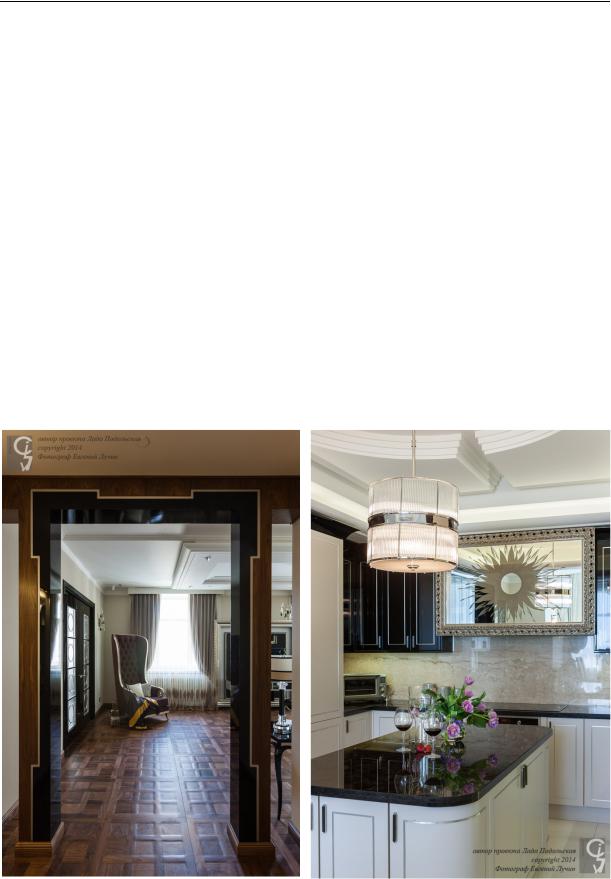
symbolic structure of the Russian modernism. A new style, the second stage of art nouveau, is already underway in Russia as “the dead Atlantis” of the Russian art of 1917 has already perished. However, it retained its unity and using the legacy of the Russian classical art as well as the revolutionary Russian avant-garde as well as the experience of the Soviet realism and Soviet nonconformism, it is ready to embrace its continuous unity [1]. It will rise up as a style on its own thanks to those individuals who see themselves as heirs of the unique international culture dating millennia back. New elites are already in need of a new form of art to regain their cultural right to be those. It should neither be secondary nor borrowed but representative of a new reality. The reality where there is a new state that has accumulated the experience of three empires: the Byzantine Russian and Soviet influences are already making a statement and finding their way through the concrete jungle just to reemerge with new modernism of organic architecture full of symbolic and metaphoric allusions. The thing is that it will not always be available to anyone as it will be exclusive to this particular social group (Fig. 8): as G.V.Plekhanov argued, a thing can be of value only if it represents significant social relations.
Fig. 8. Private interior. Author of the project L. V. Podolskaya, 2013. Photo by Ye. Luchin
100
Issue № 1 (41), 2019 |
ISSN 2542-0526 |
Conclusions. To sum up, we can conclude that the most important task currently facing architecture in general and interior art in particular is to design a comprehensible coherent volumetric and spatial style through the realization of one’s path and building up the outlook on the future using the established sign systems as well as those developed in the process of design and implementation.
References
1.Belyi A. Simvolizm kak miroponimanie [Symbolism as a world view]. Moscow, Respublika Publ., 1994.
528p.
2.Borisova E. A., Sternin G. Yu. Russkii modern [Russian modern]. Moscow, Sovetskii khudozhnik Publ., 1990.
359p.
3.Valeri P. Ob iskusstve [About art]. Moscow, Iskusstvo Publ., 1993. 512 p.
4.Gerchuk Yu. Chto takoe ornament? [What is the pattern?]. Moscow, Galart Publ., 1998. 327 p.
5.Davydova I. I. Simvol kak soteriologicheskaya kategoriya v russkoi porubezhnoi kul'ture moderna. Osobnyak S. P. Ryabushinskogo. Diss. kand. kul'turologii [The symbol as a soteriological category in the Russian culture of modernity. The S. P. Ryabushinsky Mansion. Cand. diss.]. Moscow, 2012. 274 p.
6.Kassu Zh. Entsiklopediya simvolizma [Encyclopedia of symbolism]. Moscow, 1999. 429 p.
7.Kirichenko E. Arkhitekturnoe nasledie Fedora Shekhtelya v Moskve [Architectural heritage of Fyodor Shekhtel in Moscow]. Moscow, ID Rudentsovykh, 2011. 316 p.
8.Kirichenko E. Bol'shaya Sadovaya, 4 [Large Garden, 4]. Moscow, Moskovskii rabochii Publ., 1989. 80 p.
9.Man'kovskaya N. Estetika postmodernizma [Aesthetics of postmodernism]. Moscow –– Saint-Petersburg, Tsentr gumanitarnykh initsiativ, 2016. 494 p.
10.Paiman A. Istoriya russkogo simvolizma [History of Russian symbolism]. Moscow, Respublika Publ., 1998.
415p.
11.Sennet R. Telo i gorod v zapadnoi tsivilizatsii [Body and city in Western civilization]. Moscow, Strelka press Publ., 2016. 504 p.
12.Torchinov E. Puti filosofii Vostoka i Zapada [Ways of philosophy of East and West]. Saint-Petersburg, Azbuka-klassika, Peterburgskoe vostokovedenie, 2007. 480 p.
13.Shvidkovskii D., Shorban E. Moskovskie osobnyaki. Khudozhestvennyi al'bom [Moscow mansions. Art album]. Moscow, Parnas-Aero Publ., 1997. 128 p.
14.Shevelenko I. Modernizm kak arkhaizm: natsionalizm i poiski modernistskoi estetiki v Rossii [Modernism as archaism: nationalism and the search for modernist aesthetics in Russia]. Moscow, Novoe literaturnoe obozrenie Publ., 2017. 336 p.
15.Eko U. Funktsiya i znak. Semiologiya arkhitektury [Function and sign. Semiology of architecture]. TOO TK “Petropolis”, 1998. – 432 p.
16.Bonta J. Architecture and its Interpretation: a Study of Expressive Systems in Architecture. New York, Rizzoli, 1979. 271 p.
101

Russian Journal of Building Construction and Architecture
ARCHITECTURE OF BUILDINGS AND STRUCTURES.
CREATIVE CONCEPTIONS OF ARCHITECTURAL ACTIVITY
DOI 10.25987/VSTU.2018.41.1.011
UDC 725.82
Esen Gökçe Özdamar
THE RED NARRATIVE CINEMA: AN URBAN MONTAGE IN MOSCOW
Tekirdağ Namık Kemal University
Turkey, Tekirdağ, tel. (+90282) 2502936, e-mail: gokceozdamar@gmail.com
Assoc. Prof., PhD of Faculty of Fine Arts, Design and Architecture, Department of Architecture
Statement of the problem. The article explores the concept of transformation as an invisible and constructive key element in narrative films in close relation to its architectural reflections in the Red Narrative Cinema reconstructed as a new shell for the Pushkinsky Cinema Hall, built in 1961 in Moscow’s Pushkin Square. This article does not intend to analyze or re-read a certain type of narrative film, but instead attempts to explore how filmic architecture is transformed into narrative cinema in relation to Pushkin Square as a public space in which the Red Narrative Cinema is located.
Results. The building offers the constructs of narrative film, defined as a representational, organizational film that tells its audience or spectators a fictional story or narrative. Thus the building, as a stimulating entity, narrates a sensory perception of gathering for an important event that can be visually experienced by spectators, passers-by, and local residents within a juxtaposition of two different materials that wrap the building in a layered structure. Through the use of a continuous change of colour that gradually turns from transparent to red as a sensory pattern and coincides with the cinema event time, the building is able to signify a familiar but diminished pattern in urban space. The building acts as a visual stimulus that reminds people of an event through the use of a dynamically shaped narrative and concretizes montage theories in cinema into space, thus bridging the classical narrative and the narrative of transformation through which the urban space’s meaning is symbolized as a grounds for creating debate on the formation of its backbone. Conclusions. Depending on the structure of the fabula (story) and syuzhet (plot of a narrative) as two essentials of narrative film defined by the Russian Formalists, the Red Narrative Cinema embraces the spectator in Pushkin Square and urban life by recalling cultural memory through its transformation of light during the daytime as a visual stimulator for residents and introduces a new language of systems. The findings of the research have important implication for ways of finding correlations between montage and urban narrative, as the building underlines that there is no specific or formulaic approach in montage as in the thoughts of Eisenstein.
Keywords: Narrative film; transformation; fabula; syuzhet; montage; Moscow.
Introduction. Narrative is both a part of our culture and a method of storytelling. It is located, as Roland Barthes states, in the form of ‘a causally-linked set of events [1].
1 The Red Narrative Cinema is the name of the design given by the author to the transformation of Pushkinsky Cinema Hall.
© Özdamar Esen Gökçe, 2019
102
Issue № 1 (41), 2019 |
ISSN 2542-0526 |
It appears everywhere, in every place and in every society, from literature to art, and from film to media. Every narration is a transmission from the sender to the recipient that both depends on linguistic codes and possesses discursive cues that deliver story information to the spectator or reader. The spatio-temporal structure, expression, and process form the narrative, and through the transmission of linguistic codes, “knowledge is articulated and communicated in society in the form of narratives” [2].
Narrative is primarily related to the history of humankind and human actions, events, and modes of production. It is a type of text that functions and exists in its own history with its own stylistic options. Narrative is “a departure from structuralist, formalist, or hermeneutic models, and it is a fundamental spatio-temporal structuration, expression and a process” [3]. Therefore, “human beings understand the construction of an idea of the present, past and future through their use of narrative” [4].
In cinema, the key element of the structure is the narrative, which can be analysed through two constructs: visible and invisible. The narrative is revealed visually, kinaesthetically, and audibly as an interface to either construct or deconstruct these layers’ overall meanings. The visible elements are the overlapping story, music, scenarios, and other possible components of cinema, whereas the invisible element appears in the form of the narrative in the film’s structural characteristics. Meaning is constructed through different layers of a film or fragments that overlap each other. Therefore, these visible and invisible elements and the relationship between narrative film fragments and the montage are similar to constructing both narrative and spatio-temporality in different scales of entities in architectural space.
A narrative film is defined as a representational, organizational film that tells its audience or spectator a fictional story or narrative, informing us about other stories, other possibilities of interrelation [5]. Narrative films can be extended from drama, melodrama, epics, folklore, games, animation, and so on. Narrative films are distinguished by certain shared, generic story events and discursive strategies. A narrative film serves to transform the division between the rational subject’s eye and its object through fragments. In films, the border between the individual and the world disappears within signs and representations. Meaning is produced through the connections of a chronologically altered time and space. Destroying the continuity of time and space in narrative film is the order in the realm of the mind, and camera movement and editing play an essential role in creating and heightening the communication of this meaning [6].
There are parallel relationships between cinema and architecture in the sense that they either construct or deconstruct meaning and thus form space-time relationships. The links among
103

Russian Journal of Building Construction and Architecture
film, architecture, and urbanism were discussed by early Russian Constructivists in terms of their meaning in architecture and cinema. In the modern era, the filmmakers perceived the mutual relationship between cinema and architecture because of the former’s architectonic properties. The film can “construct its own architecture within light/shade/scale and movement” [7]. Narrative is about either spatial experimentation or a film’s spatio-temporality. Regarding the relationship between film and architecture, Bernard Tschumi focuses on the impact of space on visual representation in the Manhattan Transcripts. According to Tschumi, the relationship between architecture and cinema is a “frame-by-frame technique, where spaces are not only composed but also developed from shot to shot, so that the final meaning of each shot depend” on its context [8]. This signals a cinematic perception that is similar to constructing collages, event-space, and space-time.
Today, what distinguishes new narrative films from classical narratives is the alternative plotting that deconstructs traditional cinematic storytelling and provokes a change in the spectator’s perception. In other words, the power of meta-fiction lies in its ability to enable the spectator to enter or leave a particular narrative convention. Certain contemporary narrative films whose spatio-temporal characteristics play differently appear to break the static relationship between the spectator and the object through montage, playing with time, mind, or memory. In such films, fiction and montage form the narrative in a manner similar to how the architectural ideas and fragments of urban space are constructed. Since the earliest days of the medium, the trend seems to have gained momentum, partially thanks to films such as Quentin Tarantino’s Reservoir Dogs (1992) and Pulp Fiction (1994), and Alejandro González Iñárritu’s Babel (2006). These films, along with their antecedents, use a specific style to signify not only the advent of changes in cinema or production techniques regarding manifestos, but also a diverse interrelation of the subject and object relations, approaches, and a narration signalling its open style.
Derived from constructing narrative in films, this article focuses on the invisible constructive elements that are displayed in the Red Narrative Cinema, which raises the issue of how a narrative can be formed architecturally by linking Russian film theory to architecture.
1. The Red Narrative: Diagnosis and need for a new stimulator in urban narrative. The Red Narrative Cinema is designed as a reconstruction of an existing cinema building that was originally called the Pushkinsky Cinema Hall and renamed the Rossiya Cinema in 2012. The building was erected in 1961 by Soviet architects Yu. N. Sheverdiayev and D. S. Solopov and was the first major large-format cinema in the country. As the first modern post-war building, the Pushkinsky Cinema Hall remains a cultural icon and has been of great significance to both
104