Материал: 2016_Kaplan_USMLE_Step_1_Lecture_Notes_Pharmacology

Section III λ Cardiac and Renal Pharmacology
−Side effects:
º“First-dose” syncope
ºOrthostatic hypotension
ºUrinary incontinence
−Advantage: good effect on lipid profile (↑ HDL, ↓ LDL)
λα2 agonists: clonidine and methyldopa (prodrug)
−α2 stimulation:
º↓ in sympathetic outflow
º↓ TPR but also ↓ HR
−Uses:
ºMild-to-moderate hypertension (both)
ºOpiate withdrawal (clonidine)
ºHypertensive management in pregnancy (methyldopa)
−Side effects:
ºPositive Coombs test (methyldopa)
ºCNS depression (both)
ºEdema (both)
–Drug interactions:
º Tricyclic antidepressants ↓ antihypertensive effects of α2 agonists
Clinical Correlate
Cyanide Poisoning
Sodium nitrite or amyl nitrite can be used in cyanide poisoning. It
promotes formation of methemoglobin (MetHb), which binds CN– ions, forming cyanomethemoglobin. This prevents the inhibitory action of CN– on complex IV of the electron transport chain. Cyanomethemoglobin is then reconverted to methemoglobin by treatment with sodium thiosulfate, forming the less toxic thiocyanate
ion (SCN–). MetHb is converted to oxyhemoglobin with methylene blue.
Clinical Correlate
A hypertensive emergency occurs when hypertension is severe enough to cause end-organ damage. Most commonly, nitroprusside, labetalol, or the D1 agonist fenoldopam is given intravenously as therapy.
DIRECT-ACTING VASODILATORS
Drugs Acting Through Nitric Oxide
λHydralazine
−↓ TPR via arteriolar dilation
−Use: moderate-to-severe hypertension
−Side effects:
ºSLE-like syndrome and slow acetylators
ºEdema
ºReflex tachycardia
λNitroprusside
−↓ TPR via dilation of both arterioles and venules
−Use: hypertensive emergencies (used IV)
−Side effect: cyanide toxicity (co-administered with nitrites and thiosulfate; see Clinical Correlate)
Drugs Acting to Open Potassium Channels
λDrugs: minoxidil and diazoxide
−Open K+ channel, causing hyperpolarization of smooth muscle
−Results in arteriolar vasodilation
−Uses:
ºInsolinoma (diazoxide)
ºSevere hypertension (minoxidil)
ºBaldness (topical minoxidil)
94

−Side effects:
ºHypertrichosis (minoxidil)
ºHyperglycemia (↓ insulin release [diazoxide])
ºEdema
ºReflex tachycardia
INDICATIONS FOR USE OF ANTIHYPERTENSIVE DRUGS IN COMORBID CONDITIONS
Table III-2-1. Use of Antihypertensive Drugs in Comorbid Conditions
Indication |
|
Suitable Drug(s) |
Angina |
|
Beta blockers, CCBs |
Diabetes |
|
ACEIs, ARBs |
Heart failure |
|
ACEIs, ARBs, beta blockers |
Post-MI |
|
Beta blockers |
BPH |
|
Alpha blockers |
Dyslipidemias |
|
Alpha blockers, CCBs, ACEIs/ARBs |
Chronic kidney disease |
|
ACEI, ARBs |
TREATMENT OF PULMONARY HYPERTENSION
λBosentan
−Endothelin (ET)-1 is a powerful vasoconstrictor through ET-A and -B receptors
−Bosentan is an ETA receptor antagonist
−Administered orally
−Side effects are associated with vasodilation (headache, flushing, hypotension, etc.)
−Contraindication: pregnancy
λProstacyclin (PGI2): epoprostenol
−Administered via infusion pumps
λSildenafil
– Inhibits type V PDE
– ↑ cGMP
– Pulmonary artery relaxation
– ↓ pulmonary hypertension
Chapter 2 λ Antihypertensives
Clinical Correlate
Chronic (preexisting) hypertension in pregnancy is often treated with methyldopa or labetalol, while
preeclampsia (new-onset hypertension in pregnancy) is treated with labetalol or hydralazine.
95

Section III λ Cardiac and Renal Pharmacology
Chapter Summary
λHypertension (HTN) is a major risk factor for stroke, heart failure, renal disease, peripheral vascular disease, and coronary artery disease. Factors inducing HTN include decreased vagal tone, increased sympathetic tone, increased renin-angiotensin activity, and excess water retention.
λTreatments for HTN aim to reduce sympathetic tone and blood volume and/ or relax vascular smooth muscle. However, homeostatic mechanisms may lead to compensatory increases in heart rate and/or salt and water retention.
λThe metabolic characteristics, clinical uses, and potential adverse effects of various hypertensives are discussed. Examples of each class are provided.
λThiazide diuretics are used to treat HTN. The diuretics are discussed in more detail elsewhere.
λDrugs that act via the renin-angiotensin system are the angiotensinconverting enzyme (ACE) inhibitors (e.g., captopril) and the angiotensin-II (AT-1) blockers (ARBs; e.g., losartan). Figure III-2-1 illustrates the angiotensin system and the pharmacologic effects of these drugs. Their clinical uses and adverse affects are discussed.
λCalcium channel blockers (CCBs) enhance vasodilation by blocking L-type Ca2+ channels in cardiac and vascular tissues. Drugs considered are verapamil, diltiazem, and dihydropyriodines.
λBeta blockers, alpha-1 blockers, and alpha-2 agonists alter sympathetic tone to lower blood pressure.
λDirect-acting vasodilators lower the peripheral vascular resistance mainly by causing arteriolar dilation. Drugs discussed are nitroprusside, hydralazine, minoxidil, and diazoxide.
λTable III-2-1 summarizes the use of antihypertensives in comorbid conditions.
λBosentan, epoprostenol, and sildenafil are used in pulmonary hypertension.
96
Drugs for Heart Failure |
3 |
Learning Objectives
Describe the primary treatments for CHF
Demonstrate understanding of inotropes
Demonstrate understanding of other drugs used in CHF
|
|
|
|
|
|
|
|
|
|
|
|
|
Failing Heart = |
|
CO |
|
|
|
|
|
|
|
|||||||||||||||||||
|
|
Compensation |
|
|
|
|
|
|
|
|
|
|
|
|
|
|
|
|
|
|
|
|
|
|
|
|
|
|
|
|
|||||||||||
|
|
|
|
|
|
Strength of |
|
|
|
|
|
|
|
|
|
|
|
|
|
|
|
|
|||||||||||||||||||
|
|
|
|
|
|
|
|
|
|
|
|
|
|
|
|
|
|
|
|
contraction |
|
|
|
|
|
|
|
|
|
|
|
|
|
|
|
|
|||||
|
|
|
|
|
Decompensation |
|
|
|
|
|
|
|
|
|
|
|
|
|
|
|
|
|
|
|
|
|
|
|
|
||||||||||||
|
|
|
|
|
|
|
|
|
|
|
|
|
|
|
|
|
|
|
|
|
|
|
|
|
|||||||||||||||||
|
|
|
|
|
|
Strength of |
|
|
|
|
|
Contractility |
|
||||||||||||||||||||||||||||
Dilated heart |
|
|
|
|
|||||||||||||||||||||||||||||||||||||
|
|
|
|
|
|
|
|
|
|
|
|
|
|
|
|
|
|
|
|
contraction |
|
|
|
|
|
|
|
|
|
|
|
|
|||||||||
|
|
|
|
|
|
|
|
|
|
|
|
|
|
|
|
|
|
|
|
|
|
|
|
|
|
|
|
|
|
|
|
|
|
|
|
|
|
|
|
|
|
|
|
|
|
|
|
|
|
|
|
|
|
|
|
|
|
|
|
|
|
|
|
||||||||||||||||||||
|
|
Starlings compensation |
|
|
|
|
|
|
|
|
|
|
|
|
|
|
|
|
|
|
|
|
|||||||||||||||||||
|
|
|
|
|
|
|
|
|
|
|
|
|
|
|
|
|
|
|
|
|
|
|
|
|
|
|
|
|
|
|
|
|
|
|
|
|
|
|
|
|
|
End diastolic |
|
|
|
|
|
End systolic |
|
|
|
|
|
|
|
|
|
|
|
|
|
|
Sympathetic |
|
|||||||||||||||||||
|
|
|
|
|
|
CO* |
|
|
|
|
BP |
|
|
|
|
||||||||||||||||||||||||||
volume |
|
|
|
|
|
|
volume |
|
|
|
|
|
|
|
|
|
|
|
|
|
|
|
|
|
|
activity |
|
||||||||||||||
|
|
|
|
|
|
|
|
|
|
|
|
|
|
|
|
|
|
|
|
|
|
|
|
||||||||||||||||||
|
|
|
|
|
|
|
|
|
|
|
|
|
|
|
|
|
|
|
|
|
|
|
|
|
|
|
|
|
|
|
|
|
|
|
|
|
|
|
|
|
|
|
|
|
|
|
|
|
|
|
|
|
|
|
|
|
|
|
|
|
|
|
|
|
|
|
|
|
|
|
|
|
|
|
|
|
|
|
|
|
|
|
|
|
|
|
|
|
|
|
|
|
|
|
|
|
|
|
|
|
|
|
|
|
|
|
|
|
|
|
|
|
|
|
|
|
|
|
|
|
|
|
|
|
|
|
|
|
|
|
|
|
|
|
|
|
|
|
|
|
|
|
|
|
|
|
|
|
|
|
|
|
|
|
|
|
|
|
|
|
HR |
|
|
|
|
||
|
|
|
|
|
|
|
|
|
|
|
|
|
|
|
|
Venous |
|
|
|
|
Renal |
|
|
|
|
|
|
||||||||||||||
Preload |
|
|
|
|
|
BP |
|
|
|
|
|
|
|
|
|
|
|
|
|
|
|
|
|
|
|||||||||||||||||
|
|
|
|
|
|
|
|
|
pressure |
|
|
|
blood flow |
|
|
|
|
|
|
|
|
|
|||||||||||||||||||
|
|
|
|
|
|
|
|
|
|
|
|
|
|
|
|
||||||||||||||||||||||||||
|
|
|
|
|
|
|
|
|
|
|
|
|
|
|
|
|
|
|
|
|
|
|
|
|
|
|
|
|
|
|
|
|
|
|
Vasoconstriction |
||||||
|
|
|
|
|
|
|
|
|
|
|
|
|
|
|
|
|
|
|
|
|
|
|
|
|
|
|
|
|
|
|
|
|
|
|
|||||||
|
|
|
|
|
|
|
|
|
|
|
|
|
|
|
|
|
|
|
|
|
|
|
|
|
|
|
|
|
|
|
|
|
|
|
|||||||
|
|
|
|
|
|
|
|
|
|
|
|
|
|
|
|
|
|
|
|
|
|
|
|
|
|
|
|
|
|
|
|
|
|
|
|
|
|
|
|
|
|
|
|
|
|
|
|
|
|
|
|
|
|
|
|
|
|
|
|
|
|
|
|
|
|
|
|
|
Renin |
|
|
|
|
|
|
|
|
|
|||||
|
|
|
|
|
|
|
|
|
|
|
|
|
|
|
|
|
|
|
|
|
|
|
|
|
|
|
|
|
|
|
|
|
|
|
|
||||||
|
|
|
|
|
|
|
|
|
|
|
|
|
|
|
Capillary |
|
|
|
|
|
|
|
|
|
|
|
|
|
|||||||||||||
|
|
|
|
|
|
|
|
|
|
|
|
|
|
|
|
filtration |
|
|
|
|
|
|
|
|
|
|
|
|
|
Afterload |
|
|
|||||||||
|
|
|
|
|
|
|
|
|
|
|
|
|
|
|
|
|
|
|
|
|
|
|
|
|
|
|
|
|
|
|
|
|
|
|
|
|
|
|
|
|
|
|
|
|
|
|
|
|
|
|
|
|
|
|
|
|
|
|
|
|
|
|
|
|
|
|
|
|
|
|
|
|
|
|
|
|
|
|
|
|
|
|
|
|
|
|
|
|
|
|
|
|
|
|
|
|
|
|
|
|
|
|
|
|
|
|
|
|
|
|
|
|
|
|
|
|
|
|
|
|
|
|
|
|
|
|
|
|
|
|
|
|
|
|
|
|
|
|
|
|
|
|
|
|
|
|
|
|
|
Angiotensin II |
|
|
|
|
|
|
|
||||||||||
|
|
|
|
|
|
|
|
|
|
|
|
|
|
|
|
|
|
|
|
|
|
|
|
|
|
|
|
|
|
|
|||||||||||
|
|
|
|
|
|
|
|
|
|
|
|
|
|
|
|
|
|
|
|
|
|
|
|
|
|
|
|
|
|
|
|
|
|
|
|
|
|
|
|
|
|
|
|
|
|
|
|
|
|
|
|
|
|
|
|
|
|
|
|
|
|
|
|
|
|
|
|
|
|
|
|
|
|
|
|
|
|
|
|
|
|
|
|
Pulmonary |
|
|
|
|
|
|
|
|
|
|
|
|
|
|
|
|
|
|
|
|
|
|
|
|
|
|
|
|
|
|
|
|
|
|
|
|
|
|
|||
|
|
|
|
|
|
|
|
|
|
|
|
|
|
|
|
|
|
|
|
|
Aldosterone |
|
|
|
|
|
|
|
|||||||||||||
congestion |
|
|
|
|
|
|
|
|
|
|
|
|
|
|
|
|
|
|
|
|
|
|
|
|
|
|
|
|
|||||||||||||
|
|
|
|
|
|
|
|
|
|
|
|
|
|
|
|
|
|
|
|
|
|
|
|
|
|
|
|
|
|
|
|
|
|
|
|
|
|
||||
|
|
|
|
|
|
|
|
|
|
|
|
|
|
|
|
|
|
|
|
|
|
|
|
|
|
|
|
|
|
|
|
|
|
|
|
|
|
|
|
|
|
|
|
|
|
|
|
|
|
|
|
|
|
|
|
|
|
|
|
|
|
|
|
|
|
|
|
|
|
|
|
|
|
|
|
|
|
|
|
|
|
|
|
|
|
|
|
|
|
|
|
|
Blood |
|
|
|
|
|
|
|
|
|
|
|
|
|
Sodium |
|
|
|
|
|
|
|
|
||||||||||
|
|
|
|
|
|
|
|
|
volume |
|
|
|
|
|
|
|
|
|
|
|
|
|
|
retention |
|
|
|
|
|
|
|
|
|||||||||
|
|
|
|
|
|
|
|
|
|
|
|
|
|
|
|
|
|
|
|
|
|
|
|
|
|
|
|
|
|
|
|
|
|
|
|
|
|
|
|
|
|
|
|
|
|
|
|
|
|
|
|
|
|
|
|
|
|
|
|
|
|
|
|
|
|
|
|
|
|
|
|
|
|
|
|
|
|
|
|
|
|
|
|
* = starting point |
|
|
|
|
|
|
|
|
|
Edema |
|
|
|
|
|
|
|
|
|
|
|
|
|
|
|
|
|
|
|
|
|
||||||||||
|
|
|
|
|
|
|
|
|
|
|
|
|
|
|
|
|
|
|
|
|
|
|
|
|
|
|
|
||||||||||||||
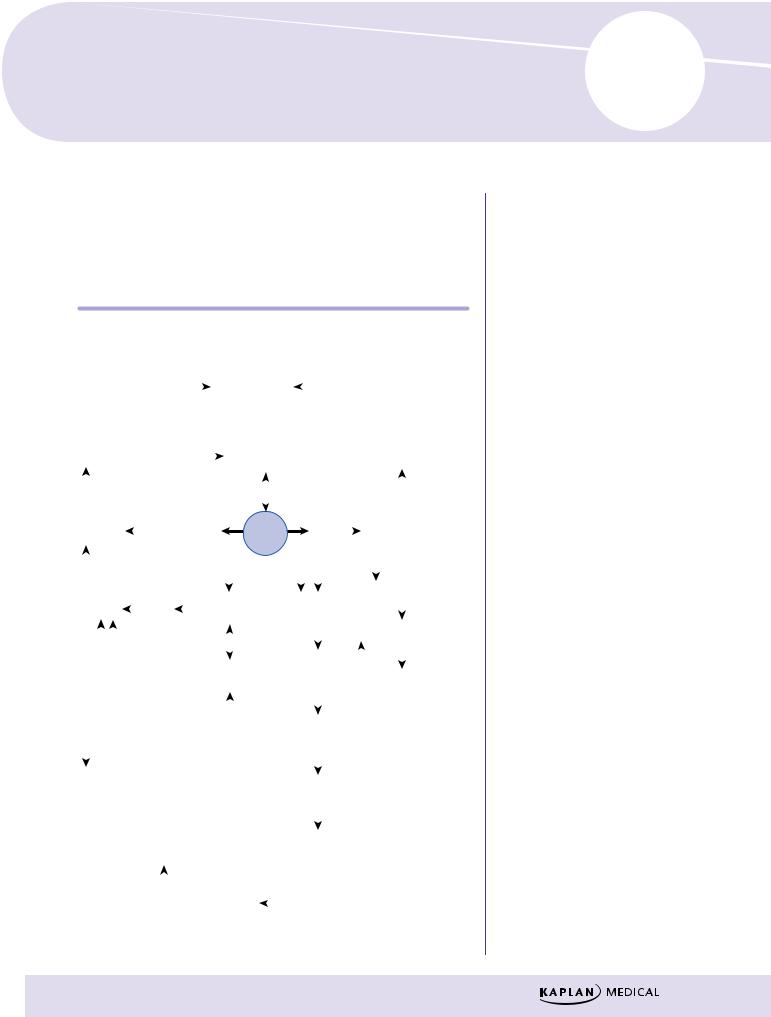
Figure III-3-1. The Failing Heart
Clinical Correlate
Left systolic dysfunction secondary to coronary artery disease is the most common cause of heart failure.
97
Section III λ Cardiac and Renal Pharmacology
Pharmacotherapy aimed at:
λ↓ preload: diuretics, ACEIs, ARBs, and venodilators
λ↓ afterload: ACEIs, ARBs, and arteriodilators
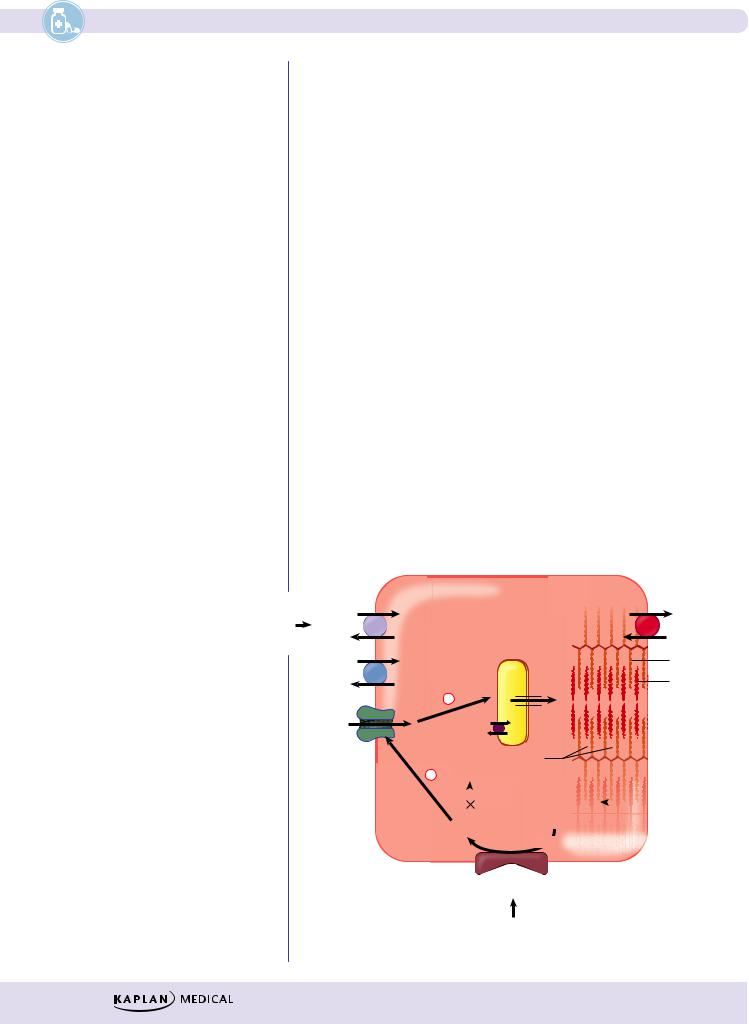
λ↑ contractility: digoxin, beta agonists, PDE III inhibitors
λ↓ remodeling of cardiac muscle: ACEIs, ARBs, spironolactone, beta blockers
Whereas digoxin does not improve survival, ACEIs, ARBs, beta blockers, and spironolactone have been proven beneficial in CHF. ACEIs and ARBs are currently drugs of choice for the chronic management of CHF. Inotropes are more beneficial in management of acute CHF.
PRIMARY TREATMENTS FOR CHF
λACEI (ARB as an alternative)
λBeta blockers (metoprolol, bisoprolol, carvedilol)
−Provide antiarrhythmic effect and also ↓ remodeling
λDiuretics
−Loop or thiazide diuretics to decrease preload
−Spironolactone or eplerenone to block aldosterone receptors and ↓ remodeling (used in advanced CHF)
λHydralazine + isosorbide dinitrate
−Preferred for chronic therapy in patients who cannot tolerate an ACEI or ARB
|
INOTROPES |
|
|
|
|
|
|
CARDIAC CELL |
H+ |
DIGOXIN |
2 K+ |
|
Sarcoplasmic |
|
3 Na+ |
|
Na+ |
||
|
3 Na+ |
|
reticulum |
Actin |
|
|
|
||
|
Ca2+ |
+ |
Ca2+ |
Myosin |
|
|
Ca2+ |
|
|
|
Ca2+ |
|
|
|
|
channel |
|
2H+ |
|
|
+ |
|
|
Troponin/ |
|
|
|
via |
AMP |
tropomyosin |
|
|
|||
protein |
|
|
|
Phosphodiesterase |
|
INAMRINONE, |
|
kinase A |
|
|
|
||||
|
|
|
|||||
|
|
|
|||||
|
|
|
ATP |
|
MILRINONE |
||
activation |
|
|
|
|
|||
cAMP |
|||||||
|
|
|
Adenylyl |
cyclase (via Gs protein) |
|||
β1 receptor
DOBUTAMINE
Figure III-3-2. Mechanism of Action of Inotropes
98