Материал: 2048
TEXT 2
1. Прочтите следующий текст и ответьте на вопросы:
1) Что такое ток? |
|
|
|
2) Что представляет собой закон Ома? |
|||
С |
|
|
|
3) Что такое электродвижущая сила? |
|||
|
|
PRACTICAL UNITS |
|
|
The main units in electrical engineering are those relating to current, |
||
pressure or voltage, resistance, power and energy. |
|||
|
Current is that which flows along the conductors forming the electric |
||
circuit. It is measured in ampers. Pressure, potential, voltage, or electromo- |
|||
tive force is that which causes a current to flow between two points when |
|||
|
бА |
||
they are joined by a conductor. The unit is the volt. |
|||
|
The total pressure generated by a cell or generator is called its |
||
electromotuveиforce (e. m. f.). The difference in pressure between any two |
|||
points in a circuit is simply known as the potential difference, voltage, or |
|||
pressure of the circuit. The opposition which a substance offers to the flow |
|||
of current through it is called its resistance. Substances having a small re- |
|||
sistance, such as metals and most liquids, are called conductors, those of- |
|||
fering a high resistance arу called insulators. The unit of resistance is the |
|||
ohm. |
When resistances are connected in succession to form a curcuit, they |
||
|
|||
are said to be connected in series. Resistances connected to the same ter- |
|||
minals are said to be in parallel. |
|
||
|
In a circuit in which a steady direct current is flowing there is a direct |
||
relation between the current, voltage, and resistance, temperature remain- |
|||
|
|
|
И |
ing constant, and this is eepressed by what is known as Ohm’s law. |
|||
|
The law is represented by theДfollowing equation: |
||
|
|
I=E/R |
I –current in amperes |
|
|
|
R-resistance in ohms |
|
|
|
E-preassure in volts |
The power in a d. c. circuit is found from the product of the amperes flowing in it and the preassure at its terminals. The unit of power is the walt. It is the power in a circuit when a current of one ampere flows under a pressure of one volt. The practical unit of electricel energy is the kilo- watt-hour (kwh). It is the energy transformed in a circuit when the power is one kilowatt and the time taken is one hour. In general practice this value is spoken of as a unit, and is the basis of charges for electrical energy.
41
2. Прочитайте и выучите. |
|
Substance – вещество, материя; |
|
succession – последовательность; |
|
in series – последовательно; |
|
in parallel – параллельно; |
|
equation – уравнение; |
|
value – величина, ценность. |
|
3. Ответьте на следующие вопросы, используя текст 2: |
|
1. What is an ampere? 2. What is a volt? 3. What is a watt? 4. What is the |
|
practical unit of electrical energy? 5. What is electromotive force? 6. What |
|
С |
|
types of resistance connections do you know? |
|
4. Перевед те |
на русский язык. |
1. He is known to be a good student. 2. She is said to have worked at this |
|
plant. 3. The delegation is likely to come tomorrow. 4. The mine is sure |
||
предложения |
||
to receive new machines. 5. The kilowatt-hour (kwh) is known to be the |
||
practical unit of electrical energy. |
||
5. |
Измените предложения согласно предложенной модели. |
|
|
Model : T.: An insulator is known to contain few free electrons. |
|
|
|
St.: It is known that an insulator contains few free electrons. |
1. |
An electric current is known to be a stream of electrons driven through |
|
|
|
бА |
a conductor. 2. The electric current is considered to flow from the negative |
||
to the positive terminal.3. The electrons are said to pass from one atom to |
||
another. 4. Different substences are known to differ markedly in electrical |
||
conductivity. 5. Every student is supposed to know such fundamental terms |
||
as intensity of the current, voltage,Дelectromoteve force (e. m. f.), and re- |
||
sistance. |
|
|
6. |
Переведите предложения на английский язык. |
|
1. |
Материя состоит из атомов. 2. Атом состоит из положительно за- |
|
|
|
И |
ряженного ядра и отрицательно заряженных электронов, движущихся |
||
вокруг ядра. 3. Электроны могут переходить от одного атома к дру- |
||
гому. 4. Ток течет по проводникам, образуя электрическую цепь. |
||
5. |
Студенты должны знать такие термины как ток, напряжение, |
|
Э. Д. С. и сопротивление.
42
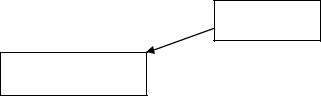
7. Прочтите текст повторно, составьте к тексту вопросы, ответы на которые могли бы служить планом пересказа текста.
8. оставьте опорную схему и перескажите текст на английском языке.
Счасти1. Прочт те следующ й текст. Назовите основные структурные данногобАтекста (заглавие, головные строки, зачин, инфор-
мационную часть, концовку). Скажите, в каком из структурных компонентов текста выражена его главная мысль.
ELECTRIC GENERATORS.
DIRECT-CURRENT GENERATORS
A device for converting mechanical energy into electric energy is called a generator. The essential parts of a generator are: a) the magnetic field, which is produced by permanent magnets or electromagnets; and
to permit the commutator to function.Д
b) a moving coil of copper wire, called the armature, wound on a drum.
The construction and operation of a. d. c. generator are practically the same as those of alternators, the main differences being the commutator action, the method of field excitation and the necessity of
always having the armature – the rotating member. This latter is required И
The commutator consists of a number of wedge-shaped copper segments fitted together around one end of the armature. The segments are separated from each other by some insulating material. As a matter of fact thin sheets of mica are widely used. The two terminals of each armature
coil are connected to adjacent commutator segments.
In practice, the brushes make contact on the outer surface of the commutators. The commutator progressively switches the brushes from one end of an armature coil to the other end, just as the coil starts to enter the opposite pole area. Thus although the direction of electron movement in the coil has reversed, the opposite end of the coil has been connected to the external circuit, direct current flowing out through the brush.
43
Direct-current generators are usually self-excited, some of the energy generated by the armature being used to energize the field windings. This is impossible in alternators, because the direction of the field flux must be constant; therefore, direct current is required as a field excitation source.
Sufficient residual magnetism remains in the field poles to generate a small voltage when the armature starts to revolve. This current, fed into the field windings, is found to strengthen the magnetic field, which in tern causes more voltage to be developed in the armature. This process continues until the generator has been brought up to operating speed.
|
D. c. generators are used for electrolytic processes. Large d. c. gener- |
||
ators are used in certain manufacturing processes, such as steel making. |
|||
С |
|
||
Generators of small capacities are used for various special purposes, such |
|||
as welding, train lighting, communication systems, automobile generators, |
|||
etc. |
|
возбуждение |
|
2.иПроч тайте выуч те. |
|||
Coil – катушка; |
|
||
armature – якорь (магн та или машины); |
|||
|
|
|
А |
alternator – альтернатор, генератор переменного тока; |
|||
excitation – |
|
; |
|
rotating – вращающийся; wound – зд. разрез, насечка; drum – барабан;
a. d. c. generator – генератор постоянного тока;
commutator – коллектор, коммутатор, преобразователь тока;
wedge-shaped – клинообразный; |
И |
mica – слюда; |
|
adjacent – смежный, примыкающий, соседний; |
|
winding – обмотка; |
Д |
brush – щетка;
outer – внешний, наружный;
switch – переключать, включать, выключать;
the opposite pole area – область противоположного полюса; flux – поток.
3. Образуйте все возможные производные слова от данных.
Operate, generate, alternate, commutate, insulate, separate, necessitate, energize, opposite, armature, sufficient, residual.
44
4. Найдите в тексте синонимы к следующим словам:
principal, to revolve, to call for, to allow, to be made up of, in effect, to apply, extensively, both, to join, to indicate, multiple, inner, in this way, though, motion, since, consequently, to begin, to go on, velocity.
Сводные:
5. Найдите в тексте антонимы к следующим словам:
different, the former, to connect, conducting, internal, possible, to weaken.
6. Перевед те на английский язык следующие слова и их произ-
7.сильныйНайд те в тексте английские эквиваленты следующих слов и
pазличаться, разл чный, разница; возбуждать, возбуждение; вращаться, вращен е, вращательный; двигаться, движение, движущий; требовать, требован е; спользовать, польза, полезный, бесполезный; дос-
таточный, достаточно; , сила, усиливать.
выражен й. Составьте с ними предложения.
Ради, точно так же как, в свою очередь, заставлять, в действительности, на практике, таким о разом, хотя, это невозможно, поэтому.
8. Ответьте на следующие вопросы, пользуясь информацией из
текста 3. |
|
1. What is the difference between the construction and operation of a direct |
|
current generator and those oа alternators? 2. What segments does a |
|
|
бА |
commutator consist of? 3. How are the segments separated from each oth- |
|
er? 4. What are the two terminals of each armature coil connected to? |
|
5. How does the commutator operate? 6. How are direct-current generators |
|
usually excited? 7. Why is this impossible in alternators? 8. What does suf- |
|
ficient residual magnetism in the fieldДpoles generate? 9. In what way is |
|
more voltage developed in the armature? 10. How long does this process continue?
И
45