Материал: 5577
36
Nina P. Polichka
Director, Far Eastern Center of Local Self-government,
PhD in Pedagogical Sciences,
Professor, Pacific National University
EMPLOYMENT AND DECENT JOBS FOR YOUNG PEOPLE: NEW APPROACHES TO THE SOLUTION OF THE PROBLEM
Annotation
Nowadays migration potential of young people and students of the Khabarovsky Krai is very high. One of the problems that motivate the people to leave the region is the problem of unemployment. The results of sociological research are presented in the article. The research was conducted by the specialists of «Leader», the program conducted within «Winrock International» who deal with protection of interests of young people and creation of social ties. The targets of the program are to reveal causes of migration among young people and students, and to suggest ways to contribute to their employment opportunities.
Декларация тысячелетия Организации Объединенных Наций, утвержденная резолюцией 55/2 Генеральной Ассамблеи от 8 сентября 2000 года, определила восемь ключевых целей на ближайшее время для всех членов ООН, задачи по их достижению, а также показатели для мониторинга прогресса по каждой цели. В частности, для достижения Цели 1 «Искоренение крайней нищеты и голода» определена задача 2: Обеспечить полную и производительную занятость и достойную работу для всех, в том числе для женщин и молодёжи.
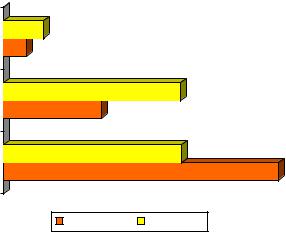
Для Дальнего Востока России актуальность и высокая значимость решение данной задачи для молодёжи определяется ещё и тем, что по данным социологических исследований, проведённых специалистами Дальневосточной академии государственной службы по заказу Программы «ЛИДЕР», реализуемой при поддержке USAID, миграционный потенциал учащейся молодежи Хабаровского края достаточно высок. Причём, если «желание постоянно жить и работать на территории своего проживания» (в процентах от числа опрошенных) имеют около 70% школьной молодежи, то среди студенческой молодежи таковых уже только 45% (см. рисунок 1)
Затрудняюсь |
10,1% |
|
|
|
|
ответить |
5,7% |
|
|
|
|
|
|
44,8% |
Нет, скорее нет |
|
|
|
24,7% |
|
|
|
45,0% |
Да, скорее да |
|
|
|
|
69,6% |
|
Школьники |
Студенты |
Рисунок 1 – Миграционный потенциал учащейся молодежи Хабаровского края
37
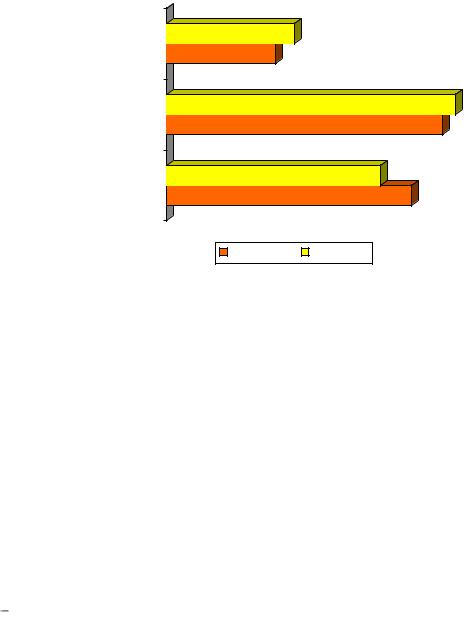
При этом наиболее важной для себя и первой по рейтингу (77% опрошенных) проблемой, отсутствие решения которой ориентирует молодёжь на выезд из региона, является проблема занятости и безработицы. Угроза безработицы – один из серьезных факторов риска и для студентов и для школьников, а потому в одинаковой степени и тех и других страшит перспектива безработицы (рисунок 2).
|
20,2% |
Не беспокоюсь |
|
17,3% |
|
|
45,8% |
Немного |
|
побаиваюсь |
43,8% |
|
|
|
34,0% |
Очень сильно |
|
|
38,8% |
Школьники |
Студенты |
Рисунок 2 – Отношение к безработице учащейся молодежи Хабаровского края
Сказанное выше доказывает, что существующие системы обеспечения занятости и достойной работы для молодёжи работают неэффективно и требуются новые подходы к решению данных задач.
Как показали исследования, изучение международного и отечественного опыта, а также проекты, реализованные в 2008 – 2009 гг. в рамках программы «ЛИДЕР», для содействия занятости и получения достойной работы для молодежи края необходимы:
 восстановление системы профориентации молодёжи (старшеклассников, прежде всего);
 кардинальная модернизация системы информирования молодёжи о состоянии и перспективах развития рынка труда в крае, ответственность за функционирование которой в соответствии с законодательством несут органы государственной власти субъектов федерации;
 адаптация системы начального, среднего и высшего профессионального образования к существующим потребностям и перспективам развития рынка труда;
 построение системы обучения предпринимательской деятельности;
развитие деятельности бизнес-инкубаторов или организаций, готовых взять на себя функции поддержки молодежи в создании собственного дела;
 поддержка создание молодыми людьми или группами молодых людей собственного дела, предприятий и кооперативов, строительных и трудовых отрядов посредством предоставления финансовой и иной поддержки, в частности помещений, оборудования, организации обучения и профессиональной консультативной помощи;
  поощрение молодежи к экспериментам в таких областях, как социальная
экономика, местные самодеятельные инициативы, предоставлять молодым людям реальные участки местного хозяйства для реализации своих социальноэкономических инициатив.

38
CONFERENCE «SUSTAINABILITY AND SECURITY OF THE WORLD
COMMUNITY IN GLOBALIZATION»
WORKSHOP №1
«BUSINESS, ECONOMICS AND POLITICS UNDER GLOBALIZATION»
Chair: Natalia V. Nikulina, Senior instructor, International Economic Relations Department, Khabarovsk State Academy of Economics and Law
Secretary: Ekaterina Chernenko, 3rd year student, International Economic Relations Department, Khabarovsk State Academy of Economics and Law
Farangiz Avazbekova,
5th year student, International Economic Relations Department, Far Eastern Institute of International Relations Scientific adviser: Elena N. Albey, Instructor
INFLUENCE OF GLOBALIZATION ON DEVELOPING COUNTRIES (INDIA)
Introduction
Many experts have good reasons to claim that the world financial and economic crisis will bring new challenges and threats. They predict a rapid increase in flows of illegal migrants from African states to Europe. The crisis threatens to terminate humanitarian programs of food and medical assistance to starving people and victims of regional conflicts. The growth of illegal migration is always accompanied by an expansion of human trafficking, which can assume the most inhuman forms during recession. Also, the crisis is expected to aggravate all territorial, ethnic and religious conflicts in regions that experience acute food and water shortages.
An increase in the crime rate is inevitable in EU countries, the Commonwealth of Independent States and the U.S. Obviously, some people, who became accustomed to a certain level of comfort during the period of economic upturn, will attempt to keep it by deriving the necessary material and financial resources illegally. The emerging problems are international. They require the development and launching of new “critical technologies” in politics, economics and law. It is for this reason that Russia proposes amending the global financial architecture, revising the role of existing international institutions, and creating new ones. This should include adequate legal regulation, based on a harmonized system of international and national standards of activity by the participants in financial markets.
Theoretical base
But before solving current issues we first of all should understand theoretical base of globalization. Globalization is the expansion of a countries economy, and the spread of its customs, ideas and traditions past its natural borders and into other countries around the world. Customarily, the term applies to economic globalization; however, it is not unusual to talk about political, social, or cultural globalization. What is globalization and how is it measured? What are its consequences? Is it good or is it bad?
One of the biggest areas affected by globalization is communication. Before telephones, a conversation as long as the ones we have today with people across the world would have

39
taken us years to complete. Now, with the advancement of science and technology, we can communicate with not only someone across the world, but with more than one of them, as if they were both standing right next to us. No matter where they are or where you are, you can communicate with them. The globalization of communication has indeed helped us greatly. Economic globalization has also helped a lot. Trade used to be only with neighboring countries and for a few countries willing to pay expensive prices and wait for weeks for overseas trade to go back and forth. Now, someone in New York can trade with someone in Hong Kong in a matter of days. A global trade marked has provided increased competition, leading to lower prices, greatly helping consumers worldwide, allowing them to buy things at more affordable prices.
The biggest downside I see with globalization is the spread of culture, customs, and traditions. While if the spread was equal for every culture the effect would leave a great mix of cultures and traditions worldwide, this is not the case. It seems that the only culture to be spreading is the American way of life, and it seems to be spreading like a plague. A life of fast food, loud music, and a very fast paced life has started to suffocate the many other cultures of the world. The globalization of the American lifestyle is a horrible thing. After looking at the pros and cons of globalization, we can see life after globalization could not get much better. However, if you look at it from the point of view of any other country with its own lifestyle being destroyed by the American one, the benefits are purely economic, and globalization is otherwise a very destructive thing.
In fact, in the last 250 years there have been three globalization waves. There have also been three periods of substantial growth since 1850. The first growth spur occurred between 1850 and 1914. Annual growth rates were very high during this period, especially for those countries that are now considered developed or industrialized nations, such as England, Germany, and France1. The main sources of growth during this relatively long period were transportation and communication. During the two World Wars, and especially during the decade prior to the Second World War, the world economy suffered substantially. Obviously, the worse happened during the great depression in 1929 and the years that followed. The economic recovery did not take place until after World War II in 1945. During this period the United States of America emerged as a leading economic and military power and has dominated the world since then.
The second rapid economic growth period of the world began immediately after WWII with the world following the footsteps of the USA. The consensus is that this period of exceptionally rapid economic growth came to end in 1973 with the Arab Oil Embargo, which resulted in a substantial increase in oil prices. Once again the world economy suffered. Although due to a built-in stabilizing mechanism imbedded in the economic systems of major industrialized countries, and with interventions from respective central governments, the world did not witness another “great depression”. Nevertheless, the productivity suffered substantially, and the output almost became stagnate. An important consequence of this slowdown pertains to less developed countries. However, the discussion is beyond the scope of the present study. Interested readers should consult Reynolds, who addresses the consequences of this slowdown for developing countries. A new era of growth began in1990s. The fuels for this third round of rapid growth are information technology and economic freedom. According to a Wall Street article new growth of 90s was more encompassing and includes numerous developing countries2 Today we have meet with a new globalization wave which brought the world to the economic collapse. Independent experts sure that industrial developed countries fore example the USA is quilt but I think not only countries but also the
1According to O’Rourke and Williamson (1999)
2Wall Street 1997

40
globalization has direct attitude to this unpleasant situation. It seems that only several countries have opportunity will go out from the world economic crises with less damage and losses. Such countries as Russia, India, China, and Brazil will a new basis of economy.
Effects of globalization
Globalization has various aspects which affect the world in several different ways such as: Industrial – emergence of worldwide production markets and broader access to a range
of foreign products for consumers and companies particularly movement of material and goods between and within national boundaries.
Financial – emergence of worldwide financial markets and better access to external financing for borrowers. As these worldwide structures grew more quickly than any transnational regulatory regime, the instability of the global financial infrastructure dramatically increased, as we have evidenced by the financial crises of late 2008.
Economic – it is realization of a global common market, based on the freedom of exchange of goods and capital. The interconnectedness of these markets however meant that an economic collapse in any one given country could not be contained.
Political – some use "globalization" to mean the creation of a world government which regulates the relationships among governments and guarantees the rights being risen from social and economic globalization. Politically, the United States has enjoyed a position of power among the world powers; in part because of its strong and wealthy economy. With the influence of globalization and with the help of The United States’ own economy, the People's
Republic of China has experienced some tremendous growth within the past decade. If China continues to grow at the rate projected by the trends, then it is very likely that in the next twenty years, there will be a major reallocation of power among the world leaders. China will have enough wealth, industry, and technology to rival the United States for the position of leading world power1.
Informational – increase in information flows between geographically remote locations. Arguably this is a technological change with the advent of fiber optic communications, satellites, and increased availability of telephone and Internet.
Language – the most popular language is English.2
About 35% of the world's mail, telexes, and cables are in English.
Approximately 40% of the world's radio programs are in English.
About 50% of all Internet traffic uses English.
Competition – Survival in the new global business market calls for improved productivity and increased competition. Due to the market becoming worldwide, companies in various industries have to upgrade their products and use technology skillfully in order to face increased competition.
Ecological – the advent of global environmental challenges that might be solved with international cooperation, such as climate change, cross-boundary water and air pollution, over-fishing of the ocean, and the spread of invasive species. Since many factories are built in developing countries with less environmental regulation, globalism and free trade may increase pollution. On the other hand, economic development historically required a "dirty" industrial stage, and it is argued that developing countries should not, via regulation, be prohibited from increasing their standard of living.
Cultural – growth of cross-cultural contacts; advent of new categories of consciousness and identities which embodies cultural diffusion, the desire to increase one's standard of living and enjoy foreign products and ideas, adopt new technology and practices, and participate in a
1Hurst E. Charles. Social Inequality: Forms, Causes, and consequences, 6th ed. P.91
2http://www.answerbag.com/q_view/53199