Диссертация: Диссертация удк 622. 692 053048. 34 Студент Группа фио подпись
Внимание! Если размещение файла нарушает Ваши авторские права, то обязательно сообщите нам
СОДЕРЖАНИЕ
Определения, обозначения, сокращения, нормативные ссылки
Отсутствие или недостаток естественного света.
Отклонение параметров климата.
Механические травмы при основных видах работ.
Отсутствие или недостаток естественного света.
Отклонение параметров климата.
Механические травмы при основных видах работ.
Обоснование мероприятий по защите окружающей среды
Правовые и организационные вопросы обеспечения безопасности
Yasin E.M. "Reliability of Trunk Pipelines" [12] for the first time described the scientific basis for ensuring the pipeline reliability. The conclusions and recommendations presented in the paper are based on the analysis of a large statistical material on the reliability of existing pipelines. The book gives an analysis of the reliability of oil pipelines, as well as the main factors that damage pipeline system and pipeline valves. The statistical data on reliability of the main technological objects and structures are presented. The methods of assessing the level of reliability of oil pipelines are considered with consideration for the methods of maintenance. The integrated methods to increase pipeline reliability are given, for example, bypass through rivers and swamps, aggregates to a station, switching between parallel pipelines. The features of oil pipeline maintenance procedure being the ways to ensure the required level of reliability are considered. The authors formulated for the first time the definition of "reliability of oil pipeline": "... Reliability of the main oil pipeline is the property of this technical system to ensure transportation of oil or oil products in the specified operating conditions and in the given period and established volume and quality." At the same time, the specified operating conditions include the implementation of technical restrictions on environmental protection, maintenance regulations, and application of safe operating modes, etc.
 In work "Reliability of oil pipelines" by Chernyaev, V. D. diagnostics of pipeline state is considered in terms of equipment and operational reliability of pipeline. Attention is paid to the issues on reliability in intensive operation modes, the reconstruction and modernization of equipment. Technical and economic indicators of oil pipeline reliability increase are presented [10].
The training manual by S.V. Deineko outlines the fundamentals of the reliability theory of oil and gas pipeline systems and their practical application for solving scientific and engineering problems. The analysis and classification of oil pipeline failures, as well as the processing of statistical data on failures, are given. Methods of ensuring reliability at the design stage and evaluating the reliability of oil in-service pipelines are considered. The theory, criteria and indices of reliability of non-recoverable and recoverable systems are considered. The methodology of research and evaluation of operational reliability of pipeline systems are presented; the methodology for constructing structural schemes for the reliability of oil pipelines is given; method to construct reliability models for oil pipeline facilities is described; the technique of computer modeling in Excel for solving reliability problems is proposed; methods for assessing the reliability of constructed reliability models are specified [4].
The training manual by A. V. Rudchenko examines the issues associated with increasing the operational reliability of pipeline systems intended for transporting liquid hydrocarbons; the theoretical basis of reliability of the repaired objects, the principle of building probabilistic models of pipeline reliability, classification of failures scenarios, calculation procedures for determining
In work "Reliability of oil pipelines" by Chernyaev, V. D. diagnostics of pipeline state is considered in terms of equipment and operational reliability of pipeline. Attention is paid to the issues on reliability in intensive operation modes, the reconstruction and modernization of equipment. Technical and economic indicators of oil pipeline reliability increase are presented [10].The training manual by S.V. Deineko outlines the fundamentals of the reliability theory of oil and gas pipeline systems and their practical application for solving scientific and engineering problems. The analysis and classification of oil pipeline failures, as well as the processing of statistical data on failures, are given. Methods of ensuring reliability at the design stage and evaluating the reliability of oil in-service pipelines are considered. The theory, criteria and indices of reliability of non-recoverable and recoverable systems are considered. The methodology of research and evaluation of operational reliability of pipeline systems are presented; the methodology for constructing structural schemes for the reliability of oil pipelines is given; method to construct reliability models for oil pipeline facilities is described; the technique of computer modeling in Excel for solving reliability problems is proposed; methods for assessing the reliability of constructed reliability models are specified [4].
The training manual by A. V. Rudchenko examines the issues associated with increasing the operational reliability of pipeline systems intended for transporting liquid hydrocarbons; the theoretical basis of reliability of the repaired objects, the principle of building probabilistic models of pipeline reliability, classification of failures scenarios, calculation procedures for determining
the reliability of the pipeline systems are outlines. The reasons for the decline of pipeline systems reliability and possible versions of their elimination are analyzed [6].
The work of the author of the Korshak A. A. "Ensuring the Reliability of Trunk Pipelines" outlines the main solutions for ensuring reliable operation of main pipelines at the stages of design and operation. The article provides information on the current level of reliability of oil pipelines. The methods of diagnostics of pipeline
 systems are considered. The preventive maintenance and repair of the pipeline system is considered [11].
The thesis by Gasparyants R. S. [3] analyzes the methods to ensure operational reliability of pipelines. Methods for ensuring the reliability and security of oil pipelines in the design stage are presented. The analysis of design solutions concerning probabilistic safety is given. The modern methods and means of pipeline technical diagnostics are analyzed, the basic approaches to improve diagnosis and assessment of technical condition are illustrated. The method to calculate the pipeline strength and durability taking into account the actual level of defects is outlined. Principles of evaluation of the technical condition of the pipeline, which allows taking timely measures to ensure reliable operation of the pipeline, are given. The issues on assessing technical condition of the pipeline system are discussed [14].
The works of Mazur I.I. "Constructive Reliability and Environmental Safety of Pipelines" consider the most important issues of pipeline reliability and safety, including general characteristics and indicators of pipeline structural reliability, engineering analysis of pipeline reliability, taking into account the requirements
The work of the author of the Korshak A. A. "Ensuring the Reliability of Trunk Pipelines" outlines the main solutions for ensuring reliable operation of main pipelines at the stages of design and operation. The article provides information on the current level of reliability of oil pipelines. The methods of diagnostics of pipeline
| | | | | | Приложение А | Лист |
| | | | | | 94 | |
| Изм. | Лист | № докум. | Подпись | Дата |
systems are considered. The preventive maintenance and repair of the pipeline system is considered [11].The thesis by Gasparyants R. S. [3] analyzes the methods to ensure operational reliability of pipelines. Methods for ensuring the reliability and security of oil pipelines in the design stage are presented. The analysis of design solutions concerning probabilistic safety is given. The modern methods and means of pipeline technical diagnostics are analyzed, the basic approaches to improve diagnosis and assessment of technical condition are illustrated. The method to calculate the pipeline strength and durability taking into account the actual level of defects is outlined. Principles of evaluation of the technical condition of the pipeline, which allows taking timely measures to ensure reliable operation of the pipeline, are given. The issues on assessing technical condition of the pipeline system are discussed [14].
The works of Mazur I.I. "Constructive Reliability and Environmental Safety of Pipelines" consider the most important issues of pipeline reliability and safety, including general characteristics and indicators of pipeline structural reliability, engineering analysis of pipeline reliability, taking into account the requirements
to the environmental safety. In addition , the works also describe th principles for calculating and evaluating the reliability of pipeline structures, pipeline testing as a way to increase their reliability and environmental safety, pipeline defects, technical diagnostics of in-service pipelines, and scientific and methodological aspects of analyzing the ecological safety of pipelines [13].
Laboratory guide by Dayneko S. V., "computer modeling of gas and oil pipelines reliability" considers the model to calculate the reliability of technological elements of oil and gas pipelines. It presents the main stages of building models and stages of computer modeling for solving problems of reliability assessment. The article provides a description and examples of using computer modeling techniques to solve engineering problems of reliability in Excel. Model buiding is based on real statistical data [15].
А.V. Rudachenko "Laboratory workshop on reliability of gas and oil pipelines" outlines the main concepts and definitions for reliability of gas and oil
Laboratory guide by Dayneko S. V., "computer modeling of gas and oil pipelines reliability" considers the model to calculate the reliability of technological elements of oil and gas pipelines. It presents the main stages of building models and stages of computer modeling for solving problems of reliability assessment. The article provides a description and examples of using computer modeling techniques to solve engineering problems of reliability in Excel. Model buiding is based on real statistical data [15].
А.V. Rudachenko "Laboratory workshop on reliability of gas and oil pipelines" outlines the main concepts and definitions for reliability of gas and oil
| | | | | | Приложение А | Лист |
| | | | | | 95 | |
| Изм. | Лист | № докум. | Подпись | Дата |
 pipelines equipment, consideres the most commonly used models of reliability of both individual objects and gas-oil pipeline systems in general. The material on the practical application of computer simulation methods for solving problems of reliability of gas and oil pipelines in the environment is given in Excel. The construction of object models is carried out on the real statistical data [16].
The thesis by Nazarov D. V. "Improvement of design standards in terms of reliability of main pipelines" provides requirements for pipeline operation based on the criterion of reliability and assessment of defects in pipes for a given probability of reliability.
The problem of reliability of oil pipelines has appeared since the 1960s. The reliability of oil pipelines is fully identified with the ability to ensure uninterrupted and trouble-free operation [16].
In order to consider the basic concepts of reliability, we need to describe the pipeline presented in table 1 [17].
| | | | | | Приложение А | Лист |
| | | | | | 96 | |
| Изм. | Лист | № докум. | Подпись | Дата |
 Table 1. Basic concepts of oil pipeline reliability
| The term, reliability theory | Definitions |
| Good stat e | The state of the object, in which it meets all the requirements of normative and technical documentation |
| Faulty state | The state of the object, in which it does not meet at least one of the requirements of normative and technical documentation |
| Ultimate state | The state of the object, in which the values of all parameters characterizing the ability to perform specified functions, meet the requirements of normative technical documentation |
| Down state | The state of the object in which the value of at least one parameter characterizing the ability to perform specified functions does not meet the requirements of normative and technical documentation |
| Limiting state | The state of the object, in which its further exploitation is unacceptable or impractical |
| Damage | The event, consisting in the violation of soundness of the object while maintaining a healthy state |
| Failure | The event, consisting in the violation of the functional state of the object |
| Operating time | Duration or amount of work of the object |
| Operating time to failure | The operating time from the beginning of operation to the occurrence of the first failure |
| Lifetime | The calendar operating time before the transition to the limit state |
| Accident | The event, consisting in the transition of a system from one level of performance functions on the other, the lower |
Based on these concepts of reliability theory, we illustrate the state of the pipeline in the course of time. The result is presented in figure 1.
| | | | | | Приложение А | Лист |
| | | | | | 97 | |
| Изм. | Лист | № докум. | Подпись | Дата |
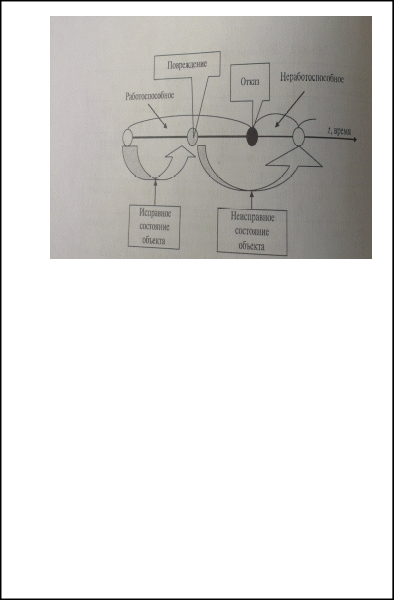
Figure 1. Changes in pipeline state in time
Figure 1 shows that damage to the pipeline does not always mean its failure. Let us consider the types of pipeline failures. The failures are divided into complete ones, which lead to loss of operability, and partial, in which the use of a unit with restriction is possible [4]. For the pipeline system, a complete failure can be the destruction of the oil pipeline, while partial failures may be a reduction in the cross section of the pipeline due to paraffin deposits. For partial failures, it is possible to use an oil pipeline with pressure or flow restrictions.
In addition, failures can be divided into the following groups: time of onset – gradual or sudden failure, in conjunction with other failure – independent or dependent, in addition to the causes – structural, production or performance, and consequences – critical or not critical (significant or not significant). Figure 2 illustrates the structural group of failures and their definitions.
| | | | | | Приложение А | Лист |
| | | | | | 98 | |
| Изм. | Лист | № докум. | Подпись | Дата |
Oil pipeline rupture
Slight reduction of the pipe cross-section
Источник: https://files.student-it.ru/previewfile/273173