Материал: part16

Page 76 |
DICOM PS3.16 2020a - Content Mapping Resource |
- Standard -

DICOM PS3.16 2020a - Content Mapping Resource |
Page 77 |
5 Conventions
Terms listed in Section 3 are capitalized throughout the document.
- Standard -

Page 78 |
DICOM PS3.16 2020a - Content Mapping Resource |
- Standard -

DICOM PS3.16 2020a - Content Mapping Resource |
Page 79 |
6 Form of Template Specifications
TemplatesarepatternsthatspecifytheConceptNames,Requirements,Conditions,ValueTypes,ValueMultiplicity,ValueSetrestric- tions, Relationship Types and other attributes of Content Items for a particular application.
An IOD may specify that particular Standard Templates shall be used or may be used to define or constrain the content of a Content Item construct. A Content Item construct includes a coded concept name and one of several types of coded values. Content Item constructs are used in:
•the main Data Set and recursively nested Content Sequences (0040,A730) of the SR Document Content Module
•the Acquisition Context Sequence(0040,0555) of the Acquisition Context Module,
•the Protocol Context Sequence (0040,0440) and Content Item Modifier Sequence (0040,0441) of the Scheduled Procedure Step Module, Image Acquisition Results Module, and others.
•the Specimen Preparation Step Content Item Sequence (0040,0612) of the Specimen Module.
Annexes A and C of this Part define Standard Templates.
Note
Standard Extended and Private Templates may be defined by implementers of the Standard. The rules for definition of Standard Extended and Private SR Templates are similar to the rules for definition of Standard Extended and Private SOP Classes. One row of a Template definition table corresponds to one row of a Module table.
Each Standard Template is specified by a Template table in this Part. Each Template table specifies exactly one Template, corres- ponding to a pattern of content within a Content Item construct.
Each Template table identifies whether the order of Content Items is significant or not significant. SOP Instances whose content is based on a Template where the order is significant shall encode the top level Content Items in the order they are specified in the Template, and the subsidiary Content Items under each parent item in the order they are specified, and so on for each Nesting Level. ThesignificanceoftheorderappliesonlytotheTemplateitself;subsidiaryincludedTemplatesmayhaveadifferentordersignificance.
Note
Even if a Template specifies that the order is not significant, there may be significance to the order in which Content Items are encoded in a SOP Instance. For example, CONTAINER Content Items with attribute Continuity of Content (0040,A050) value CONTINUOUS encode Content Items in narrative sequence, and procedure logs encode Content Items in time order.
The Content Items from subsidiary Templates may be intermingled if and only if the parent and subsidiary all specify that the order is not significant. This permits later refactoring into reusable Templates.
The range of concepts and the options that are permitted in a family of SR Documents vary inversely with the level of constraint that is applied by the corresponding SR Template. The more narrow the range of concepts and the more restricted the options permitted by a Template, the more predictable the content of the SR Documents will be.
Note
1.A very specific Template defines a family of SR Documents that are very similar to each other. They have a narrow range of content options (e.g., high level of constraint of Content Item values; use of CODE or NUM with Enumerated Context Groups) and their content is therefore highly predictable. A very general (e.g., permissive or broad) Template defines a family of SR Documents that may differ considerably from one another. They have a broader range of content options (e.g., low level of constraint of Content Item values; use of TEXT and relatively little restriction of Content Item values) and their content is less predictable.
2.The degree of interoperability that may be achieved with a family of SR Documents generated from a Template may be determinedintentionallyandpreciselyatadesiredlevelbyappropriateTemplatedesigntoachievethenecessarydegree of predictability of SR Document contents.
- Standard -
Page 80 DICOM PS3.16 2020a - Content Mapping Resource
6.1 Template Table Field Definition
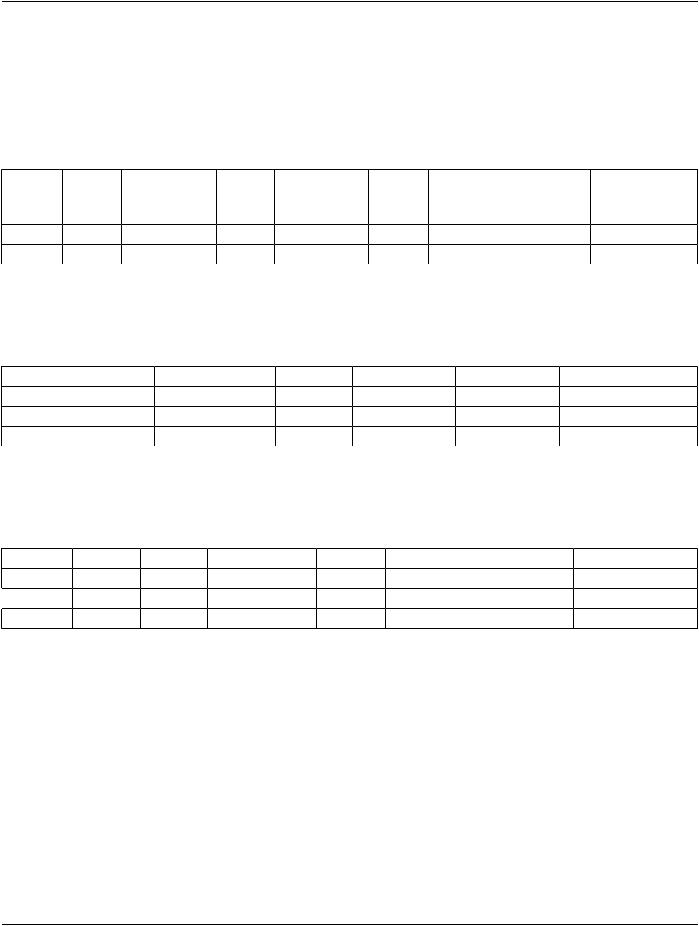
SR Templates are described using tables of the following form:
Type: |
(Non-) Extensible |
Order: |
(Non-) Significant |
Root: |
Yes or No |
|
Table TID <#>. <SR Context Template Name> |
NL Rel with Parent VT |
Concept Name |
VM Req Type Condition |
Value Set |
|||
|
|
|
|
|
|
Constraint |
1 |
|
|
|
|
|
|
2 |
|
|
|
|
|
|
3 |
|
|
|
|
|
|
Acquisition Context Templates are described using tables of the following form: |
|
|
|
|||
Type: |
(Non-) Extensible |
|
|
|
|
|
Order: |
(Non-) Significant |
|
|
|
|
|
|
Table TID <#>. <Acquisition Context Template Name> |
|
|
|||
VT |
Concept Name |
VM |
Req Type |
Condition |
Value Set Constraint |
|
1 |
|
|
|
|
|
|
2 |
|
|
|
|
|
|
3 |
|
|
|
|
|
|
Protocol Context Templates are described using tables of the following form: |
|
|
|
|||
Type: |
(Non-) Extensible |
|
|
|
|
|
Order: |
(Non-) Significant |
|
|
|
|
|
|
Table TID <#>. <Protocol Context Template Name> |
|
|
|||
NL |
VT Concept Name VM |
Req Type |
Condition |
Value Set Constraint |
||
1 |
|
|
|
|
|
|
 2 3
2 3
Thesemanticsofthefields(columns)ofTemplatetablesaredefinedbysubsectionsofthisSection.ArowofaTemplatetablespecifies eitheroneContentItemorinclusionofanotherTemplatethatmayspecifyanynumberofContentItems(seeSection6.2.3fordefinition of Included Templates). Each Template table is named by a title, identified by a TID number and further explained by a description such as explanation of Template contents, purpose and use cases.
The following conventions are defined for the form of references to coded concepts, Context Groups and Templates.
Code Meanings are enclosed in quotation marks (for example "cm"). Code Values and Coding Scheme Designators are not enclosed in quotation marks unless a comma occurs in the string.
References to coded concepts take the following form:
•EV or DT (CV, CSD, "CM")
e.g., an Enumerated Value with only CV, CSD, and CM defined is represented as follows: EV (CV, CSD, "CM"), for example EV (76752008, SCT, "Breast").
•MemberOf { BCID or DCID (CID) CNAME } MemberOf selects one term from the specified context group.
- Standard -