Материал: part17

Внимание! Если размещение файла нарушает Ваши авторские права, то обязательно сообщите нам

Page 806​

DICOM PS3.17 2020a - Explanatory Information​

Attribute​


Tag​

Value​

Protocol Design Rationale​


(0018,9910)​

See DP6678 Phase III Protocol documents:​


http://ctrialdocs.tyrell.co.ca/DP6678_protocol.aspx.​


Inparticular,seediscussioninSection3(CTAcquisition​


Parameters and Image Data Analysis) of the Protocol​


Document:​


The Spacing Between Slices may be increased as long​


as the overlap between slices is maintained between​


0% and 20% overlap.​


The Slice Thickness may be increased up to 1.5mm as​


long as the Spacing Between Slices is correspondingly​


increased to maintain between 0% and 20% overlap.​

Protocol Planning Information​


(0018,990F)​

Use of intravenous contrast media, presence of motion​


artifacts or violation of slice width, slice interval or voxel​


size constraints will disqualify the CT scan series.​

Instance Creation Date​


(0008,0012)​

20150607​

Instance Creation Time​


(0008,0013)​

115623​

Patient Specification Sequence​


(0018,9911)​


Instruction Sequence​


(0018,9914)​


>Instruction Index​


(0018,9915)​

1​

>Instruction Text​


(0018,9916)​

"Scan the chest in full inspiration"​

>Instruction Index​


(0018,9915)​

2​

>Instruction Text​


(0018,9916)​

"Set reconstruction diameter to span from outer rib to​


outer rib"​

Patient Positioning Instruction Sequence​

(0018,991B)​


>Instruction Index​


(0018,9915)​

1​

>Instruction Text​


(0018,9916)​

"Position arms above the head."​

Anatomic Region Sequence​


(0008,2218)​

(51185008, SCT, "Chest")​

Primary Anatomic Structure Sequence​


(0008,2228)​

(310787001, SCT, "Lung and Mediastinum")​

AAAA.3.2 Acme​

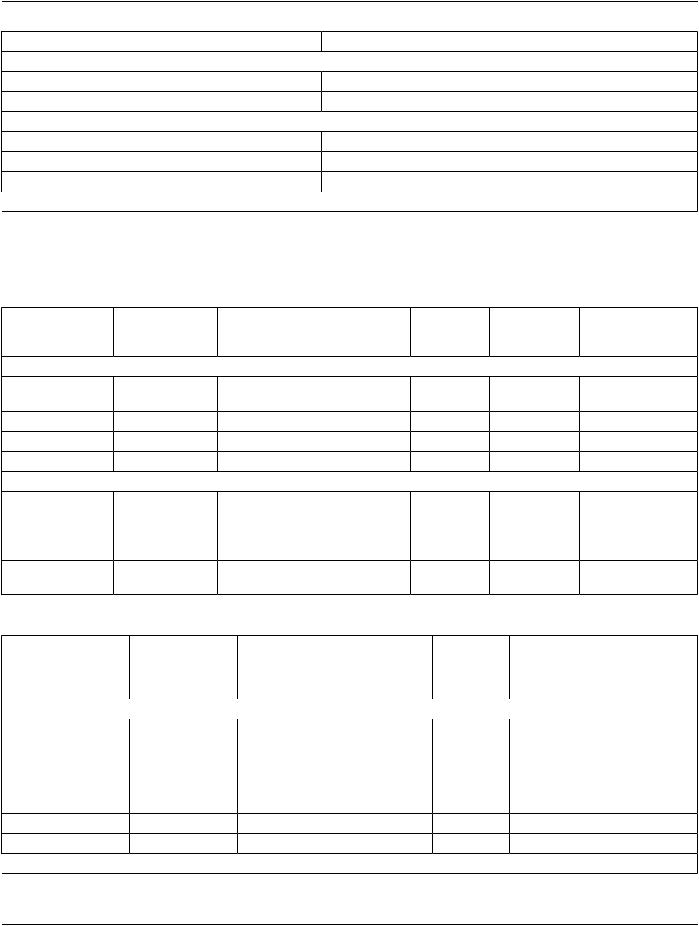
The first part of this example is shown above in Table AAAA.3-2.​

The anatomical extent is defined in the reconstruction to represent the dataset of interest to the clinical trial. The extent was not​ defined in the localizer or acquisition. Sites are welcome to reflect their local practice in the localizer and acquisition extent as long​ as they permit production of the reconstruction as specified here.​

Table AAAA.3-2. CT Tumor Volumetric Measurement - Details - Acme​

Attribute​

Tag​

Value​

Model Specification Sequence​

(0018,9912)​


>Manufacturer​

(0008,0070)​

ACME​

>Manufacturer's Related Model Group​

(0008,0222)​

Ultimate​

>Software Versions​

(0018,1020)​

V3.1​

Acquisition Protocol Element Specification Sequence​

(0018,991F)​


>Protocol Element Number​

(0018,9921)​

1​

>Parameters Specification Sequence​

(0018,9913)​


- Standard -​

DICOM PS3.17 2020a - Explanatory Information​

Page 807​

Attribute​

Tag​

Value​

>>See Table AAAA.3-2a First Acquisition Protocol Element Specification​


>Protocol Element Number​

(0018,9921)​

2​

>Parameters Specification Sequence​

(0018,9913)​


>>See Table AAAA.3-2b “Second Acquisition Protocol Element Specification”​


Reconstruction Protocol Element Specification Sequence​

(0018,9933)​


>Protocol Element Number​

(0018,9921)​

1​

>Parameters Specification Sequence​

(0018,9913)​


>>See Table AAAA.3-2c “First Reconstruction Protocol Element Specification”​

The following tables reflect the semantic contents of constraint sequences but not the actual structure of the IOD. The centered rows​ in italics clarify the context of the constrained Attributes that follow by indicating which sequence in the performed module contains​ the constrained Attribute (as specified in the Selector Sequence Pointer).​

Table AAAA.3-2a. First Acquisition Protocol Element Specification​

Attribute​

SelectorAttribute​Selector​

Selector Sequence​

Selector​

Constraint​

Constraint Value​


Value​

Pointer​

Sequence​

Type​


Number​

PointerItems​


Acquisition Protocol Element Sequence (0018,9920)​


Protocol Element​


(0018,9922)​

1​

(0018,9920)​

1​

EQUAL​

Localizer: Lateral​

Name​


Acquisition Type​


(0018,9302)​

1​

(0018,9920)​

1​

EQUAL​

CONSTANT_ANGLE​

Tube Angle​


(0018,9303)​

1​

(0018,9920)​

1​

EQUAL​

90​

Acquisition Motion​


(0018,9930)​

1​

(0018,9920)​

1​

EQUAL​

FORWARD​

>CT X-Ray Details Sequence (0018,9325) - First Beam​



Beam Number​


(300A,00C0)​

1​

(0018,9920),​

1\1​

EQUAL​

1​


(0018,9325)​


KVP​


(0018,0060)​

1​

(0018,9920),​

1\1​

EQUAL​

120​


(0018,9325)​


X-ray Tube Current​

(0018,9330)​

1​

(0018,9920),​

1\1​

EQUAL​

50​

in mA​


(0018,9325)​


Table AAAA.3-2b. Second Acquisition Protocol Element Specification​

Attribute​

Selector Attribute​Selector​

Selector Sequence​

Selector​ ConstraintType​ Constraint​


Value​

Pointer​

Sequence​


Value​


Number​


Pointer​


Items​


Acquisition Protocol Element Sequence (0018,9920)​


ProtocolElementName​

(0018,9922)​

1​

(0018,9920)​

2​

EQUAL​

Helical​

Acquisition Type​


(0018,9302)​

1​

(0018,9920)​

2​

EQUAL​

SPIRAL​

Revolution Time​


(0018,9305)​

1​

(0018,9920)​

2​

EQUAL​

0.5​

Single Collimation​


(0018,9306)​

1​

(0018,9920)​

2​

EQUAL​

0.75​

Width​


Total Collimation Width​

(0018,9307)​

1​

(0018,9920)​

2​

EQUAL​

48​

Table Speed​


(0018,9309)​

1​

(0018,9920)​

2​

EQUAL​

27​

>CT X-Ray Details Sequence (0018,9325) - First Beam​

- Standard -​

Page 808​


DICOM PS3.17 2020a - Explanatory Information​


Attribute​

Selector Attribute​Selector​

Selector Sequence​ Selector​ ConstraintType​ Constraint​


Value​

Pointer​

Sequence​


Value​


Number​


Pointer​


Items​


Beam Number​

(300A,00C0)​

1​

(0018,9920),​

2\1​

EQUAL​

1​


(0018,9325)​


KVP​

(0018,0060)​

1​

(0018,9920),​

2\1​

EQUAL​

120​


(0018,9325)​


Exposure in mAs​

(0018,9332)​

1​

(0018,9920),​

2\1​

RANGE_INCL​100, 260​


(0018,9325)​


Respiratory Motion​

(0018,9170)​

1​

(0018,9920),​

2\1​

EQUAL​

BREATH_HOLD​

Compensation​


(0018,9325)​


Technique​


Table AAAA.3-2c. First Reconstruction Protocol Element Specification​


Attribute​


Selector​

Selector​Selector Sequence​ Selector​

Constraint​

Constraint Value​


Attribute​

Value​

Pointer​

Sequence​

Type​


Number​


Pointer​


Items​


Reconstruction Protocol Element Sequence (yym8, m9x1)​


Protocol Element Name​

(0018,9922)​

1​

(0018,9934)​

1​

EQUAL​

"Transverse"​

Source Acquisition​


(0018,9938)​

1​

(0018,9934)​

1​

EQUAL​

2​


ProtocolElementNumber​


Source Acquisition Beam​

(0018,9939)​

1​

(0018,9934)​

1​

EQUAL​

1​


Number​


Reconstruction Algorithm​

(0018,9315)​

1​

(0018,9934)​

1​

EQUAL​ FILTER_BACK_PROJ​

Convolution Kernel​


(0018,1210)​

1​

(0018,9934)​

1​

EQUAL​

"B1"​

ConvolutionKernelGroup​

(0018,9316)​

1​

(0018,9934)​

1​

EQUAL​

"LUNG"​

Reconstruction Pixel​


(0018,9322)​

1​

(0018,9934)​

1​ RANGE_INCL​0.55, 0.75​

Spacing​


Slice Thickness​


(0018,0050)​

1​

(0018,9934)​

1​

EQUAL​

1.0​


Spacing Between Slices​

(0018,0088)​

1​

(0018,9934)​

1​

EQUAL​

1.0​


>Reconstruction Start Location Sequence (0018,993B)​


Reference Location Label​

(0018,9900)​

1​

(0018,9934),​

1\1​

EQUAL​

"Top of Shoulders"​


(0018,993B)​


Reference Basis Code​

(0018,9902)​

1​

(0018,9934),​

1\1​

EQUAL​

(16982005, SCT,​

Sequence​


(0018,993B)​


"Shoulder region​


structure")​

Reference Geometry​


(0018,9903)​

1​

(0018,9934),​

1\1​

EQUAL​

(128120,DCM,"Plane​

Code Sequence​


(0018,993B)​


through Superior​


Extent")​

>Reconstruction End Location Sequence (0018,993C)​


Reference Location Label​

(0018,9900)​

1​

(0018,9934),​

1\1​

EQUAL​

"Mid-liver"​


(0018,993C)​


Reference Basis Code​

(0018,9902)​

1​

(0018,9934),​

1\1​

EQUAL​

(10200004, SCT,​

Sequence​


(0018,993C)​


"Liver")​

Reference Geometry​


(0018,9903)​

1​

(0018,9934),​

1\1​

EQUAL​

(128130,DCM,"Plane​

Code Sequence​


(0018,993C)​


through Center")​

- Standard -​

DICOM PS3.17 2020a - Explanatory Information​

Page 809​

BBBBColorinformationforParametricObject​ (Informative)​

BBBB.1 Introduction​

Functional imaging can create Parametric Maps showing a functional relation between the anatomical region and the specific func-​ tional activity. For display purposes it is useful to show this functional activity with the use of a color LUT on the related anatomical​ image. To be able to do this it is necessary to include a Palette Color Lookup Table for the Parametric Map and define how to map​ the (floating point) values to a specific RGB value.​

For a correct mapping it is important to know what range of continuous values needs to be mapped to the discrete range of RGB​ values of the LUT. For this the Minimum Stored Value Mapped (0028,1231) and the Maximum Stored Value Mapped (0028,1232)​ are defined. All values between the minimum and maximum will be distributed in a linear manner to the Palette Color Lookup Table​ that is supplied.​

The usage of floating point values for the stored values removes the need for a Real World Value transformation other than the​ identity transformation.​

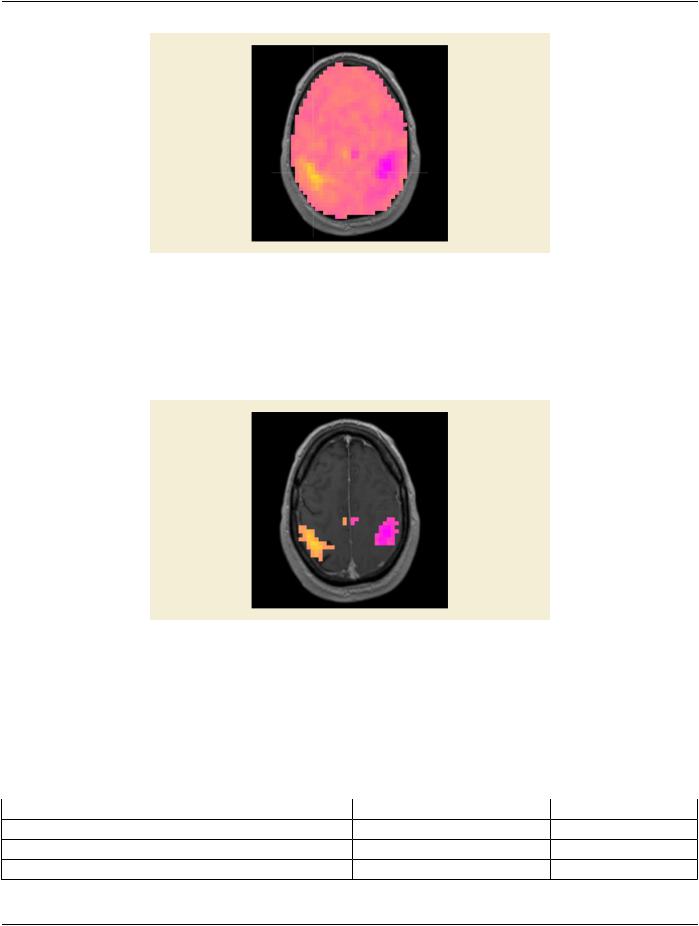
This example illustrates BOLD fMRI activation data for a bipolar motor paradigm stored as a floating point parametric map encoding​ ‘t’ (statistical) Real World Values. Each voxel’s value represents how well the BOLD time series information at that location of the​ brain fits the general linear model (GLM) of the fMRI block paradigm pattern (right or left versus control, no movement). Right and​ left have been encoded as positive and negative t values, respectively.​

TheDoubleFloatMinimumStoredValueMappedandMaximumStoredValueMappedinthiscaseare-16.739and21.434,respectively.​ This range will be mapped to the low and high ends of the LUT applied to this activation map. In this case the Minimum Stored Value​ Mapped and Maximum Stored Value Mapped are equal to the RWV Minimum and Maximum, respectively, in the activation map data.​ Note several compelling reasons for the range to be different from the RWV Minimum and RWV Maximum:​

1.​Centering the RWV zero value on some desired index of the LUT; e.g., choosing -21.434 to +21.434 to properly center RWV​ zero on the middle of the LUT (presumably to match the LUT design).​

2.​ChoosinganarrowerrangeofMinimumStoredValueMappedand/orMaximumStoredValueMapped(negativeand/orpositive),​ i.e., windowing, to maximize the dynamic range of the LUT for critical RWV range(s).​

3.​Specifying a predetermined Minimum Stored Value Mapped and Maximum Stored Value Mapped regardless of the actual RWV​ data, in order to have key RWV transitions match LUT color effects, e.g., generally accepted hyperperfusion and hypoperfusion​ transition points in cerebral blood flow (CBF) maps.​

For the purpose of this example, the full RWV range of the activation map is appropriate to display with the full range of the Spring​ Color Palette.​

- Standard -​

Page 810​

DICOM PS3.17 2020a - Explanatory Information​

Figure BBBB.1-1. Color Parametric Map on top of an anatomical image​

Astheactivationmapwithoutthresholdsuggests,areasoutsidethebrainhavebeenmaskedoff.ThesewouldbecodedwithPadding​ values in the parametric map.​

Thresholding (not part of the parametric map) will be applied for positive and/or negative ranges. Note that this operation does not​ change the color mapping (i.e., RWV x corresponds to LUT entry j) but only the opacity of voxels outside the range (forcing A=0 or​ transparent).​

Figure BBBB.1-2. Color Parametric Map with threshold applied on top of an anatomical image​

Other visualization methods such as smoothing and overall opacity may be applied to the colored, thresholded activation map.​

BBBB.2 Encoding Example​

This section illustrates the usage of the Color LUT in the context of a Parametric Map IOD with the Palette Color Lookup Table for​ the example described.​

Table BBBB.2-1. Example data for the Floating Point Image Pixel Module​

Attribute​

Tag​

Value​

Comment​

Samples per Pixel​

(0028,0002)​

1​


Photometric Interpretation​

(0028,0004)​

COLOR_RANGE​


Rows​

(0028,0010)​

41​


- Standard -​

Источник: https://studfile.net/preview/14585770/