Материал: part17
Page 156 |
DICOM PS3.17 2020a - Explanatory Information |
|
Mid-Stress Stage - View 1 |
Mid-Stress Stage |
|
Protocol Image |
Extra-Protocol Image |
|
View Code Sequence: |
|
---- |
>Code Value: "399139001" |
|
---- |
>Coding Scheme Designator: "SCT" |
|
---- |
>Code Meaning: "Parasternal long axis" |
---- |
|
K.5.4 Multiple Images of A Stage-view
Ultrasound systems often acquire multiple images at a particular stage and view. If one image is difficult to interpret or does not fully portray the ventricle wall, the physician may choose to view an alternate. In some cases, the user may identify the preferred image. The Key Object Selection Document can identify the preferred image for any or all of the Stage-Views. This specific usage of the Key Object Selection Document has a Document Title of (113013, DCM, "Best In Set") and Document Title Modifier of (113017, DCM, "Stage-View").
K.5.5 Workflow Management of Staged Protocol Images
K.5.5.1 Uninterrupted Exams - Single MPPS
Modality Performed Procedure Step (MPPS) is the basic organizational unit of Staged Protocol Exams. It is recommended that a single MPPS instance encompass the entire acquisition of an ultrasound Staged Protocol Exam if possible.
There are no semantics assigned to the use of Series within a Staged Protocol Exam other than the DICOM requirements as to the relationship between Series and Modality Performed Procedure Steps. In particular, all of the following scenarios are possible:
•one Series for all images in the MPPS.
•separate Series for Protocol View images and extra-Protocol images in the MPPS.
•separate Series for images of each Stage within the MPPS.
•more than one Series for the images acquired in a single Protocol Stage.
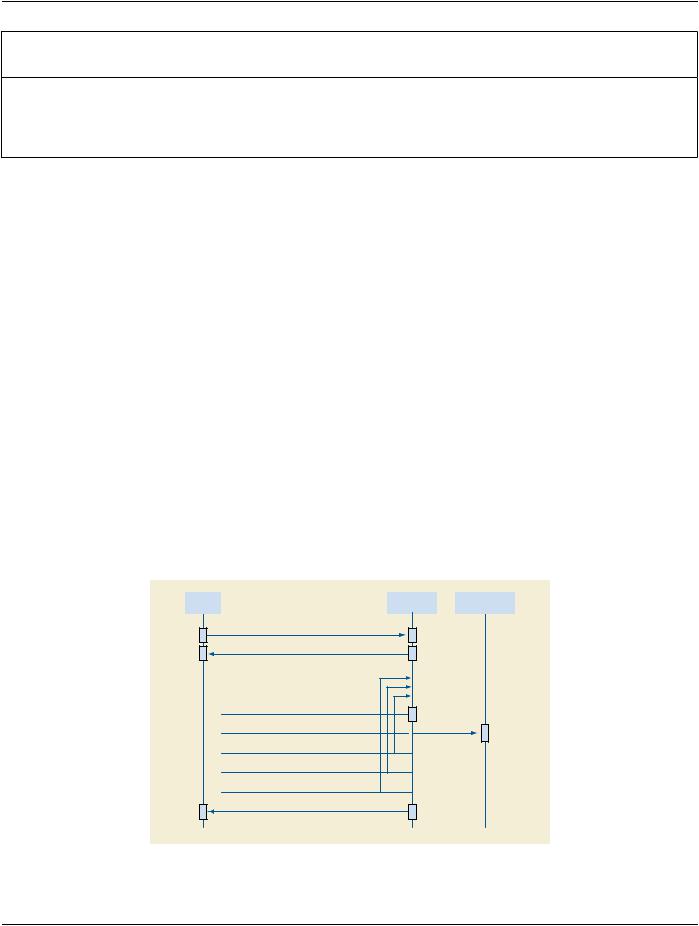
There is no recommendation on the organization of images into Series because clinical events make such recommendations imprac- tical. Figure K.5.5-1 shows a possible sequence of interactions for a protocol performed as a single MPPS.
Worklist |
|
Acquisition |
|
Storage |
Manager |
|
Modality |
|
Server |
|
|
|
|
|
1. Modality Worklist Provides Scheduled Staged Protocol
2.MPPS Created for Scheduled Staged Protocol
3. Acquire Image
4.Store Image
5.Acquire Stage-View
6.Acquire Next View
7Acquire Next Stage
8. MPPS Set “COMPLETED” for Scheduled Staged Protocol
Figure K.5.5-1. Example of Uninterrupted Staged-Protocol Exam WORKFLOW
- Standard -
DICOM PS3.17 2020a - Explanatory Information |
Page 157 |
K.5.5.2 Interrupted Exams - Multiple MPPS
A special case arises when the acquisition during a Protocol Stage is halted for some reason. For example, such a situation can occur if signs of patient distress are observed, such as angina in a cardiac stress exam. These criteria are part of the normal exam Protocol, and as long as the conditions defined for the Protocol are met the MPPS status is set to COMPLETED. Only if the exam terminates before meeting the minimum acquisition requirements of the selected Protocol would MPPS status be set to DISCONTINUED. It is recommended that the reason for discontinuation should be conveyed in the Modality Procedure Step Discontinuation Reason Code Sequence(0040,0281).StagedProtocolsgenerallyincludecriteriaforendingtheexam,suchaswhenatargettimedurationisreached or if signs of patient distress are observed.
If a Protocol Stage is to be acquired at a later time with the intention of using an earlier completed Protocol Stage of a halted Staged Protocol then a new Scheduled Procedure Step may or may not be created for this additional acquisition. Workflow management re- commendations vary depending on whether the care institution decides to create a new Scheduled Procedure Step or not.
Follow-upStagesmustuseViewNumbers,Names,andCodeSequencesidenticaltothoseinthepriorStagestoenableautomatically correlating images of the original and follow-up Stages.
K.5.5.2.1 Unscheduled Follow-up Stages
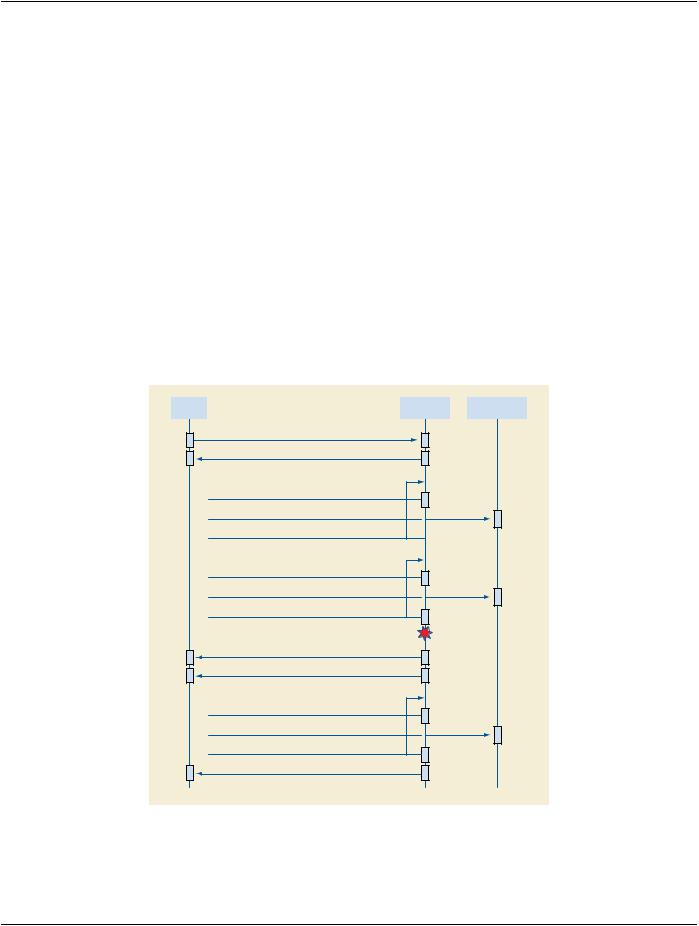
Follow-up Stages require a separate MPPS. Since follow-up stages are part of the same Requested Procedure and Scheduled Pro- cedure Step, all acquired image SOP Instances and generated MPPS instances specify the same Study Instance UID. If the Study InstanceUIDisdifferent,systemswillhavedifficultyassociatingrelatedimages.ThiscreatesasignificantproblemifModalityWorklist is not supported. Therefore systems should assign the same Study Instance UID for follow-up Stages even if Modality Worklist is not supported. Figure K.5.5-2 shows a possible interaction sequence for this scenario.
Worklist |
|
Acquisition |
|
Storage |
Manager |
|
Modality |
|
Server |
|
|
|
|
|
1. Modality Worklist Provides Scheduled Staged Protocol
2.MPPS Created for Scheduled Staged Protocol
3. Acquire Images
4.Store Images
5.Acquire Baseline Stage
6. Acquire Images
7. Store Images
8. Begin Stress Stage(s)
Halt Exam Early Due to Patient Distress
9. MPPS Set “COMPLETED” for Scheduled Staged Protocol
10. Second MPPS Created for ‘Follow-up’ Scheduled Protocol
11. Acquire Images
12. Store Images
13. Acquire Stress and Recovery Stages
14. MPPS Set “COMPLETED” for ‘Follow-up’ Scheduled Staged Protocol
Figure K.5.5-2. Example Staged-Protocol Exam with Unscheduled Follow-up Stages
- Standard -
Page 158 |
DICOM PS3.17 2020a - Explanatory Information |
K.5.5.2.2 Scheduled Follow-up Stages
In some cases a new Scheduled Procedure Step is created to acquire follow-up Stages. For example, a drug induced stress-echo exam may be scheduled because an earlier exercise induced stress-echo exam had to be halted due to patient discomfort. In such cases it would be redundant to reacquire earlier Stages such as the rest Stage of a cardiac stress-echo ultrasound exam. One MPPS contains the Image instances of the original Stage and a separate MPSS contains the follow-up instances.
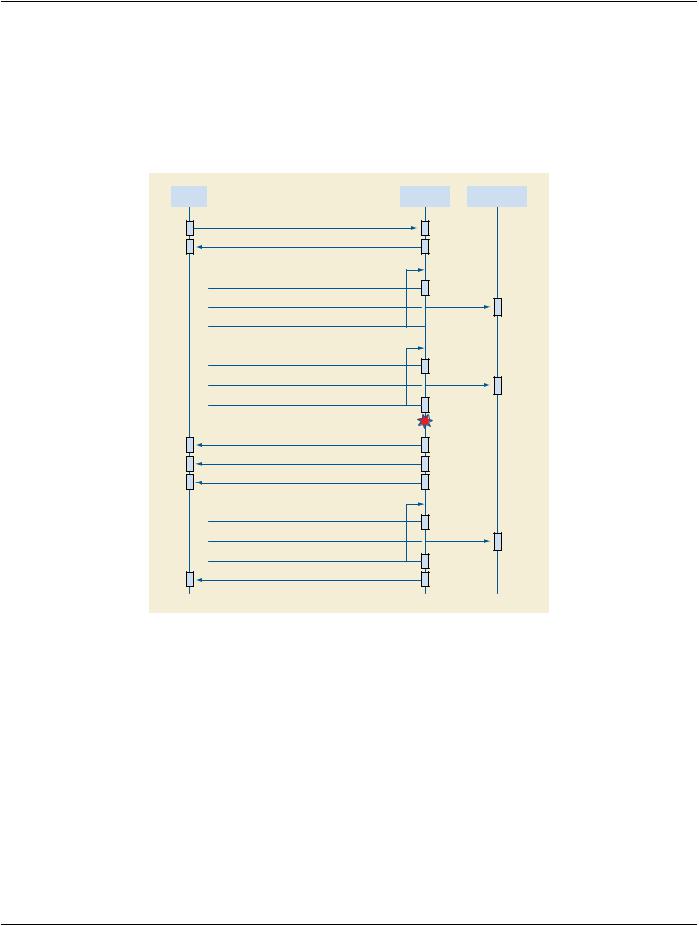
If Scheduled and Performed Procedure Steps for Staged Protocol Exam data use the same Study Instance UID, workstations can associate images from the original and follow-up Stages. Figure K.5.5-3 shows a possible interaction sequence for this scenario.
Worklist |
|
Acquisition |
|
Storage |
Manager |
|
Modality |
|
Server |
|
|
|
|
|
1. Modality Worklist Provides Scheduled Staged Protocol
2.MPPS Created for Scheduled Staged Protocol
3. Acquire Images
4.Store Images
5.Acquire Baseline Stage
6. Acquire Images
7. Store Images
8. Begin Stress Stage(s)
Halt Exam Early Due to Patient Distress
9. MPPS Set “COMPLETED” for Scheduled Staged Protocol
10. Modality Worklist Provides New Follow-up Scheduled Staged Protocol
(same Study UID as original)
11.MPPS Created for ‘Follow-up’ Scheduled Protocol
12. Acquire Images
13. Store Images
14. Acquire Stress and Recovery Stages
15. MPPS Set “COMPLETED” for ‘Follow-up’ Scheduled Staged Protocol
Figure K.5.5-3. Example Staged-Protocol Exam with Scheduled Follow-up Stages
- Standard -
DICOM PS3.17 2020a - Explanatory Information |
Page 159 |
L Hemodynamics Report Structure (Informative)
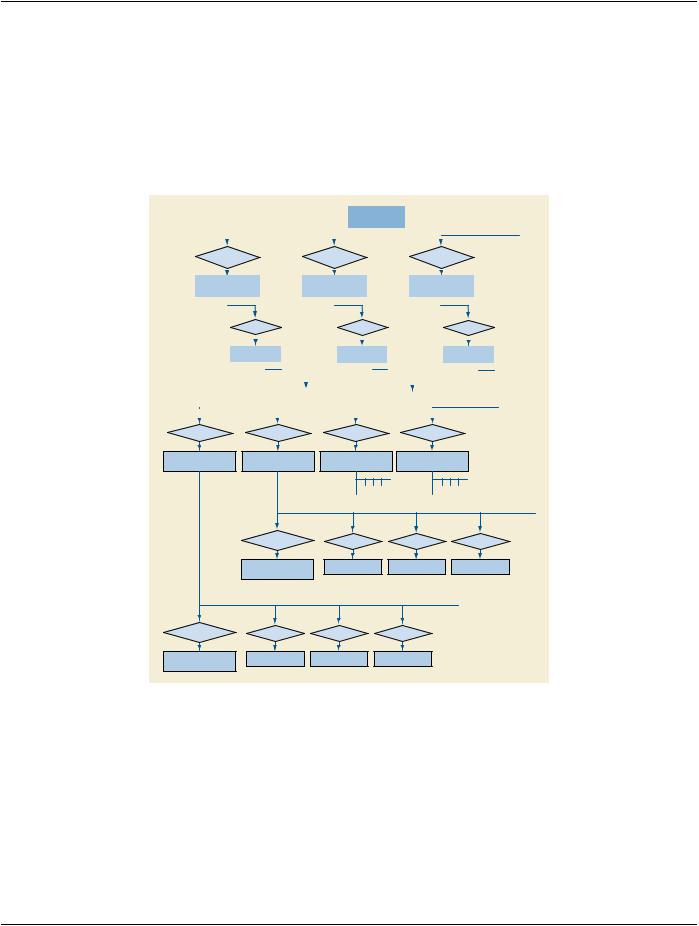
TheHemodynamicsReportisbasedonTID3500“HemodynamicsReport”.Thereportcontainsoneormoremeasurementcontainers, each corresponding to a phase of the cath procedure. Within each container may be one or more sub-containers, each associated withasinglemeasurementset.Ameasurementsetconsistsofmeasurementsfromasingleanatomiclocation.Theresultinghierarch- ical structure is depicted in Figure L-1.
|
|
|
|
|
|
|
|
|
|
|
|
|
|
Document Root |
|
|
|
|
|
|
|
|
|
|||||
|
|
|
|
|
|
|
|
|
|
|
|
|
|
(CONTAINER) |
|
|
|
|
|
|
|
|
|
|||||
|
|
|
|
|
|
|
|
|
|
|
|
|
|
|
|
|
|
|
|
|
|
|
|
|
|
|
|
|
|
|
|
|
|
|
|
|
|
|
|
|
|
|
|
|
|
|
|
|
|
|
|
|
|
|
|
|
|
|
|
|
|
|
|
|
|
|
|
|
|
|
|
|
|
|
|
|
|
|
|
|
|
|
|
|
|
|
|
CONTAINS |
|
CONTAINS |
|
|
CONTAINS |
||||||||||||||||||||||
|
|
|
|
|
|
|
|
|
|
|
|
|
|
|
|
|
|
|
|
|
|
|
|
|
|
|
|
|
|
|
|
|
|
|
|
|
|
|
|
|
|
|
|
|
|
|
|
|
|
|
|
|
|
|
|
|
|
|
|
|
|
|
|
|
|
|
|
|
|
|
|
|
|
|
|
|
|
|
|
|
|
|
|
|||
|
Baseline Phase |
|
|
|
|
|
Post-Contrast Phase |
|
|
|
|
Post-Intervention Phase |
|
|
||||||||||||||
|
(CONTAINER) |
|
|
|
|
|
(CONTAINER) |
|
|
|
|
|
(CONTAINER) |
|
|
|||||||||||||
|
|
|
|
|
|
|
|
|
|
|
|
|
|
|
|
|
|
|
|
|
|
|
|
|
|
|
|
|
|
|
|
CONTAINS |
|
|
|
CONTAINS |
|
|
|
|
CONTAINS |
||||||||||||||||
|
|
|
|
|
|
|
|
|
|
|||||||||||||||||||
|
|
|
|
|
|
|
|
|
|
|
|
|
|
|
|
|
|
|
|
|
|
|||||||
|
|
|
|
|
|
|
|
|
|
|
|
|
|
|
|
|
|
|
|
|
|
|
|
|
|
|
|
|
|
|
|
|
|
|
|
|
|
|
|
|
|
|
|
|
|
|
|
|
|
|
|
|
|
|
|
|
|
|
|
|
Clinical Context |
|
|
|
Clinical Context |
|
|
|
|
|
Clinical Context |
|||||||||||||||
|
|
|
(CONTAINER) |
|
|
|
(CONTAINER) |
|
|
|
|
|
(CONTAINER) |
|||||||||||||||
|
|
|
|
|
|
|
|
|
|
|
|
|
|
|
|
|
|
|
|
|
|
|
|
|
|
|
|
|
|
|
|
|
|
|
|
|
|
|
|
|
|
|
|
|
|
|
|
|
|
|
|
|
|
|
|
|
|
|
|
|
|
|
|
|
|
|
|
|
|
|
|
|
|
|
|
|
|
|
|
|
|
|
|
|
|
|
|
|
|
|
|
|
|
|
|
|
|
|
|
|
|
|
|
|
|
|
|
|
|
|
|
|
|
|
|
|
|
|
|
|
|
|
|
|
|
|
|
|
|
|
|
|
|
|
|
|
|
|
|
|
|
|
|
|
CONTAINS |
CONTAINS |
CONTAINS |
CONTAINS |
Arterial Measurements |
Arterial Measurements |
Ventricular Measurements |
Gradient Measurements |
(CONTAINER) |
(CONTAINER) |
(CONTAINER) |
(CONTAINER) |
HAS OBS CONTEXT
Anatomic Location
LOC = Aorta
CONTAINS |
CONTAINS |
CONTAINS |
Systolic Pres. |
Diastolic Pres. |
Mean Pres. |
HAS OBS CONTEXT
Anatomic Location
LOC = L Fem Art
CONTAINS |
CONTAINS |
CONTAINS |
Systolic Pres. |
Diastolic Pres. |
Mean Pres. |
Figure L-1. Hemodynamics Report Structure
ThecontainerforeachphasehasanoptionalsubsidiarycontainerforClinicalContextwithaparent-childrelationshipofhas-acquisition- context.ThisClinicalContextcontainerallowstherecordingofpertinentpatientstateinformationthatmaybeessentialtounderstanding the measurements made during that procedure phase. It should be noted that any such patient state information is necessarily only a summary; a more complete clinical picture may be obtained by review of the cath procedure log.
The lowest level containers for the measurement sets are specialized by the class of anatomic location - arterial, venous, atrial, ventricular - for the particular measurements appropriate to that type of location. These containers explicitly identify the anatomic location with a has-acquisition-context relationship. Since such measurement sets are typically measured on the same source (e.g., pressurewaveform),thecontainermayalsohaveahas-acquisition-contextrelationshipwithasourceDICOMwaveformSOPInstance.
- Standard -

Page 160 |
DICOM PS3.17 2020a - Explanatory Information |
The "atomic" level of measurements within the measurement set containers includes three types of data. First is the specific meas- urement data acquired from waveforms related to the site. Second is general measurement data that may include any hemodynamic, patient vital sign, or blood chemistry data. Third, derived data are produced from a combination of other data using a mathematical formula or table, and may provide reference to the equation.
- Standard -