Материал: 2016_Kaplan_USMLE_Step_1_Lecture_Notes_Pharmacology
Chapter 2 λ Cholinergic Pharmacology
–Bronchoconstriction
–Lacrimation
–Salivation
–Sweating
–CNS stimulation
λNicotinic effects:
–Skeletal muscle excitation followed by paralysis
–CNS stimulation
Management
λMuscarinic effects: atropine
λRegeneration of AChE: pralidoxime (2-PAM)
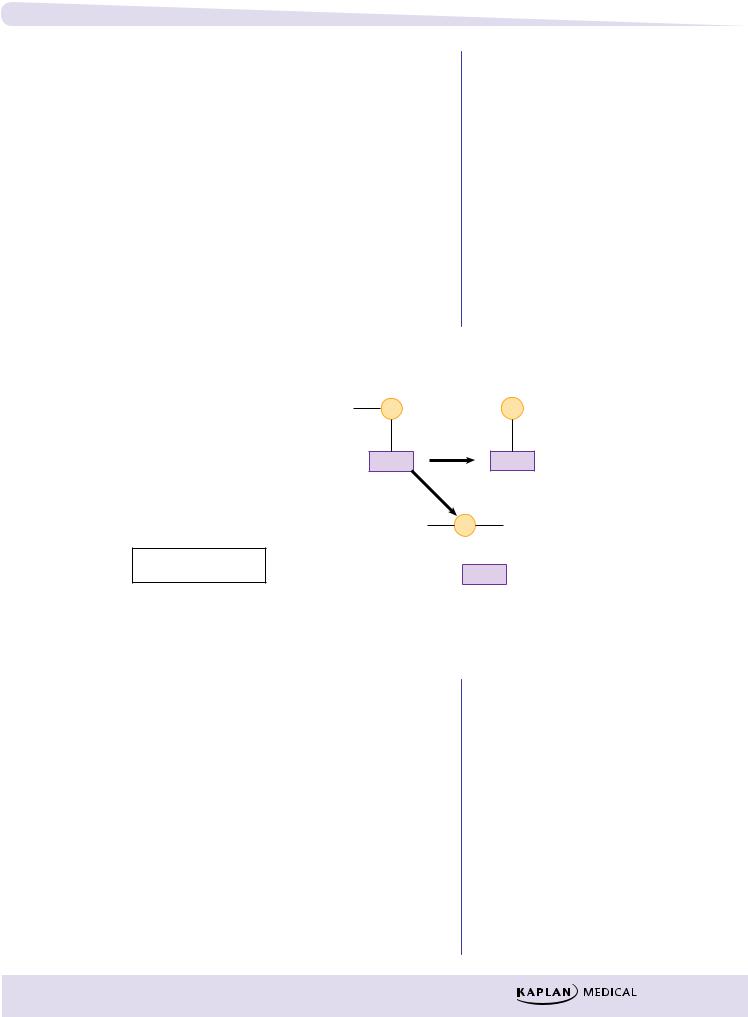
λTime-dependent aging requires use of 2-PAM as soon as possible (see Figure II-2-3).
Irreversibly Acting Cholinomimetics:
These compounds phosphorylate the esteratic site on AChE, at serine hydroxyl groups
1.phosphorylation; reversible by pralidoxime (2-PAM)
2.removal of a part of the organophosphate molecule (aging); complex no longer reversible by 2-PAM
R = leaving group
P = organophosphate
|
BLOCKADE |
AGING |
R |
P |
P |
H2O
AChE AChE
2-PAM
R P 2-PAM
REGENERATION AChE
Figure II-2-3. Effects of Organophosphate on AChE
Chronic toxicity
λPeripheral neuropathy causing muscle weakness and sensory loss
λDemyelination not due to AChE inhibition
MUSCARINIC RECEPTOR ANTAGONISTS
Atropine
λPrototype of the class
λAs a tertiary amine, it enters CNS
λOther M blockers differ mainly in their pharmacokinetic properties
49

Section II λ Autonomic Pharmacology
Bridge to Physiology
ANS Dominance
For effector tissues with dual innervation, PANS is dominant. These include the SA and AV nodes of the heart, the pupil, GI and GU muscles, and sphincters. SANS is dominant only in terms of vascular tone and thermoregulatory sweat glands.
Pharmacologic effects
λAtropine effects in order of increasing dose:
–Decreased secretions (salivary, bronchiolar, sweat)
–Mydriasis and cycloplegia
–Hyperthermia (with resulting vasodilation)
–Tachycardia
–Sedation
–Urinary retention and constipation
–Behavioral: excitation and hallucinations
λOther classes of drugs with antimuscarinic pharmacology:
–Antihistamines
–Tricyclic antidepressants
–Antipsychotics
–Quinidine
–Amantadine
–Meperidine
λTreatment of acute intoxication:
–Symptomatic ± physostigmine
Table II-2-6. Clinical Uses and/or Characteristics of M Blockers
Drug |
|
Clinical Uses and/or Characteristics |
Atropine |
|
Antispasmodic, antisecretory, management of |
|
|
AChE inhibitor OD, antidiarrheal, ophthalmology |
|
|
(but long action) |
Tropicamide |
|
Ophthalmology (topical) |
Ipratropium, |
|
Asthma and COPD (inhalational)—no CNS entry, |
tiotropium |
|
no change in mucus viscosity |
Scopolamine |
|
Used in motion sickness, causes sedation and |
|
|
short-term memory block |
Benztropine, |
|
Lipid-soluble (CNS entry) used in parkinsonism |
trihexyphenidyl |
|
and in acute extrapyramidal symptoms induced |
|
|
by antipsychotics |
Oxybutynin |
|
Used in overactive bladder (urge incontinence) |
NICOTINIC RECEPTOR ANTAGONISTS
Ganglion Blocking Agents
λDrugs: hexamethonium and mecamylamine
λReduce the predominant autonomic tone (see Table II-2-7)
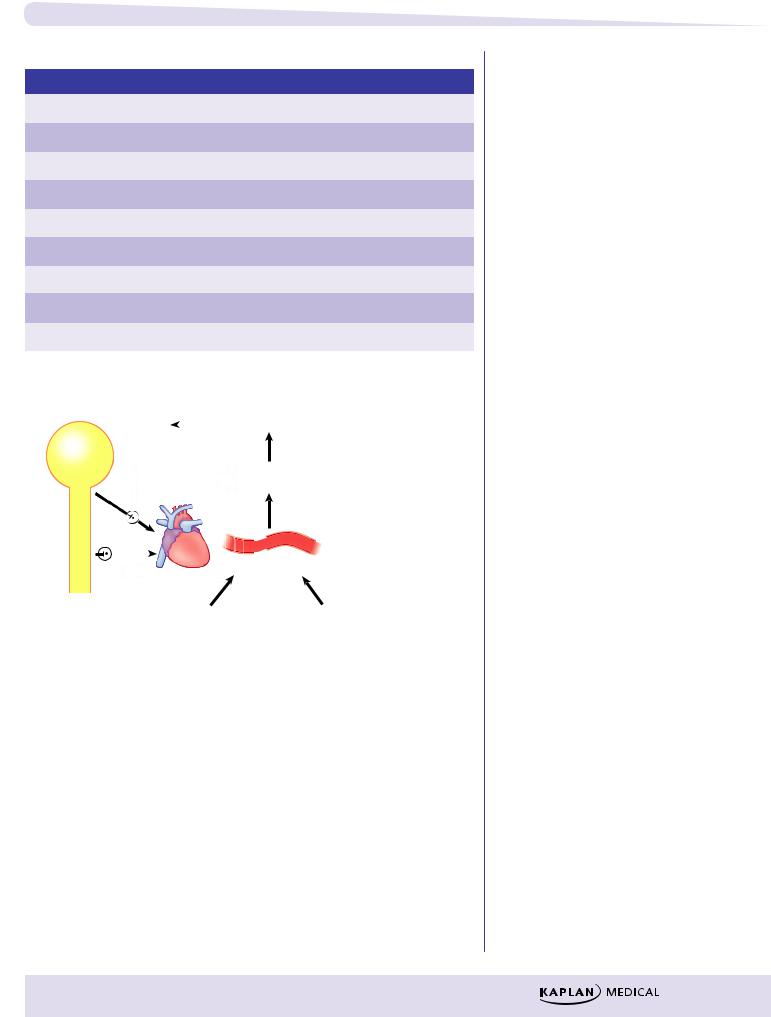
λPrevent baroreceptor reflex changes in heart rate (see Figure II-2-4)
50
Chapter 2 λ Cholinergic Pharmacology
Table II-2-7. Characteristics of Ganglion Blocking Agents
Effector |
|
System |
|
Effect of Ganglion Blockade |
Arterioles |
|
SANS |
Vasodilation, hypotension |
|
Veins |
|
SANS |
Dilation, ↓ venous return, ↓ CO |
|
Heart |
|
PANS |
Tachycardia |
|
Iris |
|
PANS |
Mydriasis |
|
Ciliary muscle |
|
PANS |
Cycloplegia |
|
GI tract |
|
PANS |
↓ tone and motility—constipation |
|
Bladder |
|
PANS |
Urinary retention |
|
Salivary glands |
|
PANS |
Xerostomia |
|
Sweat glands |
|
SANS |
Anhydrosis |
|
Vasomotor |
|
Baroreceptors |
center |
|
|
|
|
CNS |
|
Blood pressure |
|
|
|
|
|
|
PANS |
change |
|
|
|
Ganglion blocking drugs |
|
|
|
|
|
|
SANS |
Heart |
prevent reflex changes |
|
in heart rate elicited |
||
|
|
Blood vessel |
by vasoconstriction (α1) |
|
|
|
and vasodilation (β2). |
Ganglionic blocking
drugs do not prevent Vasoconstrictor Vasodilator
changes in HR elicited directly by the drug (β1 or M2 agonists).
Figure II-2-4. Algorithm: Reflex Control of Heart Rate
Neuromuscular Blocking Drugs
See CNS Pharmacology, chapter on Drugs Used in Anesthesia.
51

Section II λ Autonomic Pharmacology
Chapter Summary
λAcetylcholine (ACh) is synthesized from acetate and choline in the synaptic nerve via choline acetyltransferase and is stored in the synaptic vesicles and released by Ca2+ influx upon depolarization. The ACh then binds to a receptor on the other side of the synaptic junction, thereby transmitting the signal. Acetylcholinesterase (AChE) hydrolyzes the ACh and ends the signal. Cholinergic drugs are those that affect this process either by influencing ACh levels or by acting directly on the nicotinic or muscarinic receptors.
λCholine uptake is inhibited by hemicholinium. Botulinum toxin binds to synaptobrevin and prevents ACh release, and AChE inhibitors slow its rate of breakdown. Several reversible AChE inhibitors are useful pharmacologic agents; the irreversible AChE inhibitors are generally poisons.
λA cholinomimetic is a drug that imitates ACh. Nicotine acts as a cholinomimetic on nicotinic receptors, whereas bethanechol and pilocarpine are cholinomimetics that act on muscarinic receptors.
λOther drugs are ACh receptor blockers. Specific blocking agents acting on
ganglionic nicotinic (NN) receptors are hexamethonium and mecamylamine.
Those acting on the end-plate nicotinic receptors (NM) are tubocurarine, atracurium, and succinylcholine. Those acting on muscarinic (M) receptors include atropine, benztropine, and scopolamine.
λAll M-receptor activators are nonspecific (they act on M1–3), and, in general, M-receptor activation decreases cardiovascular function and increases secretions and smooth muscle contraction. Table II-2-1 shows the type of M receptor involved and specific end-organ responses to M-receptor activators.
λTable II-2-2 summarizes the effects of nicotinic receptor activation on the adrenal medulla, the autonomic ganglia, and the neuromuscular junction.
The effect of autonomic ganglia stimulation depends upon the transmission system used to connect the ganglia to the end organ. Blood vessels are innervated by SANS, resulting in vasoconstriction. PANS innervates the gut, the end result being increased motility and secretion.
λTable II-2-3 summarizes the receptor mechanisms used by the various receptor types.
λTable II-2-4 summarizes the activity, properties, and clinical uses for the direct-acting cholinomimetics, and Table II-2-5 does the same for the indirect-acting ones.
λLong-acting AChE inhibitors are commonly used as insecticides. Although these are less toxic for humans, they still provide a hazard, causing poisoning with both acute and chronic symptoms caused by both muscarinic and nicotinic hyperactivity (“dumbbeelss”).
λTherapy for acute poisoning by AChE inhibitors includes administration of M blockers (atropine) and pralidoxime (2-PAM), which helps reactivate AChE.
52

Chapter 2 λ Cholinergic Pharmacology
Chapter Summary (cont’d )
λAtropine is the prototype of muscarinic receptor antagonist drugs. In simple terms, increasing doses of atropine progressively decreases secretions and causes mydriasis, blurred vision, tachycardia, constipation, and urinary retention. Overdoses of over-the-counter medications containing M blockers are common causes of toxicity. Management is largely symptomatic, although physostigmine may be useful because it helps counteract both central and peripheral effects. The clinical uses and properties of the M-blocking drugs are summarized in Table II-2-6.
λThe NN antagonists act as ganglionic blockers, so they will affect both the SANS and PANS tracts.
λGanglionic blockade prevents ANS reflexes. Table II-2-7 summarizes specific effects of ganglionic blocking agents and the transmission system employed for various specific organs.
λFigure II-2-4 summarizes the effects of ganglionic blockers on drugs that modify blood pressure, causing a reflex change in heart rate, and on drugs that act directly at the SA node to change the heart rate.
53