Материал: 2249
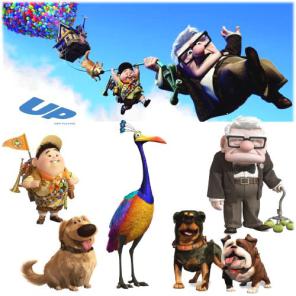
Post-watching activities:
5.Who said this phrase in the cartoon? Describe the situation.
1.So long, boys! I’ll send you a postcard from Paradise Falls!
2.I can smell you.
3.Please, let me in!
4.Well, this is all a misunderstanding. My dogs made a mistake.
5.Don’t you know this is an exclusiveclub?Onlyexplorers get inhere.
6.I steered us! I steered the house.
7.There it is! Ellie, it’s so beautiful.
8.You know, you don’t talk very much. I like you.
9.I found the snipe!
6.The following is a summary of the cartoon. Put the lines of the summary in the correct order.
America. That’s why he bound to his house many Fredricksen. In South America they had many
By chance little explorer Russell flew away with Mr. close to Paradise Falls. They returned home in the
An old man Carl Fredricksen had a dream to get to South 1 balloons and went to the lost land on his floating house. adventures. They saved the bird and placed the house
dirigible and became close friends.
116

WHO FRAMED ROGER RABBIT (1988)
Pre-watching activities:
1. What do these words and expressions mean?
Toon, Toontown, pat-a-cake, dip, sugar daddy, blackmail, will, bump off, probate, gag.
While-watching activities:
Episode 1. The beginning of the detective story
2. Find the appropriate answer:
1.What task did Mr. Valiant get from Mr. Maroon? A) to find Roger rabbit.
B) to follow Roger’s wife and to prove her adultery. C) to find Jessica’s lover.
D) To reveal a murder.
2.For this task Valiant asked…
A) 50 bucks; |
C) 200 bucks; |
B) 100 bucks; |
D) 150 bucks. |
3. Why Eddie didn’t want to work in Toontown?
A)Because he didn’t like toons.
B)Because toons couldn’t pay much money.
C)Because his brother was killed by the toon.
D)Because toons owed him much money.
117
4. What was the password for entrance to the bar?
A) Walt sent me. |
C) Mickey sent me. |
B) Goofy sent me. |
D) Roger sent me. |
5. Marvin Acme was….. |
|
A) owner of Toontown; |
C) bitter enemy of all toons; |
B) the gag king; |
D) A) and B) are true. |
6.Why Roger was upset? A) because he lost his job.
B) Because his wife played pat-a-cake with other man. C) Because he lost his wife.
D) Because he looked after baby Herman badly.
7.What man was photographed with Valiant?
A) His friend. |
C) His brother. |
B) His distant relative. |
D) Partner. |
Episode 2. The murder and consequences
3. Who said this phrase in the film? Describe the situation.
1.I’ll catch the rabbit, Mr. Valiant. Then I’ll try him, convict him and execute him.
2.The rabbit didn’t kill Acme. He is not a murderer.
3.Everybody knows when a toon’s in trouble there’s only one place to go: Valiant& Valiant.
4.Baby was right.
5.Every toon knows that Acme had a will. He promised to leave Toon town to us, toons.
6.I asked the fireman, the green grocer, the butcher, the baker. They didn’t know.
7.Get out off this chair.
8.Eddie Valiant, you are under arrest.
9.One of these days you’re gonna die laughing.
10.For starters, don’t ever kiss me again!
11.Is that a rabbit in your pocket, or are you just happy to see me?
12.Maybe you can go to downtown and check the probate.
13.I am a pawn in this game, like Roger.
14.Maroon wanted to blackmail Acme.
118
15.It’s Cloverleaf that wants to get their hands on Toontown.
16.A laugh can be a very powerful thing.
17.Hey I’ve seen a rabbit.
18.I don’t know who is toonier – you or Doom.
Episode 3. The investigation of the crime and the happy end
4. Is it true or false?
1.Benny helped Roger and Eddie to escape from the chase.
2.Roger and Eddie hid in the bar.
3.Cloverleaf wouldn’t buy the Maroon’s studio unless Toontown was sold.
4.Jessica wanted to kill Mr. Valliant.
5.Weasels found the Acme’s will.
6.Judge Doom was the sole stockholder in Cloverleaf.
7.Judge Doom killed people because he wanted to build a freeway through Toontown.
8.Weasels killed Valliant’s brother.
9.Judge Doom was dipped.
Post-watching activities:
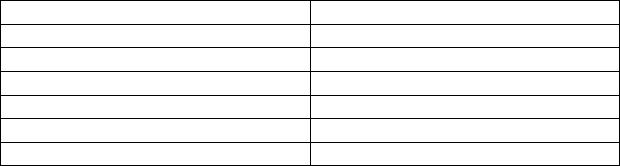
5. Fill in the chart.
The details of this crime The answers
the crime
suspected persons
the cause
victims
murderer
Weapon
6. Match the names and their meaning.
cloverleaf |
человек в безвыходном положении |
doom |
горностай, ласка, проныра |
valiant |
бестолковый, тупой |
acme |
рок, смерть |
maroon |
дорожная развязка |
goofy |
храбрец, герой |
weasel |
кульминация, зрелый возраст |
119
TRANSLATION PRACTICE
Первое, с чем сталкивается переводчик, – это проблема установления соотношения (корреляции) между значениями слов в языке источнике и языке перевода. При сопоставлении единиц словарного состава английского и русского языков обнаруживается несколько типов смысловых отношений между словами этих языков.
1.Значение английского слова полностью соответствует значению русского слова, т. е. имеется постоянное словарное соответствие, называемое эквивалентом. Переводчик в данном случае пользуется готовым соответствием. К этой группе слов относятся имена собственные (например, географические названия, названия животных, растений и др.), названия дней недели, месяцев, имена числительные, многие научные и научно-технические термины, зафиксированные в словарях, и т. д.
2.Значению английского слова соответствует в русском языке несколько слов, образующих синонимический ряд. Такой тип соответствий принято называть вариантным соответствием. В данном случае переводчик производит выбор из нескольких вариантов, исходя из условий контекста (сочетания, в которое входит слово, или более широкого контекста). Например:
Prevent - 2) мешать, препятствовать; оберегать
Nothing shall prevent us from reaching our aim! — Ничто не смо-
жет помешать нам достичь цели!
We were prevented from studying abroad – Было много препятст-
вий тому, чтобы мы обучались за рубежом
3.Английское слово не всегда имеет готовое соответствие в англо-русском словаре, поскольку ни один даже самый полный словарь не может отразить все оттенки значения слова. В данном случае перед переводчиком стоит задача создания собственного соответствия, которое, однако, не является оторванным от потенциальных значений, заложенных в смысловой структуре слов, и которое можно выявить на основе анализа контекста.
Подобные соответствия, создаваемые самим переводчиком,
принято называть контекстуальными заменами, или лексическими трансформациями. Выделяют следующие типы трансформаций.
120