Chapter 1 • Gonad Development
SPERMATOGENESIS
•Primordial germ cells arrive in the indifferent gonad at week 4 and remain dormant until puberty.
•When a boy reaches puberty, primordial germ cells differentiate into type A spermatogonia, which serve as stem cells throughout adult life.
•Some type A spermatogonia differentiate into type B spermatogonia.
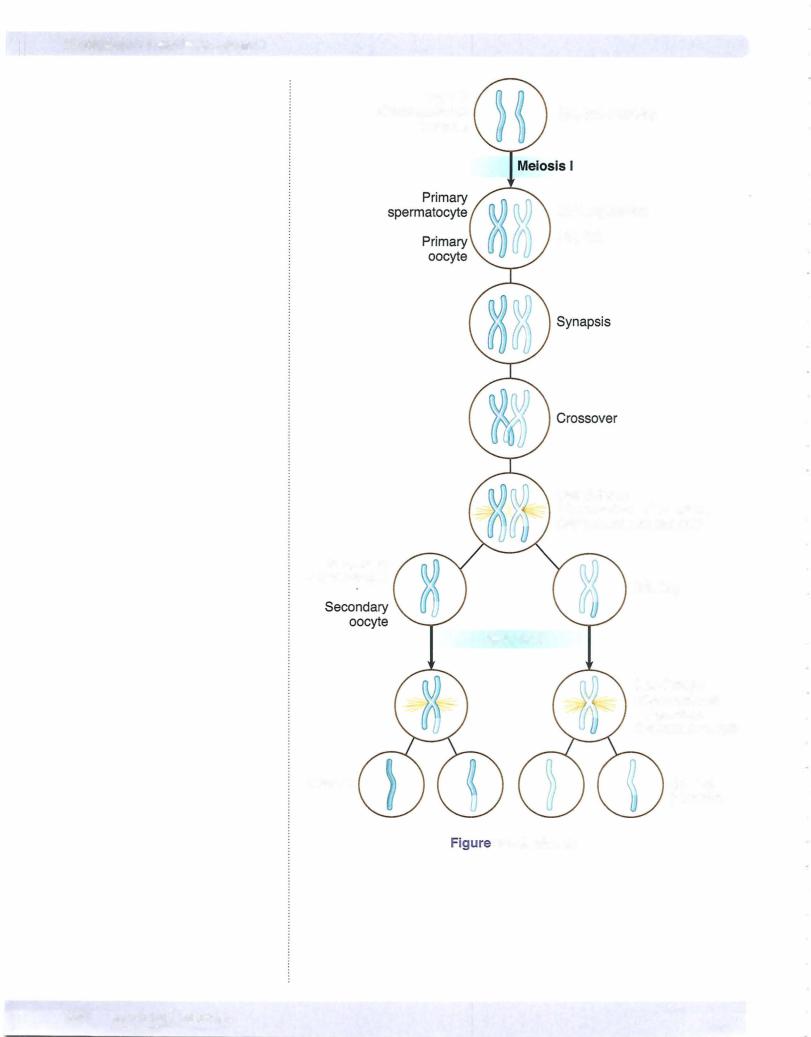
•Type B spermatogonia enter meiosis I to form primary spermatocytes.
•Primary spermatocytes form 2 secondary spermatocytes.
•Secondary spermatocytes enter meiosis II to form 2 spermatids.
•Spermatids undergo spermiogenesis, which is a series of morphological changes resulting in the mature spermatozoa.
OOGENESIS
•Primordial germ cells arrive in the indifferent gonad at week 4 and dif ferentiate into oogonia.
•Oogonia enter meiosis I to form primary oocytes. Allprimary oocytes are formed by month 5 offetallife and are arrested the first time in prophase (diplotene) ofmeiosis I and remain arrested until puberty.
•Primary oocyte arrested in meiosis I are present at birth.
•When a girl reaches puberty, during each monthly cycle a primary oocyte becomes unarrested and completes meiosis I to form a secondary oocyte and polar body.
•The secondary oocyte becomes arrested the second time in metaphase of meiosis II and is ovulated.
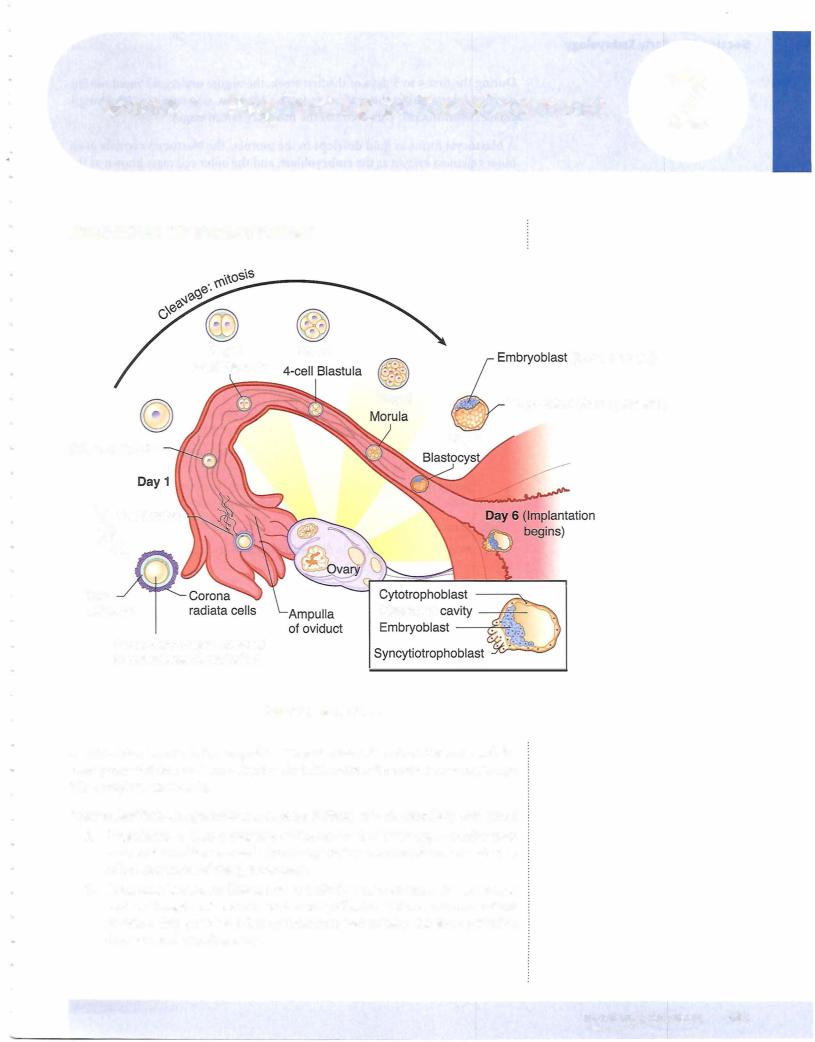
•At fertilization within the uterine tube, the secondary oocyte completes meiosis II to form a mature oocyte and polar body.