Материал: Kaplan USMLE-1 (2013) - Anatomy
Section I • Histology and Cell Biology
Copyright McGraw-Hill Companies. Used withpermission.
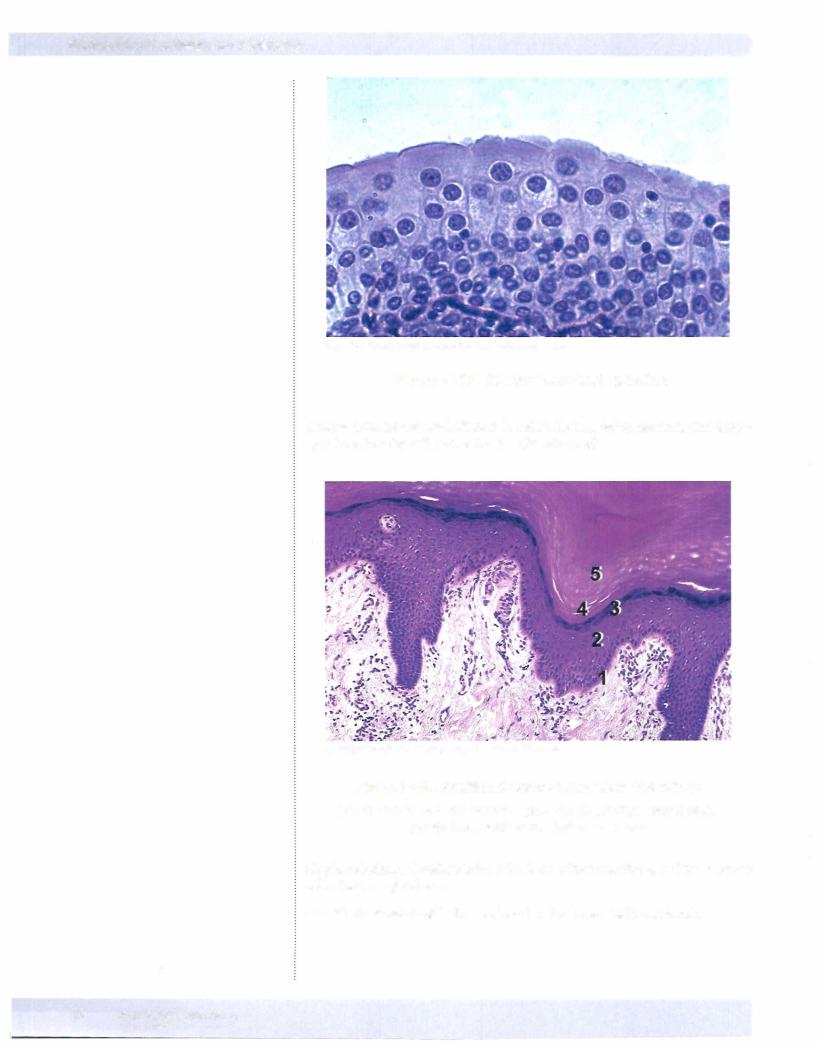
Figure 1-1-20. Bladder Transitional Epithelium
Stratified squamous epitheliumis found in the oral cavity, pharynx, and esoph agus (non-keratinized) and in the skin (keratinizing).
Copyright McGraw-Hi/I Companies. Used with permission.
Figure 1-1-21. Stratified Squamous Epithelium (Thick Skin)
(1) stratum basale (2) stratum spinosum (3) stratum granulosum (4) stratum lucidum (5) stratum corneum
Simple cuboidalepitheliumis the epithelium ofthe renal tubulesandthe secretory cells ofsalivary gland acini.
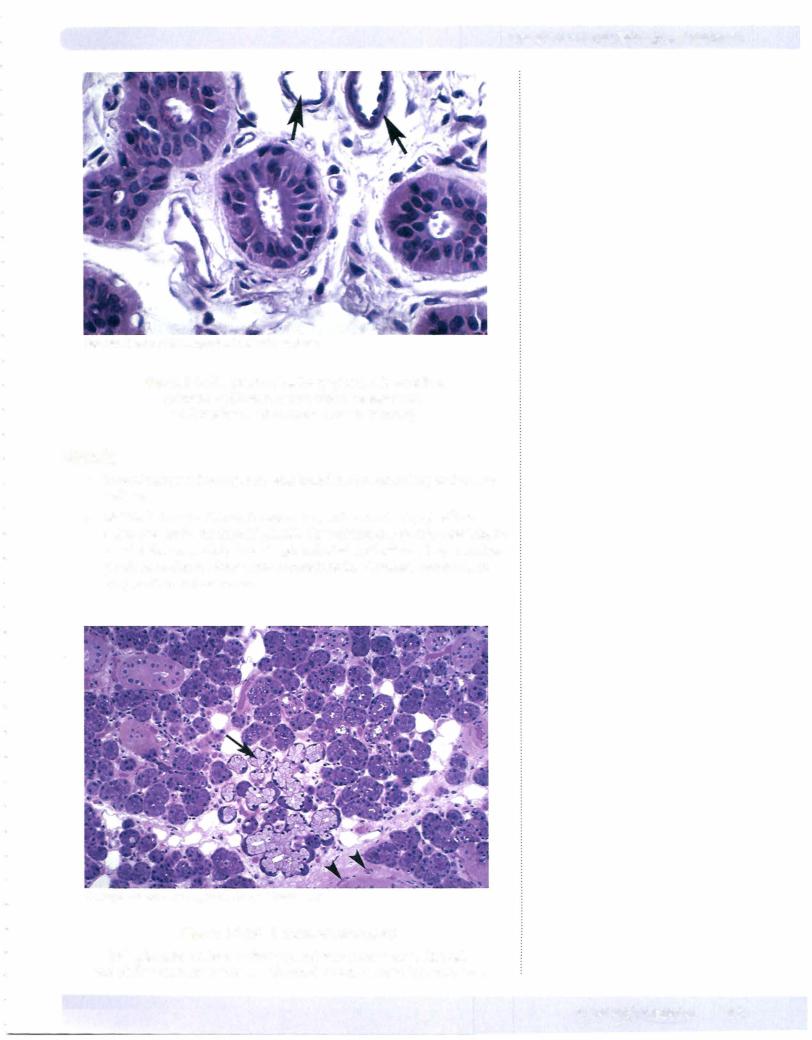
Stratified cuboidalepithelium is found in the ducts ofsalivary glands.
22 MEDICAL
Chapter 1 • Cell Biology and Epithelia
Copyright McGraw-Hi/I Companies. Used with permission.
Figure 1-1 -22. Ducts of salivary gland with stratified cuboidal epithelium small blood vessels with endothelium and smooth muscle (arrows)
Glands
•Unicellular glands are goblet cells found in the respiratory and GI epi thelium.
•Multicellular glands may be exocrine (such as a salivary gland) or endocrine (as in the thyroid gland). Allmulticellular glands have tubules or acini formed mainly by a simple cuboidal epithelium. Only exocrine glands have ducts, which serve as conduits for glandular secretions to a body surface or to a lumen.
Copyright McGraw-Hill Companies. Used with permission.
Figure 1-1-23. Submandibular gland
This gland is a mixed salivary gland with mucus acini (arrow) and darker staining serous acini; small blood vessels (arrowheads)
MEDICAL 23
Section I • Histology and Cell Biology
ChapterSummary
• Cell components include the nucleus, cytoplasm, cytoskeleton, and cell surface.
The Nucleus
•The nucleus consists of a nuclear envelope, lamina, nucleolus, and chromatin.
•Phosphorylation ofthe lamina during prophase of mitosis initiates nuclear disassembly into small vesicles.
•The nucleolus assembles ribosomes and synthesizes ribosomal RNA. The nucleolus has a fibrillar center that contains nontranscribed DNA.
•Chromatin is a complex of DNA, histone, and nonhistone proteins. DNA exists in 3 forms: B DNA, Z DNA, and A DNA. Histone proteins are positively charged and complex with DNA to form nucleosomes and solenoid fibers. Nonhistone proteins are neutral and perform diverse functions such as DNA repair, replication, transcription, and regulation of chromatin function. There are 2 forms of chromatin: euchromatin, which is transcriptionally active; and heterochromatin, which is transcriptionally inactive. Ten percent of chromatin is in the form of heterochromatin. The Barr body (inactive X chromosome) is heterochromatin.
The Cytoplasm
•The cytoplasm contains ribosomes, endoplasmic reticulum, Golgi apparatus, lysosomes, peroxisomes, mitochondria, and matrix.
•Ribosomes are composed of rRNA and protein. Large ribosomal units are synthesized in the nucleolus, whereas small ones are synthesized in the nucleus. Polysomes are formed from ribosomes associating with a single mRNA strand. There are 2 kinds of polysomes: free and membrane-bound. The former synthesize proteins destined forthe nucleus, peroxisomes, or mitochondria. The latter form secretory proteins, lysosomal enzymes, and membrane proteins.
•Endoplasmic reticulum exists in 2 forms: smooth and rough. Smooth endoplasmic reticulum (SER) lacks ribosomes. It is involved in detoxification reactions-hydroxylation, via cytochrome P450, and conjugation. It forms glucose from glycogen via membrane-bound enzyme glucose-6 phosphatase and lipolysis by releasing fatty acid from triglyceride. Other products made here include phospholipids, lipoproteins, and sterols. SER in striated muscle is known as sarcoplasmic reticulum. Calcium ions are sequestered and released here. Rough endoplasmic reticulum (RER) contains ribosomes that synthesize proteins that are delivered to Golgi apparatus, lysosomes, and plasma membrane.
•Lysosomes are classified as primary or secondary. The latter are formed by fusion ofthe former with either phagosomes or cellular organelles. Lysosomes contain approximately 60 hydrolytic enzymes, all of which are acidic. They degrade DNA, RNA, lipids, glycoproteins, proteins, and phosphatases.
(Continued)
24 MEDICAL

Chapter 1 • Cell Biologyand EpitheUa
ChapterSummary(Cont'd)
•Peroxisomes are organelles that synthesize and degrade hydrogen peroxide, initiate oxidation ofvery long-chain fatty acids, synthesize bile and exchange of phospholipid.
•Mitochondria are organelles bounded by 2 membranes-an outer and inner membrane. The inner membrane contains enzymes for electron transport and oxidative phosphorylation.
•Mitochondrial matrix contains dehydrogenases and mitochondrial DNA, which is always inherited from the mother. Thus, transmission of diseases of energy metabolism is from the mother. lntramitochondrial granules contain calcium and magnesium and are probably stored here. The cytoskeleton is a supportive network that contains microtubules, intermediate filaments, and microfilaments. Assembly of microtubules is important for spindle formation. Intermediate filaments contain tissue-specific proteins. Microfilaments are composed of actin.
Cell Surface
•Important cell-surface modifications include the basal and reticular lamina, tight junctions, desmosomes, gap junctions, microvilli, and cilia.
MEDICAL 25