GENERAL FEATURES
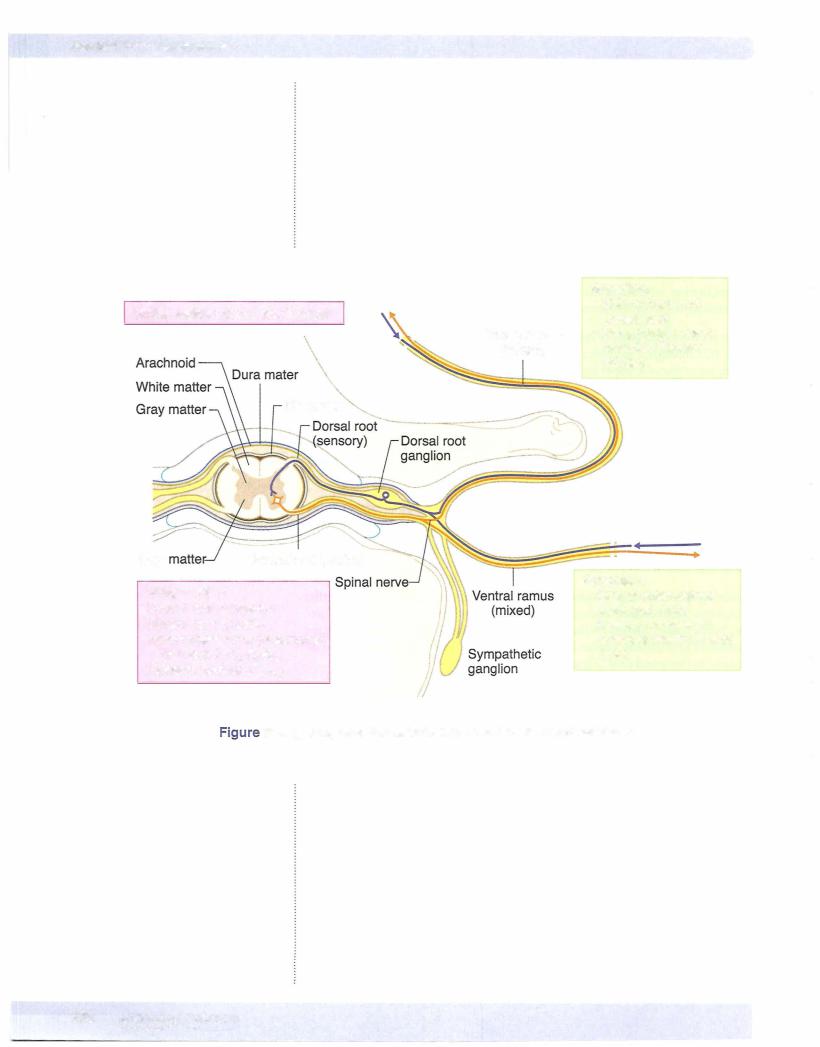
The spinal cord is housedin the vertebral canal. It is continuous with the medulla below the pyramidal decussation and terminates as the conus medullaris at the second lumbar vertebra of the adult. The roots of 31 pairs of spinal nerves arise segmentally from the spinal cord.
There are 8 cervicalpairsof spinal nerves (Cl through CS). The cervical enlarge ment (CS through T l ) gives rise to the rootlets that form the brachia! plexus, which innervates the upper limbs.
There are 12 thoracic pairs of spinal nerves (Tl through T l2). Spinal nerves emanating from thoracic levels innervate most of the trunk.
There are 5 lumbarpairs of spinal nerves (Ll through LS). The lumbar enlarge ment (Ll through S2) gives rise to rootlets that form the lumbar and sacral plex uses, which innervate the lower limbs.
There are 5 sacral pairs of spinal nerves (Sl through SS). Spinal nerves at the sacral level innervate part of the lower limbs and the pelvis.
There is one coccygeal pair of spinal nerves. The cauda equina consists of the dorsal and ventral roots ofthe lumbar, sacral, and coccygeal spinal nerves.
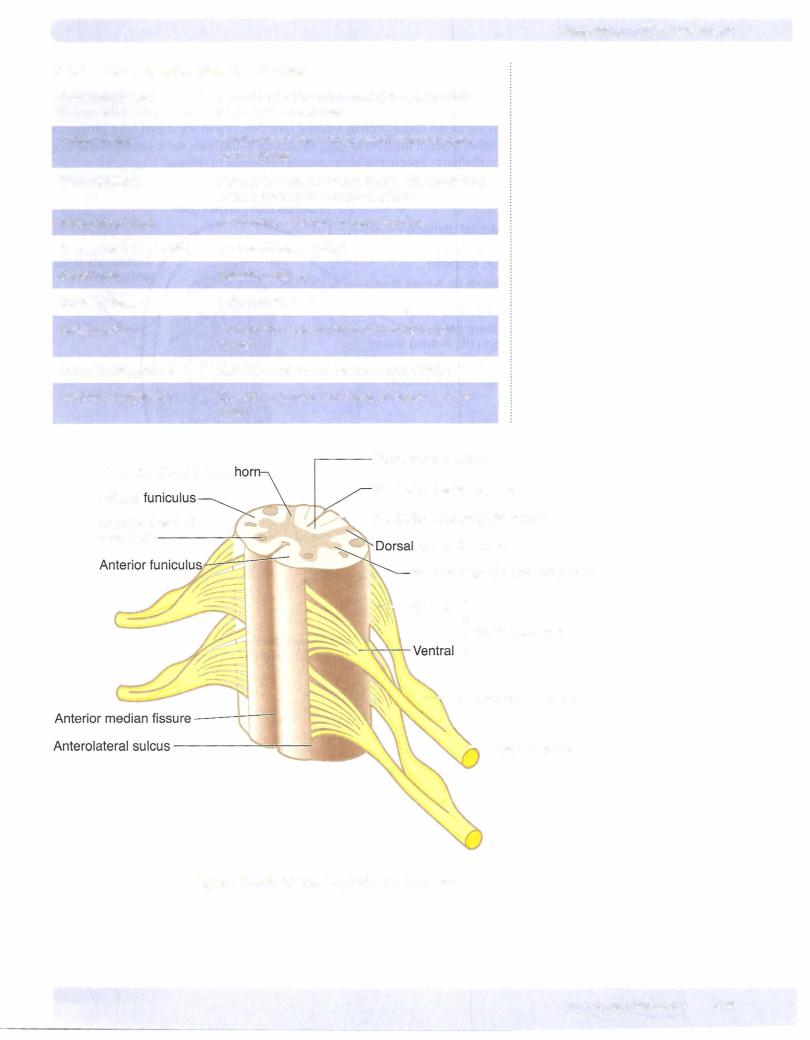
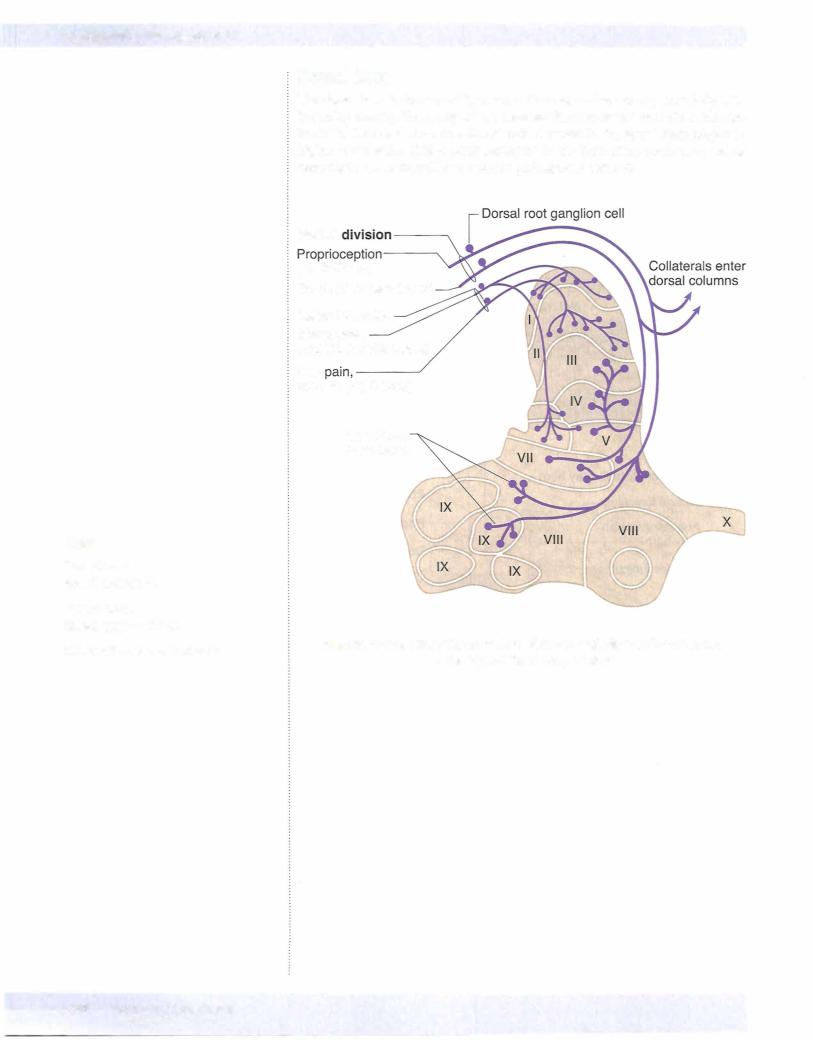
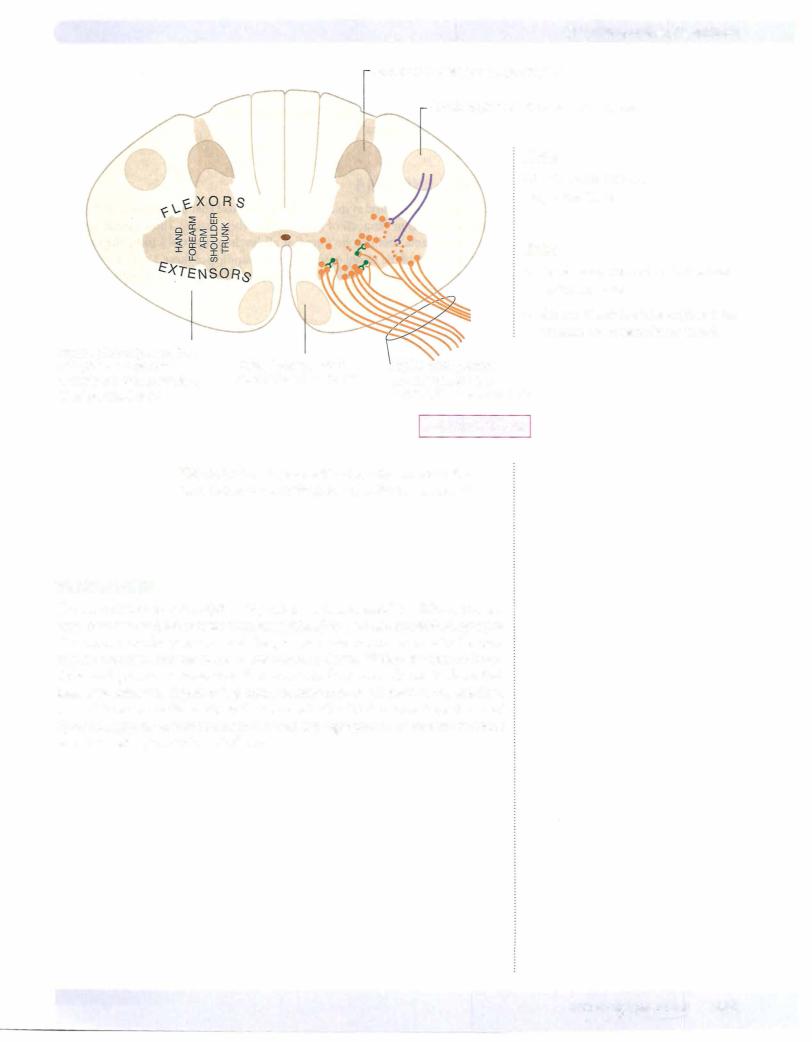
Inside the spinal cord, gray matter is centrally located and shaped like a butterfly. It contains neuronal cell bodies, their dendrites, and the proximal parts of ax ons. White matter surrounds the gray matter on all sides. White matter contains bundles of functionally similar axons called tracts or fasciculi, which ascend or descend in the spinal cord (Figures IV-4- 1 and IV-4-2).