Материал: Russian Journal of Building Construction and Architecture

Issue № 4 (36), 2017 |
ISSN 2542-0526 |
mix obtained is 32 %. On addition of fly ash and silica fume the normal consistency of cement paste increases. The outer surface of fly ash particles increases with increase in fly ash content, the amount of absorbed calcium ion increases. This inhibits calcium ion concentration built up in fresh paste during early hydration resulting setting time is prolonged and thus the heat of hydration decreases causing consistency to increase. Also the results show that both Initial setting time and final setting time of mix increase as replacement level of fly ash increases. There is lesser effect on final setting time as compared with initial setting time at same replacement level of fly ash.
|
|
|
|
|
|
|
|
|
|
|
|
Table 2 |
|
|
|
|
|
Results |
|
|
|
|
|
|
|
|
|
|
|
|
|
|
|
|
|
|
|
|
|
Normal |
Setting Time |
Compressive strength (Mpa) |
Flexural strength (Mpa) |
|
|||||||
Mix |
(min) |
Shrinkage |
||||||||||
Code. |
Consistency |
|
|
|
|
|
90 |
|
|
|
|
Strain |
|
|
7 |
28 |
60 |
7 |
28 |
60 |
90 |
||||
|
(%) |
Initial |
Final |
Day |
Day |
Day |
Day |
Day |
Day |
Day |
Day |
|
|
|
|
|
|
|
|
55.21 |
|
|
|
|
|
C |
32 |
32 |
500 |
26.01 |
48.01 |
52.54 |
2.38 |
4.86 |
5.13 |
5.35 |
460 |
|
|
|
|
|
|
|
|
56.12 |
|
|
|
|
|
CP1F1S |
37 |
45 |
530 |
25.33 |
48.80 |
54.46 |
2.59 |
4.97 |
5.22 |
5.77 |
440 |
|
|
|
|
|
|
|
|
57.11 |
|
|
|
|
|
CP1F2S |
40 |
70 |
590 |
25.02 |
47.82 |
56.87 |
2.64 |
5.01 |
5.54 |
6.12 |
430 |
|
|
|
|
|
|
|
|
55.95 |
|
|
|
|
|
CP1F3S |
44 |
90 |
620 |
24.89 |
45.43 |
55.23 |
2.60 |
5.04 |
6.90 |
7.27 |
425 |
|
|
|
|
|
|
|
|
58.03 |
|
|
|
|
|
CP2F1S |
38 |
45 |
530 |
25.20 |
49.18 |
57.30 |
2.76 |
7.84 |
7.86 |
8.22 |
380 |
|
|
|
|
|
|
|
|
58.45 |
|
|
|
|
|
CP2F2S |
41 |
70 |
590 |
25.43 |
48.21 |
58.22 |
2.75 |
7.91 |
8.17 |
8.54 |
365 |
|
|
|
|
|
|
|
|
57.23 |
|
|
|
|
|
CP2F3S |
43 |
90 |
620 |
24.92 |
46.19 |
56.19 |
2.43 |
7.94 |
8.12 |
9.01 |
350 |
|
|
|
|
|
|
|
|
59.20 |
|
|
|
|
|
CP3F1S |
37 |
45 |
580 |
26.23 |
48.27 |
59.09 |
2.82 |
8.41 |
8.89 |
9.52 |
342 |
|
|
|
|
|
|
|
|
59.45 |
|
|
|
|
|
CP3F2S |
42 |
70 |
590 |
25.49 |
48.91 |
59.22 |
2.86 |
7.92 |
8.83 |
9.81 |
340 |
|
|
|
|
|
|
|
|
57.46 |
|
|
|
|
|
CP3F3S |
43 |
90 |
620 |
24.12 |
47.20 |
57.00 |
2.81 |
7.88 |
8.56 |
9.75 |
339 |
|
|
|
|
|
|
|
|
|
|
|
|
|
|
Workability
The slump cone value for each mix type obtained is given in table 2. It was observed that with the addition of fibers, the entrapped air voids increases and hence the increased air content reduces the workability. Due to reduction in workability, compaction of fresh concrete becomes difficult. As observed from the slump cone values, it can be seen that the workability of fresh concrete decreases with increase in polypropylene fiber volume but this can be overcome by adding Water reducing admixture. There is reduction in workability with increase in fiber content. Up to the fiber content of 0.40 percent there is not much reduction in workability, it was within the permissible requirement but, for 0.60 percent fiber content a suitable dose of 1.5 percent of super plasticizer was added to achieve desired slump value.
121
Russian Journal of Building Construction and Architecture
Compressive strength
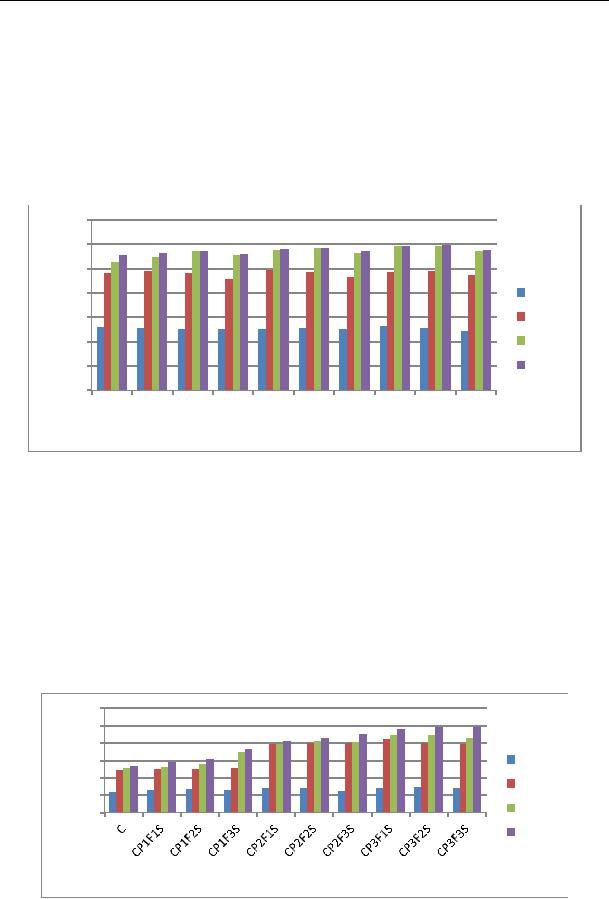
The compressive strength test results are presented in fig 1. The maximum compressive strength is observed to be 59.53 Mpa for mix 10 (containing 0.60 % PP fibers with 30 % fly ash and 5 % silica fume replacement). For a same fly as replacement level, as fiber volume increases there is an increase in compressive strength. However it can be observed that increase in compressive strength in not significant.
Fig. 1. Compressive strength result
Flexural strength
The flexural strength test results are presented in fig 2. The maximum flexural strength is observed to be 9.81 Mpa for mix 9 (containing 0.60 % PP fibers with 20 % fly ash and 5 % silica fume replacement). The results show that pozolons replacement and PP fiber volume greatly affects flexural strength. As fly ash replacement level increases flexural strength increases. Also direct relation is observed between fiber volume and flexural strength.
Fig. 2. Flexural strength result
122
Issue № 4 (36), 2017 |
ISSN 2542-0526 |
Shrinkage strain
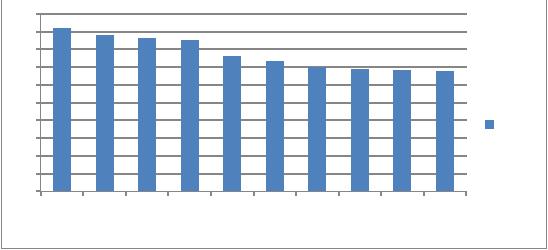
The results obtained from shrinkage test are presented in fig 3. From the results it is observed that the PP fiber with pozzolons is very effective in controlling shrinkage of concrete. The minimum shrinkage observed at mix 10 (Containing 0.60 % PP fiber with 30% fly ash replacement and 5 % silica fume) as 339.
Fig 3. Shrinkage strain resul
Conclusion
PP fiber tends to behave well with pozzolans. There is not much significance of polypropylene fibers’ addition on compressive strength but it improves the behavior under flexural loading. Also it mitigates shrinkage by increasing the tensile strength of concrete and bridging the forming cracks. In this study, it was found that the strength parameters increase with an increase in polypropylene fibers’ volume. For same replacement of fly ash as the fiber volume is increased from 0.20 % to 0.40 % a maximum increase of 16 % in flexural strength is observed. Further increase in fiber volume does not yield a significant increase in flexural strength.
Most of the developed as well as developing countries are having huge resource of waste materials such as fly ash and silica fume. These waste materials if not disposed of properly can cause severe environmental degradation. The results of present study shows that these materials tend to perform well with PQC thereby providing a means for their effective disposal. The results show that the gain in compressive and flexural strength is less at early age of 7 days, but gain in later age strength is more due to pozzolonic reactions which sets in late. The durability in terms of shrinkage strength decreases with the use of pozzolans which is an additional benefit.
123

Russian Journal of Building Construction and Architecture
It can be inferred from the result that, the optimum PP fiber content and replacement level of fly ash varies with the parameter under consideration. The maximum 90 day compressive strength and Flexural strength is obtained as 59.45 Mpa and 9.81 Mpa for mix CP3F2S (0.60 % PP fiber volume, 20 % fly ash and 5% silica fume replacement), whereas minimum 28 day shrinkage strain of 339 is obtained for CP3F3S (0.60 % PP fiber volume, 30 % Fly ash and 5 % Silica fume replacement). Thus in general CP3F2S can be considered as best mix.
The construction of rigid pavement with polypropylene fiber may increases the cost of construction which can be counter balanced by reduction in the maintenance and rehabilitation operation cost. Also, the replacement of cement with pozzolans further helps in cost reduction.
Acknowledgements
The author would like to acknowledge “Ropar Thermal Power plant, Punjab India” for providing us Fly ash. The contribution of materials from Transportation engineering Laboratory, NIT Hamirpur is greatly appreciated.
References
1.Hussam A. Toutanji. Properties of polypropylene fiber reinforced silica fume expansive-cement concrete. Construction and Building materials, Elsevier, 1999, vol. 13, pp. 171––177.
2.Madhkhan M., R. Azizkhani and M. E. Torki Harchegani. Effects of pozzolans together with steel and polypropylene fibers on mechanical properties of RCC pavements. Construction and Building materials, 2011, vol. 26, pp. 102––112.
3.Kolluru V. Subramaniam, Roman Gromotka, Surendra P. Shah, Karthik Obla and Russell Hill. Influence of Ultrafine Fly Ash on the Early Age Response and the Shrinkage Cracking Potential of Concrete. Journal of materials in civil engineering, ASCE, 2005, vol. 17 (1), pp. 45––53.
4.Alaa M. Rashad, Hosam El-Din H. Seleem and Amr F. Shaneen. Effect of Silica Fume and Slag on Compressive strength and Abrasion Resistance of HVFA Concrete. International journal of Concrete Structures and Materials, 2014, vol. 8, pp. 69––81.
5.Shiping Zhang and Binghua Zhao. Influence of polypropylene fibre on the mechanical performance and durability of concrete materials. European Journal of Environmental and Civil Engineering, Taylor and Francis, 2012, vol. 16 (10).
6.Osman Gencel, Cengiz Ozel and Witold Brostow. Mechanical properties of self-compacting concrte reinforced with polypropylene fibres. Material research innovations, Research Gate, 2011, vol. 15.
7.Zhen Mei and D. D. L. Chung. Improving the flexural Modulus and Thermal Stability of Pitch by the Addition of Silica Fume”, Journal of Reinforced plastics and Composites, 2000, vol. 21 (1).
8.IS 3812-2: 2003, Specification for pulverized fly ash for use as an admixture in mortar or concrete.
9.IS 383: 1970, Specifications for coarse and fine aggregates from natural sources for concrete.
10.IS 456: 2000, Plain and Reinforced Concrete - Code of Practice.
124
Issue № 4 (36), 2017 |
ISSN 2542-0526 |
11.IRC 44: 1976, Tentative guidelines for cement concrete mix design for pavements.
12.IS 1489 (1):1991, Specifications for Portland pozzolona cement.
13.IS 15388: 2003, Silica fume specifications.
14.IS 1199: 1959, Methods for sampling and analysis of concrete [CED 2: cement and concrete].
15.IS 516: 1959, Method of tests for strength of concrete.
16.IS 4031 (1): 1996, Methods of physical tests for hydraulic cement.
17.ASTM C 157/ C157 M-04, Guidelines for shrinkage test of cement mortar.
18.IRC 58: 2011, Guidelines for plain jointed rigid pavements for highways.
125