Материал: Uchebnik_dlya_sud_expertov
GLOSSARY
1. amend – ( )
amendment – , , , ,
constitutional ~ - make an ~ -
reject an ~ - $
2.conform – -!, -!, !
conform to the Constitution – $
conform to international standards – $ & conformation –
3.contradict – , , , $
~a fact – $ #
~law – $
~a statement – & $
~a witness – $
4. court –
~ of first instance – " ~ of arbitration – & "
~ of appellate jurisdiction – " , high ~ - "
higher ~ - ) " supreme ~ " trial ~ - "
appear in ~ - $
attend the ~ - $ , $ bring before the ~ - $ ( $ )
in open ~ -
5. executive – ;
~authority – $ $
~branch – $ $ ( $ )
~Director - @$ " > ( ) execute – $, $; $ execution – ; $
6.judicial – !,
~ branch – $ ~ review – "
~ system – ~ practice – judiciary – $
7.jurisdiction – #$ , , ! , -
exclusive ~ - $
207
MODULE 8
CRIMINAL TRIAL
UNIT I. INTRODUCTION TO A CRIMINAL TRIAL
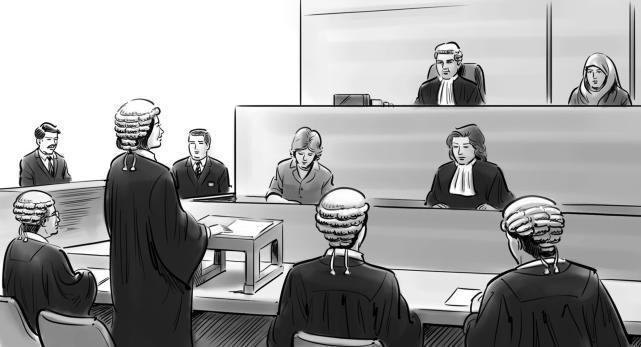
Court cases involve a number of participants.
1. !, ( & #, . !",
( .
Why is criminal law prosecuted by the state rather than by individual citizens?
a)Victims of crime are usually unable to afford legal representation.
b)Crime is considered a wrong against us all and thus a matter of public law.
c)Crime is often due to government decisions or policy and the state must take responsibility for it.
d)It is a matter of organization and this is a subject of administrative law.
2. , .
A detective watched Mrs. Carroll a well-dressed woman who always went into a large store on Monday mornings. One Monday, there were fewer people in the shop than usual when the woman came in, so it was easier for the detective to watch her. The woman first bought a few small articles. After a little time, she chose one of the most expensive dresses in the shop and handed it to an assistant who wrapped it up for her as quickly as possible. Then the woman simply took the par-
209