Материал: Искусство дизайна. основные направления. Крячко Л.Н
Чтение и перевод текста
Architecture
Architecture is both the process and product of planning, designing and construction. Architectural works, in the material form of buildings, are often perceived as cultural symbols and as works of art. Historical civilizations are often identified with their surviving architectural achievements.
I
 n
relation to buildings, architecture has to do with the planning,
designing and constructing form, space and ambience that reflect
functional, technical, social, environmental, and aesthetic
considera- tions. It requires the creative manipu-lation and
coordination of material technology, light and shadow.
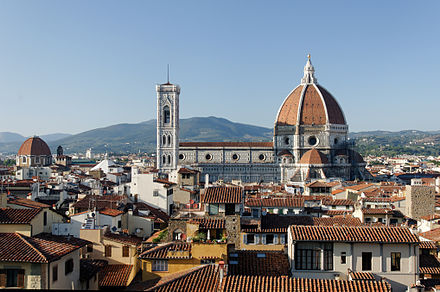
Florence
Cathedral.
Florence,
Italy
Architecture also encompasses the pragma tic aspects of realizing
buildings and structures, including scheduling, cost estimating and
construction administration. As documentation produced by architects,
typically drawings, plans and technical specifications, architecture
defines the structure
and/or behavior
of a building or any other kind of system
that is to be or has been constructed.
n
relation to buildings, architecture has to do with the planning,
designing and constructing form, space and ambience that reflect
functional, technical, social, environmental, and aesthetic
considera- tions. It requires the creative manipu-lation and
coordination of material technology, light and shadow.
Florence
Cathedral.
Florence,
Italy
Architecture also encompasses the pragma tic aspects of realizing
buildings and structures, including scheduling, cost estimating and
construction administration. As documentation produced by architects,
typically drawings, plans and technical specifications, architecture
defines the structure
and/or behavior
of a building or any other kind of system
that is to be or has been constructed.
T
 he
earliest surviving written work on the subject of architecture is De
architectura,
by the Roman architect Vitruvius
in the early 1st century AD.
According to
Vitruvius, a good building should satisfy the three principles:
he
earliest surviving written work on the subject of architecture is De
architectura,
by the Roman architect Vitruvius
in the early 1st century AD.
According to
Vitruvius, a good building should satisfy the three principles:
Durability – it should stand up robustly and remain in good condition.
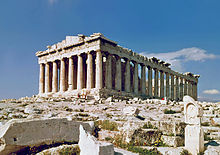
Utility – it should be useful and function well The Parthenon, Athens, Greece for the people using it.
Beauty – it should delight people and raise their spirits.
T
 he
great 19th century architect of skyscrapers, Louis
Sullivan,
promoted an overriding precept to architectural design: "Form
follows function".
he
great 19th century architect of skyscrapers, Louis
Sullivan,
promoted an overriding precept to architectural design: "Form
follows function".
While the notion that structural and aesthetic considerations should be entirely subject to functionality was met with both popularity and skepticism, it had the effect of introducing the concept of "function" in place of Vitruvius'
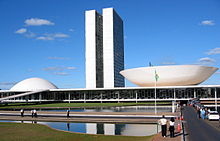
The National Congress of Brazil "utility". "Function" came to be seen as encompassing all criteria of the use, perception and enjoyment of a building, not only practical but also aesthetic, psychological and cultural.
Послетекстовые задания
I. Сопоставьте английские словосочетания в колонке а с их русскими эквивалентами в колонке b.
A |
B |
1. Good condition |
a) Управление строительством |
2. Achitecural works |
b) Прагматический аспект |
3. Aesthetic considerations |
c) Хорошее состояние |
4. Architectural achievements |
d) Культурные символы |
5. Pragmatic aspect |
e) Оценка стоимости |
6. Cultural symbols |
f) Архитектурные произведения |
7. Cost estimating |
g) Эстетические соображения |
8. Construction administration |
h) Достижения архитектуры |
II. Ответьте на вопросы к тексту.
1. What is architecture?
2. How is it often perceived?
3. What does architecture have to do with in relation to buildings?
4. Does architecture define the structure and/or behavior of a building that is to be or has been constructed?
5. What are three principles a good building should satisfy according to Vitruvius?
6. Who promoted an overriding precept to architectural design: “Form follows function”?
7. What did the Louis Sullivan’s concept of “function” encompass?
Грамматические упражнения
I. Поставьте глаголы в скобках в форму Past Simple Tense.
1. A: … (you/go) on holiday last summer?
B: Yes, I … (go) to Hungary.
2. A: Where … (be) you last night?
B: I … (meet) a friend for dinner.
3. I … (call) her house but there … (be) no answer.
4. Yesterday Sue … (receive) a package in the post from Tom.
5. A: What … (you/do) when you … (finish) school?
B: I … (travel) through Europe.
6. I … (send) an e-mail to Marie yesterday and she … (write) back immediately.
7. A: … (they/go) to the football game on Saturday?
II. Прочтите приведенную ниже записку и поставьте глаголы в нужную форму Present Simple, Present Continuous или Past Simple.
Dear Pam,
I 1) … (be) sorry I 2) … (not/come) to your party yesterday. As you 3) … (know) I 4) … (go) skiing three days ago. It was fantastic but I 5) … (catch) a terrible cold! I 6) … (still/lie) in bed with a temperature! That’s why I 7) … (miss) your party. Julie 8) … (tell) me it 9) … (be) great.
Call me as soon as you can.
Love,
Alison
III. Заполните пропуски глаголами в Past Simple Tense.
1. A: Where … (you/go) last weekend?
B: I … (visit) my grandparents on their farm.
A: … (you/enjoy) yourself?
B: Oh, yes!
A: What … (you/do)?
B: Well, on Saturday I … (go) swimming and on Sunday I … (help) my
grandfather milk the cows.
2. A: Uncle Tom, how … (you/spend) your time when you … (be) young?
B: First of all, we … (not/have) a television so we … (play) a lot of games.
A: Really! What else … (you/do)?
B: Well, we … (listen) to the radio and … (read) books.
IV. 10 лет назад Джерри был студентом. Сейчас он адвокат. Задайте вопросы о прошлом и настоящем Джерри, используя приведенную ниже модель.
A: Did Jerry use to work hard?
B: No, he didn’t. He used to study hard.
Then |
Now |
Study hard |
Work hard |
Live with his parents |
Have his own house |
Take the bus to University |
Drive to work in his car |
Wear jeans and pullovers |
Wear suits |
Shop at discount stores |
Shop at expensive stores |
Eat fastfood at McDonald’s |
Eat in expensive restaurants |
УРОК 5 LESSON FIVE
Фонетика: Повторение чтения буквы “u”.
Грамматика: Present Perfect Tense.
Тема: Дизайн одежды. Fashion Design.