Материал: Крючков Фундаменталс оф Нуцлеар Материалс Пхысицал Протецтион 2011
|
KMP–1: |
|
|
|
|
–––––––– |
|
|
|
|
Check of |
FE |
KMP–2: |
|
Pellets of |
attributes; |
FE |
||
weighing; |
|
–––––– |
||
|
neutron |
LOADING |
|
|
|
measurement of |
|
|
|
UO2 |
|
Gamma |
|
|
U–235 mass; |
|
|
||
|
samples for NM |
DEPT. |
spectrometry |
|
|
analyses |
|
|
|
|
|
KMP–3: |
|
|
|
|
–––––––– |
|
|
|
|
Weighing; |
|
|
|
|
neutron |
|
|
|
|
measurement |
|
|
|
|
U–235 mass |
|
|
Scrap
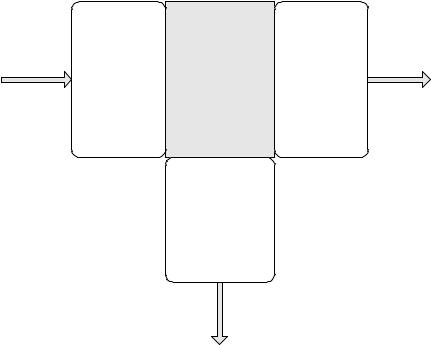
Fig. 2.2. Measurements of NM flows at KMPs
Another example of attributes used efficiently is the procedure of the NM physical inventory taking in MBAs. This procedure determines all NM inventories in an MBA through:
∙checks of NM for presence and integrity;
∙checks of seals for integrity and identification of same;
∙counting of existing items;
∙weighing of items;
∙accounting and verifying measurements.
A physical inventory taking involves examination of accounting records and the listing of the existing NM (inventory listing (IL)). Nuclear material is measured and the physical inventory of NM in the MBA is determined (physical inventory listing (PIL)).
The NM integrity and accounting quality are determined from the conformity of the NM physical inventory and the NM documented for the MBA. The establishment of this conformity is called NM balance closing
141
for the MBA. Formally, the NM balance in the MBA can be written as the following equation:
ID = PI – BI = PI – IN + DE – I, |
(2. 1) |
where ID is the inventory difference; PI is the physical inventory of NM in the MBA as determined in the given PIT; BI is the book inventory of NM in the MBA as of the physical inventory taking start point; IN is the determined and documented NM quantity increase over the given material balance period (MBP); DE is the determined and documented NM quantity decrease over the given MBP; I is the inventory of NM in the MBA as determined and documented as of the given MBP start point. More details on the NM physical inventory taking and balance closing procedures are discussed in Chapter 6.
Basic requirements to organization of NM accounting and control in MBAs
When an MBA is established, one shall specify:
∙the types, forms and quantities of NM as may be therein (that is, the NM category);
∙the system of authorized NM locations. Each location should have a unique identifier;
∙personnel with access to NM in the given MBA;
∙the MBA has NM key measurement points defined to be provided with required instrumentation;
∙the physical inventory taking procedure is developed;
∙the forms of and the keeping procedures for accounting records are determined;
∙the responsibility for storing all NM inside the MBA shall be placed on a custodian with whom a contract is made as to accountability under the Russian Federation Labor Code.
The custodian’s major responsibilities are:
∙execution of documents for NM shipments/receipts and all NM transfers into and out of the MBA;
∙the keeping of accounting records and preparation of reports to superior organizations;
∙participation in physical inventory takings;
142
∙ making the enterprise executive staff aware of all NM deficiencies detected.
References
1.Основные правила учета и контроля ядерных материалов.НП– 030–05. Утверждены Постановлением Федеральной службы по экологическому, технологическому и атомному надзору N 19 от 26 декабря 2005 года. М., 2005.
2.IAEA Safeguards: Guidelines for States Systems of Accounting for and Control of Nuclear Material, IAEA/SG/INF/2, IAEA, Vienna (1980).
3.Концепция системы государственного учета и контроля ядерных материалов. – Постановление Правительства РФ от 14 октября 1996 г.
№1205.
143
CHAPTER 3
INFORMATION SYSTEMS OF NM ACCOUNTING
Information systems are central to accounting and control of NM. It is exactly where all data is generated as required to plan activities with NM at all (state, agency and operator) levels.
This chapter looks into how NM accounting information systems are built at the federal and operator level.
3.1. Tasks of NM accounting information systems
An NM accounting information system addresses a spectrum of tasks involved in NM handling.
1.Management tasks. The first point to note is that no activities can be planned efficiently and no NM can be managed in the process of these activities without credible NM data in hand. So NM data is fundamental to an advanced NM management system at state, agency and operator levels.
2.NM control tasks. An information system provides data for control activities undertaken both by internal departments (e.g. corporate administrative control of NM) and by outside organizations (e.g. control by Rostekhnadzor of Russia).
3.Protection tasks. An information system that is accurate and responds rapidly to changes in the NM condition also has a protection role since it is what helps detect NM-related anomalies. Besides, computerization of data handling processes and generalization of information on inventories and movements of nuclear material in the form of a server-based centralized database are factors that contribute to prevention of unauthorized transactions with NM. The centralized database is accessible to persons in charge who can check what is taking place at the facility against database-contained custodians’ reports. This, therefore, gives NM an improved traceability.
3.2.Basic requirements to NM accounting information systems
Quality of reported NM data. NM data provided by an accounting information system at any level is expected to meet the requirement of credibility, completeness and timeliness. The current approach to accounting and control of NM is based on the measured NM balance and is intended to ensure the above requirement. It is exactly based on these measurements that NM data is generated. All NM in each MBA shall be totally checked at regular intervals (the physical inventory taking
144
procedure). NM is presently accounted for using up-to-date computer-based data processing technologies.
Data security. NM data security, accessibility and access partitioning are the major requirements to NM accounting information systems contained in the General Rules. Means to support these and other regulatory requirements to the NM accounting information systems are developed intensively as part of advanced computerized accounting systems.
3.3. Enterprise-level structure of NM accounting information systems
MBA is an elementary autonomous structural unit having a corporate information system operating as part of it. It is exactly MBA that the primary and most complete NM information is generated in. This information is further analyzed, processed and consolidated for the area reported on to form a single report. The consolidated data is then forwarded to superior levels. Therefore, an enterprise NM accounting data system integrates consolidated data on each MBA.
Structure of the information description of NM in MBAs
The attributes and essential parameters of all NM within the MBA are documented, including NM types, forms and quantities. Identifiers are used to document expressly NM and the authorized locations thereof in the MBA. All NM measurements done and data of the instrumentation used are recorded. Absence of unauthorized access to NM is characterized by identification tags of TIDs. All significant operations done with NM are also documented.
All accounting operations in the MBA lead ultimately to as detailed information as it can be generated for each item with NM. The maximum of information description detailing, as combined with the localization up to the MBA level, enables balance closing for these regions and detection of a significant difference between the documented quantity of NM and its physical inventory at the MBA level, while controlling the quality of the NM handling information description within each MBA.
The data noted above is booked in special journals of NM handling operations and in NM accounting registers (a general ledger and several auxiliary ones) for MBAs in the form of electronic databases. The information system is so realized in paper and electronic forms. These two accounting data keeping forms are mutually complementary and enable online and reliable storing and handling of NM data.
145