Материал: part17
DICOM PS3.17 2020a - Explanatory Information |
Page 71 |
C.5 Waveform Information Model
The part of the composite information object that carries the waveform data is the Waveform Information Entity (IE). The Waveform IE includes the technical parameters of waveform acquisition and the waveform samples.
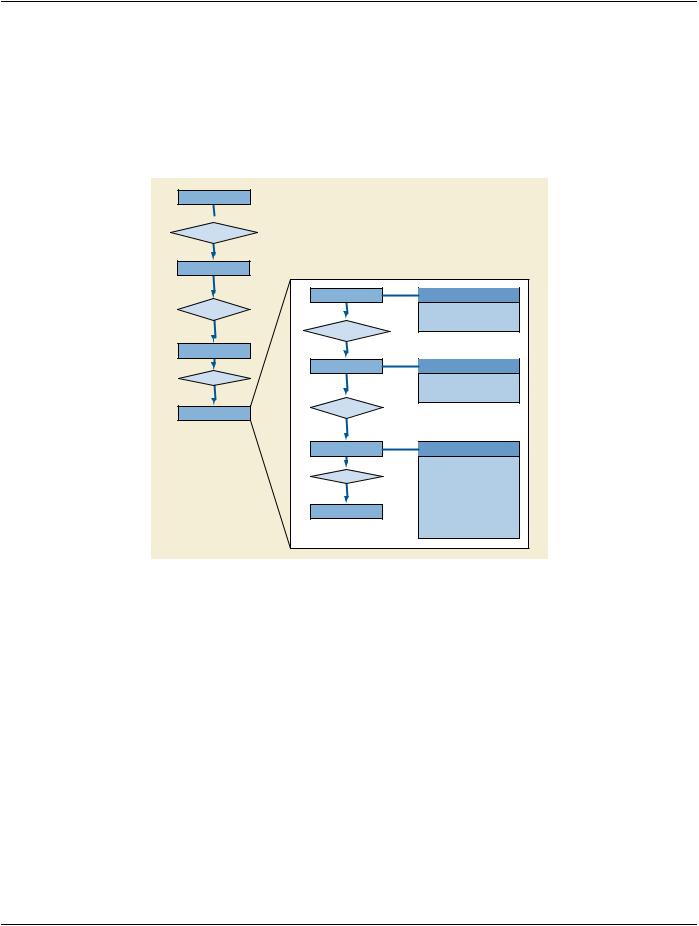
The information model, or internal organizational structure, of the Waveform IE is shown in Figure C.5-1. A waveform information object includes data from a continuous time period during which signals were acquired. The object may contain several multiplex groups, each defined by digitization with the same clock whose frequency is defined for the group. Within each multiplex group there will be one or more channels, each with a full technical definition. Finally, each channel has its set of digital waveform samples.
Patient
 1 is the subject of 1-n
Study
1 |
Waveform |
Waveform Attributes |
|
|
|
contains |
|
Time of Acquisition |
1-n |
1 |
Acquisition Context |
|
contains |
Annotation |
|
|
|
Series |
1-n |
|
|
|
|
1 |
Multiplex Group |
Multiplex Group Attributes |
|
|
|
contains |
|
Number of Channels |
1-n |
|
|
|
Sampling Frequency |
|
|
|
|
|
1 |
Timing |
Waveform |
contains |
|
1-n |
|
|
|
|
|
|
Channel |
Channel Attributes |
|
1 |
Channel Source |
|
Metric |
|
|
contains |
|
|
Anatomic Location(s) |
|
|
1-n |
|
|
Function |
|
|
|
|
|
|
Technique |
|
Sample |
Channel Sensitivity |
|
Baseline |
|
|
|
|
|
|
Skew |
|
|
Filter Characteristics |
Figure C.5-1. DICOM Waveform Information Model
C.6 Harmonization With HL7
This Waveform IE definition is harmonized with the HL7 waveform semantic constructs, including the channel definition Attributes and the use of multiplex groups for synchronously acquired channels. The use of a common object model allows straightforward transcoding and interoperation between systems that use DICOM for waveform interchange and those that use HL7, and may be viewed as an example of common semantics implemented in the differing syntaxes of two messaging systems.
This section describes the congruence between the DICOM Waveform IE and the HL7 version 2.3 waveform message format (see HL7 version 2.3 Chapter 7, sections 7.14 - 7.20).
C.6.1 HL7 Waveform Observation
Waveforms in HL7 messages are sent in a set of OBX (Observation) Segments. Four subtypes of OBX segments are defined:
•The CHN subtype defines one channel in a CD (Channel Definition) Data Type
•The TIM subtype defines the start time of the waveform data in a TS (Time String) Data Type
•The WAV subtype carries the waveform data in an NA (Numeric Array) or MA (Multiplexed Array) Data Type (ASCII encoded samples, character delimited)
- Standard -
Page 72 |
DICOM PS3.17 2020a - Explanatory Information |
•The ANO subtype carries an annotation in a CE (Coded Entry) Data Type with a reference to a specific time within the waveform to which the annotation applies
Other segments of the HL7 message definition specify patient and study identification, whose harmonization with DICOM constructs is not defined in this Annex.
C.6.2 Channel Definition
TheWaveformModuleChannelDefinitionsequenceAttribute(003A,0200)isdefinedinharmonizationwiththeHL7ChannelDefinition (CD) Data Type, in accordance with the following Table. Each Item in the Channel Definition sequence Attribute corresponds to an OBX Segment of subtype CHN.
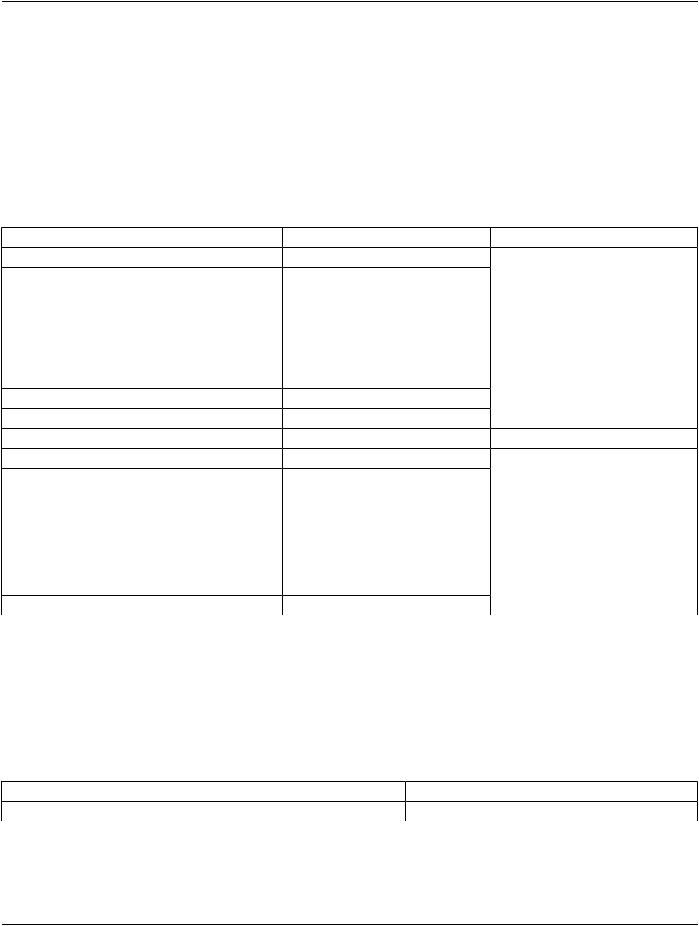
Table C.6-1. Correspondence Between DICOM and HL7 Channel Definition
DICOM Attribute |
DICOM Tag |
HL7 CD Data Type Component |
|
Waveform Channel Number |
(003A,0202) |
Channel Identifier (number&name) |
|
Channel Label |
(003A,0203) |
|
|
Channel Source Sequence |
(003A,0208) |
Waveform Source |
|
Channel Source Modifier Sequence |
(003A,0209) |
|
|
Channel Sensitivity |
(003A,0210) |
Channel Sensitivity and Units |
|
Channel Sensitivity Units Sequence |
(003A,0211) |
|
|
Channel Sensitivity Correction Factor |
(003A,0212) |
Channel Calibration Parameters |
|
Channel Baseline |
(003A,0213) |
(correctionfactor&baseline×kew) |
|
Channel Time Skew |
(003A,0214) |
||
|
|||
[Group] Sampling Frequency |
(003A,001A) |
Channel Sampling Frequency |
|
Channel Minimum Value |
(5400,0110) |
Minimum and Maximum Data Values |
|
Channel Maximum Value |
(5400,0112) |
(minimum & maximum) |
|
|
|
||
Channel Offset |
(003A,0218) |
not defined in HL7 |
|
Channel Status |
(003A,0205) |
|
|
Filter Low Frequency |
(003A,0220) |
|
|
Filter High Frequency |
(003A,0221) |
|
|
Notch Filter Frequency |
(003A,0222) |
|
|
Notch Filter Bandwidth |
(003A,0223) |
|
In the DICOM information object definition, the sampling frequency is defined for the multiplex group, while in HL7 it is defined for each channel, but is required to be identical for all multiplexed channels.
Note that in the HL7 syntax, Waveform Source is a string, rather than a coded entry as used in DICOM. This should be considered in any transcoding between the two formats.
C.6.3 Timing
In HL7, the exact start time for waveform data is sent in an OBX Segment of subtype TIM. The corresponding DICOM Attributes, which must be combined to form the equivalent time string, are:
Acquisition DateTime |
(0008,002A) |
Multiplex Group Time Offset |
(0018,1068) |
- Standard -

DICOM PS3.17 2020a - Explanatory Information |
Page 73 |
C.6.4 Waveform Data
The DICOM binary encoding of data samples in the Waveform Data (5400,1010) corresponds to the ASCII representation of data samples in the HL7 OBX Segment of subtype WAV. The same channel-interleaved multiplexing used in the HL7 MA (Multiplexed Array) Data Type is used in the DICOM Waveform Data Attribute.
Because of its binary representation, DICOM uses several data elements to specify the precise encoding, as listed in the following Table. There are no corresponding HL7 data elements, since HL7 uses explicit character-delimited ASCII encoding of data samples.
Number of Waveform Channels |
(003A,0005) |
Number of Waveform Samples |
(003A,0010) |
Waveform Bits Stored |
(003A,021A) |
Waveform Bits Allocated |
(5400,1004) |
Waveform Sample Interpretation |
(5400,1006) |
Waveform Padding Value |
(5400,100A) |
C.6.5 Annotation
InHL7,WaveformAnnotationissentinanOBXSegmentofsubtypeANO,usingtheCE(CodedEntry)DataTypeCE.Thiscorresponds precisely to the DICOM Annotation using Coded Entry Sequences. However, HL7 annotation ROI is to a single point only (time refer- ence), while DICOM allows reference to ranges of samples delimited by time or by explicit sample position.
C.7 Harmonization With SCP-ECG
TheSCP-ECGstandardisdesignedforrecordingroutinerestingelectrocardiograms.SuchECGsarereviewedpriortocardiacimaging procedures, and a typical use case would be for SCP-ECG waveforms to be translated to DICOM for inclusion with the full cardiac imaging patient record.
SCP-ECG provides for either simultaneous or non-simultaneous recording of the channels, but does not provide a multiplexed data format (each channel is separately encoded). When translating to DICOM, each subset of simultaneously recorded channels may be encoded in a Waveform Sequence Item (multiplex group), and the delay to the recording of each multiplex group shall be encoded in the Multiplex Group Time Offset (0018,1068).
The electrode configuration of SCP-ECG Section 1 may be translated to the DICOM Acquisition Context (0040,0555) sequence items using TID 3401 “ECG Acquisition Context” and Context Groups 3263 and 3264.
The lead identification of SCP-ECG Section 3, a term coded as an unsigned integer, may be translated to the DICOM Waveform Channel Source (003A,0208) coded sequence using CID 3001 “ECG Leads”.
Pacemaker spike records of SCP-ECG Section 7 may be translated to items in the Waveform Annotations Sequence (0040,B020) with a code term from CID 3335 “ECG Annotations”. The annotation sequence item may record the spike amplitude in its Numeric Value and Measurement Units Attributes.
- Standard -

Page 74 |
DICOM PS3.17 2020a - Explanatory Information |
- Standard -

DICOM PS3.17 2020a - Explanatory Information |
Page 75 |
D SR Encoding Example (Informative)
This Annex was formerly located in Annex K “SR Encoding Example (Informative)” in PS3.3 in the 2003 and earlier revisions of the Standard.
The following is a simple and non-comprehensive illustration of the encoding of the Informative SR Content Tree Example in PS3.3.
SR Tree |
Nesting |
Attribute |
Tag |
VR |
VL (hex) |
Value |
Depth |
|
|
|
|
|
|
|
|
SOP Class UID |
(0008,0016) |
UI |
001e |
1.2.840.10008.5.1.4.1.1.88.33 |
|
|
SOP Instance UID |
(0008,0018) |
UI |
0012 |
1.2.3.4.5.6.7.300 |
|
|
Study Date |
(0008,0020) |
DA |
0008 |
19991029 |
|
|
Content Date |
(0008,0023) |
DA |
0008 |
19991029 |
|
|
Study Time |
(0008,0030) |
TM |
0006 |
154500 |
|
|
Content Time |
(0008,0033) |
TM |
0006 |
154510 |
|
|
Accession Number |
(0008,0050) |
SH |
0006 |
123456 |
|
|
Modality |
(0008,0060) |
CS |
0002 |
SR |
|
|
Manufacturer |
(0008,0070) |
LO |
0004 |
WG6 |
|
|
Referring Physician's |
(0008,0090) |
PN |
0014 |
Luke^Will^^Dr.^M.D. |
|
|
Name |
|
|
|
|
|
|
Coding Scheme |
(0008,0110) |
SQ |
ffffffff |
|
|
|
Identification Sequence |
|
|
|
|
|
%item |
|
|
|
|
|
|
> |
Coding Scheme |
(0008,0102) |
SH |
000e |
99STElsewhere |
|
|
Designator |
|
|
|
|
|
> |
Coding Scheme UID |
(0008,010C) |
UI |
0010 |
1.2.3.4.6.7.8.91 |
|
> |
Responsible |
(0008,0116) |
ST |
0034 |
Informatics Dept |
|
|
Organization |
|
|
|
St Elsewhere Hosp |
|
|
|
|
|
|
|
|
|
|
|
|
|
Boston, MA 02390 |
|
%enditem |
|
|
|
|
|
|
%endseq |
|
|
|
|
|
|
|
Referenced Performed |
(0008,1111) |
SQ |
ffffffff |
|
|
|
Procedure Step |
|
|
|
|
|
|
Sequence |
|
|
|
|
|
%endseq |
|
|
|
|
|
|
|
Patient's Name |
(0010,0010) |
PN |
000e |
Homer^Jane^^^ |
|
|
Patient's ID |
(0010,0020) |
LO |
0006 |
234567 |
|
|
Patient's Birth Date |
(0010,0030) |
DA |
0008 |
19991109 |
|
|
Patient's Sex |
(0010,0040) |
CS |
0002 |
F |
|
|
Study Instance UID |
(0020,000D) |
UI |
0012 |
1.2.3.4.5.6.7.100 |
|
|
Series Instance UID |
(0020,000E) |
UI |
0012 |
1.2.3.4.5.6.7.200 |
|
|
Study ID |
(0020,0010) |
SH |
0006 |
345678 |
|
|
Series Number |
(0020,0011) |
IS |
0002 |
1 |
|
|
Instance (formerly |
(0020,0013) |
IS |
0002 |
1 |
|
|
Image) Number |
|
|
|
|
- Standard -