Материал: part17

Внимание! Если размещение файла нарушает Ваши авторские права, то обязательно сообщите нам

Page 866​

DICOM PS3.17 2020a - Explanatory Information​

Operator

Contrast Infusion

Contrast Usage

RIS

Manager

Consumers


Preparation

Note

The procedure details contain information expected by the infusion informer / infusion action informer may use procedure code, procedure name or explicit contrast reference. The mechanism that steers this information into the Infusion Manager is not addressed.

Patient and Study context

Patient / Study selection

Create explict

Contrast Usage plan

Administration

Note

As many or as few details as possible - since it’s manual, only limited information is expected. (e.g., total volume, average flow rate, etc.)

Register contrast usage details

Contrast Report Use

Imaging Agent Administration SR

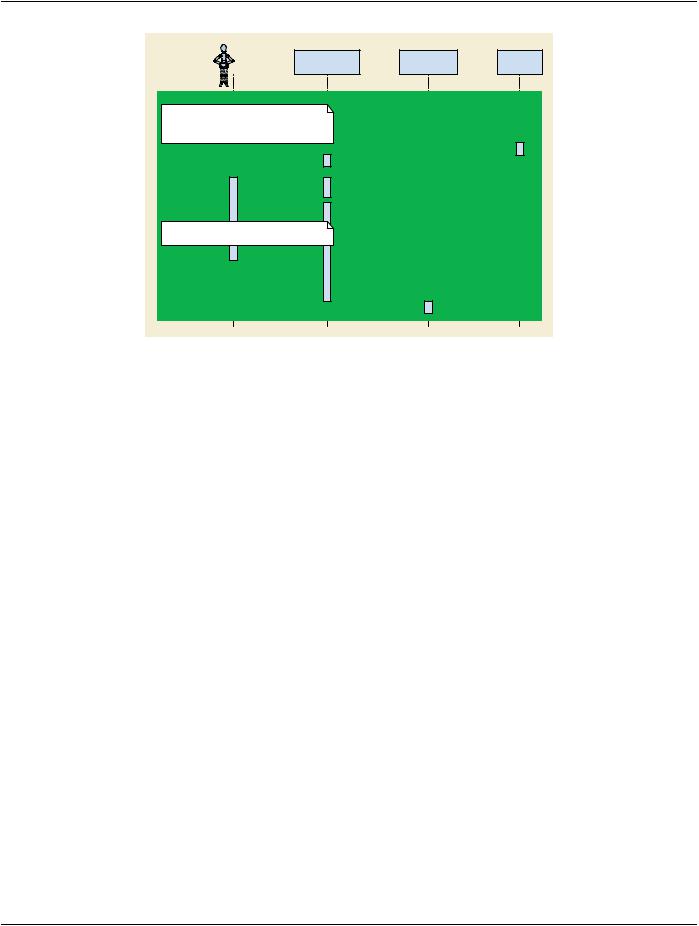
Figure LLLL.2-1. Use Case 1 - Manual Bolus Injection​

LLLL.2.2 Use Case 2 - Automatic Infusion Pump - Contrast Reporting​

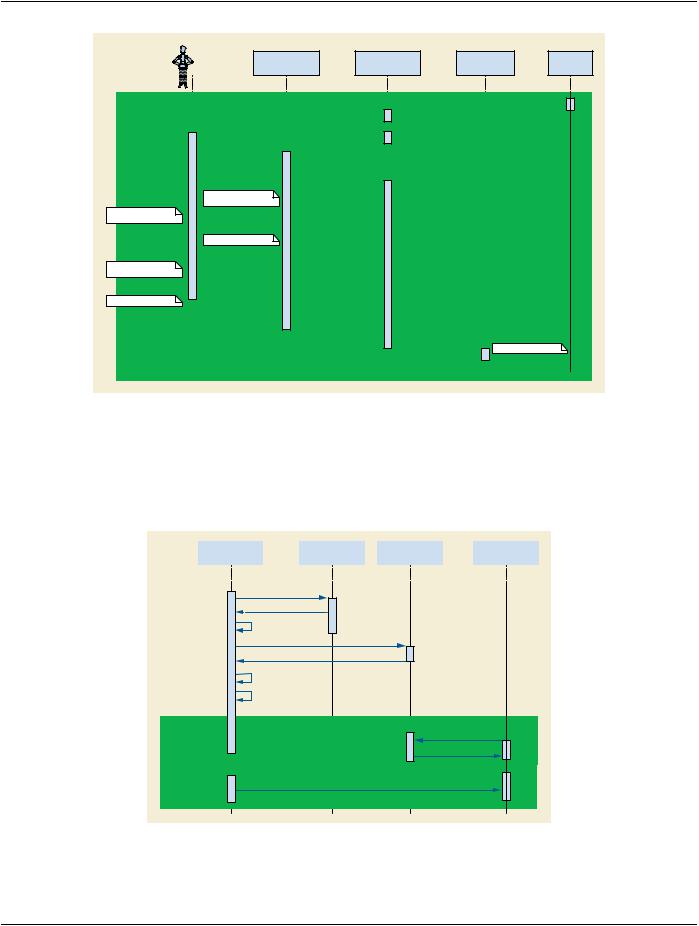
The use case shown in Figure LLLL.2-2 is an example of how a performed object could be used for capturing an automatic infusion.​ The technologist selects a patient at the infusion manager from the work list available from the scheduling system and then performs​ anautomatedadministrationofcontrastfortheselectedpatient.Theinfusionmanagerrecordsvariouseventsduringtheadministration.​ The data from the injector events and from the adverse events that occurred during the administration are captured and obtained by​ the infusion manager.​

Upon completion of the administration procedure, the infusion manager generates a Performed Imaging Agent Administration SR​ objectusingtheinjectiondataobtainedfromtheinjectionsystemandincludingtheeventsandupdatedparametersthatwerecaptured​ during the administration. The generated report is then sent to the PACS and other contrast usage consumers.​

- Standard -​


DICOM PS3.17 2020a - Explanatory Information​

Page 867​


Operator

Contrast Infusion

Contrast Infusion

Contrast Usage

RIS


System


Manager

Consumers


Preparation


Patient and Study context


Patient / Study selection


Administration

Program infusion


Start infusion


Start infusion event


e.g., Pressure limit reached


Pump infusion event


flow rate limited


e.g., Pressure limit reached

Adjust settings


flow rate limited


Update parameters


e.g.,Extravasation


Pump infusion event


Pump infusion event


e.g., Increase volume to

Adjust settings


compensate for extravasation


Update parameters


e.g.,Validate

Modify / Correct


Infusion finished


Infusion finished


Contrast Report Use


Imaging Agent Administration SR


Contrast Report


Figure LLLL.2-2. Use Case 2 - Automatic Infusion Pump - Contrast Reporting​

LLLL.2.3 Use Case 3 - Protocoling​

The use case shown in Figure LLLL.2-3 is an example of how a planned object could be used. The radiologist uses the protocoling​ application in order to plan the contrast administration protocol for a patient. The protocoling application outputs the planned object​ into the infusion manager for immediate use or to the RIS or PACS. The planned object is used by the technologist during the study.​

Protocoling


RIS


PACS


Contrast Infusion

Application


Manager


Worklist Query

Procedure Steps

Radiologist starts new case

Requests prior performed SR

Return prior performed SR

Radiologist reviews orders

Radiologist customizes injection protocol for patient

Alternative 1

Register contrast usage details

Query contrast usage details

Provide contrast usage details

Alternative 2

Register contrast usage details

Figure LLLL.2-3. Use Case 3 - Protocoling​

- Standard -​

Page 868​

DICOM PS3.17 2020a - Explanatory Information​

LLLL.2.4 Use Case 4 - Consumption of the Contrast Information by Reporting Systems for​ Automated Documentation​

This use case gives an example of how a Performed Imaging Agent Administration SR object could be used for capturing summary​ valuesofcontrastintoaradiologyreportingsystem.Inthiscase,theradiologyreportingsystemwouldbeaContrastUsageConsumer​ (Figure LLLL.2-2).​

The most straightforward and ubiquitous need for the contrast administration record is in the radiologist reporting workflow. Inclusion​ of delivered contrast data into templates or sections of the report is mandated in some regions of the world as evidence for billing​ reconciliation. More generally, the radiologist can include this data for completeness of study documentation. Ostensibly, contrast​ data included in reports may be used to construct a longitudinal record of contrast exposure for a patient undergoing multiple imaging​ studies.​

Data of primary importance in this workflow are the summary values of contrast administered to the patient (total volume of contrast,​ saline, flow rate and concentration/type of contrast used). Often, information describing the vascular access device used (e.g., cath-​ eter gauge) is clinically relevant and/or mandated.​

The guidance from ACR [ACR Communication] about the procedures and materials description in the report body states, “The report​ shouldincludeadescriptionofthestudiesand/orproceduresperformedandanycontrastmediaand/orradiopharmaceuticals(including​ specificadministeredactivities,concentration,volume,androuteofadministrationwhenapplicable),medications,catheters,ordevices​ used, if not recorded elsewhere”.​

LLLL.3 Informative References​

[ACR Communication] American College of Radiology. 2014. Resolution 11. ACR Practice Parameters and Technical Standards -​ Practice Guideline for Communication of Diagnostic Imaging Findings. http://www.acr.org/-/media/ACR/Files/​ Practice-Parameters/CommunicationDiag.pdf .​

- Standard -​

DICOM PS3.17 2020a - Explanatory Information​

Page 869​

MMMM Performed Imaging Agent​ Administration Structured Report​ (Informative)​

This Annex describes the use of Imaging Agent Administration Structured Report objects.​

MMMM.1 Performed Imaging Agent Administration Structured Report​

This Section contains examples for use cases involving contrast imaging of a single patient in CT system.​

In the basic use case:​

•​Patient was scheduled by RIS system with a study UID and accession number.​

•​An Injection procedure for the study was described by an IAASR plan object.​

•​Patient suffers from insufficient renal function, so intravenous (i.v.) contrast agents were dissolved to achieve necessary volumes.​

•​Before i.v. contrast was administered a 10 mg Prednisone injection was given to the patient.​

•​Afterconnectingthepatienttotheinjectionsystem,apatencytestinjectionwasdone.(Theinjectionsystemdoesnotrecorddetailed​ graph information of this.)​

•​"Keep vein open" was activated at a rate of 1 ml per minute.​

•​The Requested Procedure was a CT abdominal study with both i.v. and oral contrast administration.​

•​Oral contrast media OralContrastofin was diluted to 25:1000 as given in the drug usage description. 1000 ml of oral contrast​ mediawasgiven2hoursinadvanceoftheprocedure.(Preparationof1000mlsolutionuses24.4mlcontrastand975.6mlwater)​

•​Test bolus and Imaging injection phase was done at 3 ml/s and were followed by a 30 ml flush at the same flow rate.​

•​Before the diagnostic injection, a test bolus of 10 ml undiluted ContrastStuff 370 contrast was given, in order to determine scan​ delay time for the diagnostic injection.​

•​Finally 88 ml i.v. contrast media ContrastStuff 370 (corresponding to 0.5 g iodine / kg body weight for a 65 kg person) was given​ during imaging. Due to the high viscosity of the contrast and renal insufficiency of the patient, ContrastStuff 370 was diluted 1:1​ with 88 ml flush on the fly during injection.​

The content tree structure would resemble:​

Node​

Code Meaning of Concept​ Code Meaning or Example Value​

Reference to TID/ CID/ Comments​


Name​


1​

Performed Imaging Agent​


TID 11020​


Administration​


1.1​

Language of Content Item​

English​

TID 11020​


and Descendants​


TID 1204​


1.1.1​

Country of Language​

United States​

TID 1204​

1.2​

Observer Type​

Person​

TID 1002​


CID 270​

1.3​

Person Observer Name​

Doe^Jane​

TID 1003​

- Standard -​

Page 870​

DICOM PS3.17 2020a - Explanatory Information​


Node​

Code Meaning of Concept​ Code Meaning or Example Value​

Reference to TID/ CID/ Comments​


Name​


1.4​

Observer Type​

Device​

TID 1002​


Since Observer Type is Device​

1.5​

Device Observer UID​

1.2.3.4.47110815.1​

TID 1004​

1.6​

Device Observer​

Injector Corporation​

TID 1004​


Manufacturer​


1.7​

Device Observer Model​

XYZ INJECTOR​

TID 1004​


Name​


1.8​

Device Observer Serial​

1234567890​

TID 1004​


Number​


1.9​

Station AE Title​

XYZINJAET​

TID 1004​

1.10​

Procedure Study Instance​

1.2.3.4.47110815.2​

TID 1005​


UID​


Defaults to Study Instance UID​


(0020,000D) of General Study Module​

1.11​

Accession Number​

123456789​

TID 1005​


Defaults to (0008,0050)​

1.12​

Medication given​


TID 8131​

1.12.1​

Route of administration​

(47625008, SCT, "Intravenous route")​

TID 8131​


CID 11​

1.12.2​

Mixture​


TID 8131​

1.12.2.1​

Drug administered​

Prednisone​

TID 8131 row 7​

1.12.2..2​

Medication Type​

(130259, DCM, "Contrast Reaction​

TID 8131​


Prophylactic Agent")​

CID 76​


1.12.2.3​

Dosage​

2 ml​

TID 8131​


CID 82 (Units)​

1.12.2.4​

Concentration​

5 mg/ml​

TID 8131​


CID 82 (Units)​

1.13​

Patient Characteristics​


TID 10024​

1.13.1​

Patient State​

(414417004, SCT, "History of renal failure")​TID 10024​


CID 64​

1.13.2​

Subject Age​

25​

TID 10024​


CID 7456​


UNITS=EV (a, UCUM, "year")​

1.13.3​

Subject Sex​

(M, DCM, "Male")​

TID 10024​


CID 7455​

1.13.4​

Patient Height​

175​

TID 10024​


UNITS=EV (cm, UCUM, "cm")​

1.13.5​

Patient Weight​

65​

TID 10024​


UNITS=EV (kg, UCUM, "kg")​

- Standard -​

Источник: https://studfile.net/preview/14585770/