Материал: 2048
4. If the secondary coil is attached to a load that allows current to flow, electrical poweris transmitted from the primary circuit to the secondary circuit.
5. All the incoming energy is transformed from the primary circuit to the magnetic field and into the secondary circuit.
С6. Transformers for use at power or aiduo frequencies typically do not have any cores made of high permeability silicon steel.
7. Ferromagnetic materials are good insulators and a solid core made from such a material also constitutes a single short-circuited turn throughout its entireиlengh.
8. A small transformer, such as a plug-in “wall-wart” or power adapter type used for high-power consumer electronics.
9. Each time the magnetic field is reversed; a small amount of energy is lost due to hysteresisбАwithin the core.
10. Powdered iron cores are used in circuits that operate above main frequencies and up to a few tens of kilohertz.
10. Заполн те пропуски в тексте необходимыми предлогами и выполните письменный перевод на русский язык.
A key application … transformers is to increase voltage before transmitting electrical energy … long distances through wires. Wires have resistance and so dissipate electrical at a rate proportional to the square … the current through the wire. …. transformingДelectrical power to a high-voltage (and therefore low-current) form for transmission and back again afterwards, transformers enable economic transmission of power … long distances. Consequently, transformers have shaped the electricity supply industry, permitting generation to be located remotely … points of demand. All but a tiny fraction … the world's electrical power has Иpassed … a series of transformers by the time it reaches the consumer. Transformers are used extensively … electronic products to step down the supply voltage to a level suitable … the low voltage circuits they contain. The transformer also electrically isolates the end user from contact … the supply voltage.
Signal and audio transformers are used to couple stages of amplifiers and to match devices such as microphones and record player cartridges … the input impedance of amplifiers. Audio transformers allowed telephone circuits to carry on a two-way conversation over a single pair of wires. Transformers are also used when it is necessary to couple a differential-mode signal … a ground-referenced signal, and … isolation between external cables and internal circuits.
61
11. Прочтите текст еще раз и ответьте на вопросы.
1. What is a generator used for? 2. What is a transformer used for?
3. What does a transformer consist of? 4. What kinds of cores do you know?
5. How does the electromagnetic field around the primary coil change if a Сvarying voltage is applied to it? 6. What does the value of the induced
e.m.f. depend upon?
7. How are transformers classed? 8. When does the inductive reactance of the transformer increase? 9. Where must air core transformers be used?
рах.
просами12. оставьте план текста и на его основе, а также пользуясь во- з упражнен я 10, подготовьте рассказ о трансформато-
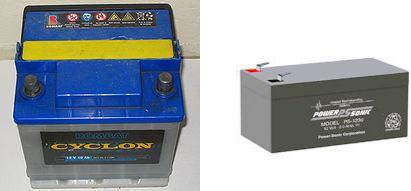
1. Рассмотр те зо ражения (рис. 14) и ответьте на вопросы.
1. What is shown in these pictures?
2. What is the usage of this device?
бАTEXT 8
3. What types of this device do you know? Д
2.Прочтите первые предложения абзацевИи назовите вопросы,
которые будут рассматриваться в тексте.
3.Прочитайте текст и постарайтесь понять его содержание.
62
plate – пластина;
sulphuric acid – серная кислота; dilute – разбавленный, разведенный.
5. Прочтите следующие слова вслух и назовите их эквиваленты |
|||
С |
|
|
|
на русском языке: |
|
|
|
Alessandro Volta |
discovery |
difference |
regardless |
approximately |
exhausted |
particular |
chemicals |
charge capacity |
zinc |
carbon |
protrude |
negative electrode |
ensemble |
|
|
6. |
Ответьте на вопросы. |
1. |
What are the two common forms battery cells are manufactured? |
2. |
What could these battery cells be used for? |
3. |
How the difference of potential between the terminals of any dry or wet |
cellиis explained? |
|
4. |
What is the main distinction of dry and wet cells? |
7. |
Закончите предложения, используя данные ниже слова, при не- |
обходимостибАменяя их грамматическую форму.
To provide, to refer, strong, to invent, to be, to run, to transfer, to charge, to use, liquid, to coat.
1.The first battery …… in 1800 by Alessandro Volta.
2.Near the end of the 19th century, the invention of dry cell batteries, which replaced … electrolyte with a paste, made portable electrical devices practical.
3.In the modern sense of the term, a battery is a device that …. a current by means of an electrochemical reaction, wherein electrons ……. from one chemical to another.
4.However, the original usage of the term not to an electrochemical cell but to a set of linked Leyden jar, which, in the 18th century was used by scientists as a means of storing charge.
5.Leyden jars … the first capacitors, and basically consisted of a glass jar whose inner and outer surfaces with metal foil, and had an …. electrode through its center.
6.They could …. with a static generator, and …. by touching a conductor to its electrode. ДИ
64
7. Scientists could obtain …. discharges by linking the electrodes of multiple jars together.
8. It was Benjamin Franklin who, in 1748, first …. the word "battery" to describe a similar assembly of glass plates with lead sheets pasted on either surface.
С8. а) Выберите из предложенных определений одно, наиболее точ-
но отражающее значение выделенного слова, в каждом из следующ х предложен й:
1.иBatteries as continuous sources of electrical energy are the result of a long series of experiments which started with the discoveries of Alessandro Volta more than one hundred years ago.
a) the point or place from which something originates;
b) any person, book, organization, etc., from which information, evidence, etc., is obtained;
c)the electrode region in a field-effect transistor from which majority carriers flow into the interelectrode conductivity channel.
2.Today battery cells are manufactured in two common forms, dry cells being used in flash lights, portable radios, etc.
a)a small simple room, as in a prison, convent, monastery, or asy-
lum;
b)a device for converting chemical energy into electrical energy, usually consisting of a container with two electrodes immersed in an electrolyte.
3.The difference of potential between the terminals of every dry cell, regardless of size, is approximately 1.5 volts.
a)the state or quality of being unlike;
b)a disagreement or argument;
c)a degree of distinctness, as between two people or things.
4.The difference of potential between the terminals of any dry or wet cell depends in principle upon the particular chemicals used in its construction.
a)exacting or difficult to please, esp. in details;
b)of or belonging to a single or specific person, thing, category, etc.; specific. бАИ
65