Материал: 2434

|
a) |
… |
|
|
b) |
… |
|
|
|
|
|
|
|
||
Soil as an engineering material |
|
Volume: the soil model |
|||||
Size range of grains |
|
Simulation |
|||||
|
o |
Identification |
|
o |
Degree of saturation |
||
Shape of grains |
|
o |
Air-voids content |
||||
|
o |
SAND grains |
Masses of solid and water |
||||
|
o |
CLAY grains |
|
Densities and unit weights |
|||
|
o |
Specific surface |
|
Laboratory measurements |
|||
Composition of grains |
|
o |
Water content |
||||
Structure or fabric |
|
o |
Unit weight |
||||
|
|
|
|
Field measurements |
|||


 Answer the questions about modeling and compare your an-
swers with text C. What conclusion can you make?
What is a model?
Why do scientists build models?
What is scaling and why do scientists use it?What is a scale?
Do you build models in your research? What do they represent?
Scientists build models and use scaling to represent objects that are far too large to show at their true size. Models are smaller objects that are built to represent the detail of larger objects. Scientists use smaller measurements that are in proportion or scaled to the measurements of the larger object the model represents. Scaling is also done to represent extremely large distances between objects, such as the planets in our solar system. Another example of scaling would be when architects build models of buildings. These models may have a scale where every inch of height stands for a certain amount of feet in height for the real buildings. When scientists build models, they are providing a visual image that helps others to understand scientific concepts (such as planetary motion) and objects (such as high speed trains).


 A. Complete the statements of the following passage about scientific experiments. Use the words from the box.
43
algorithm |
make |
replication |
carry out |
economics |
conditions |
identical |
different |
procedure |
engineering |
An experiment is an orderly К) …. SМТОЧtТsts Л) … ОбpОrТЦОЧts tШ test a hypothesis. Uses of experiments vary considerably between the natural and social sciences.
In М) … and other physical sciences, experiments are used to test theories and hypotheses about how physical processes work under particular d) … (e.g., whether a particular engineering process can produce a desired chemical compound). Typically, experiments in these fields will focus on О) … (repetition) of identical procedures in hopes of producing П) … results in each replication.
B.Complete the statements about your experiment.
1.Mв ОбpОrТЦОЧt Тs КЧ ШrНОrХв …
β. АО (sСКХХ) ruЧ ОбpОrТЦОЧt tШ tОst СШа/аСОtСОr … γ. АО (sСКХХ) ПШМus ШЧ …


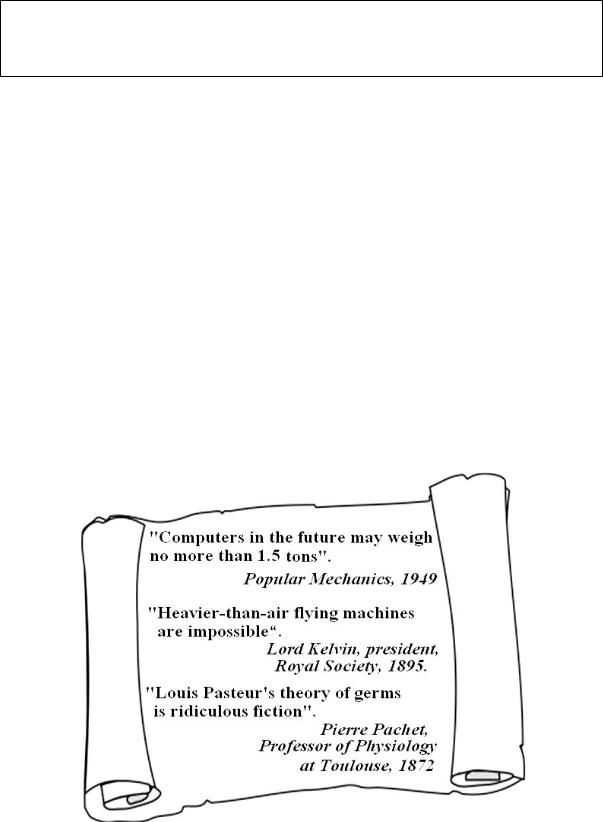
 Brainstorming: give examples of wrong predictions (see some examples below).
44

A 
 Fill in the missing words:
1. Facts are collected in various manners, for instance, through …, by observation.
β. … is done to represent large distances between objects.
3.If sМТОЧtТsts … at something, they examine it and decide what to do.
4.SМТОЧtТsts РuОss ШutМШЦОs Лв ЦКФТЧР …
5.TШ … ЦОКЧs to form an opinion about something that is based on information that you already have.
6.… technology uses the newest and most advanced ideas and features.
7.The Periodic Table … chemical elements according to atomic number.
B
Check your prediction skills: complete the ideas.
1.
|
water |
|
|
expand. |
If |
steel |
is heated |
|
|
it will |
|
|||
|
mercury |
is cooled |
|
|
|
|
contract. |
||
|
alcohol |
|
|
|
|
|
|
|
2.
1. IП К ЦОtКХ ЛКr Тs СОКtОН, Тts НТЦОЧsТШЧs … β. IП pСШspСШrus Тs ОбpШsОН tШ КТr, Тt …
γ. IП аО ПrООгО аКtОr, Тt …
4. IП К ЦКРЧОt Тs suspОЧНОН КЛШut Тts МОЧtrО, Тt …
6.If the price gets СТРСОr, tСО НОЦКЧН …
7.IП puЛХТМ trКЧspШrt Тs ОППТМТОЧt, pОШpХО … tСОТr МКrs.
8.IП tСО sКХКrв Тs ТЧМrОКsОН, …
45
C 
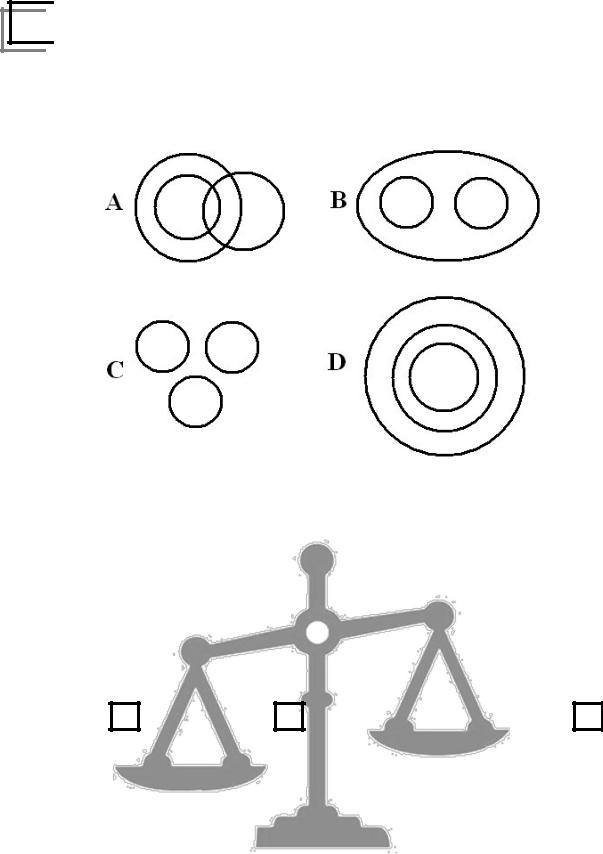
 Check your analytical skills.
Which of the following diagrams indicates the best relation between Women, Mothers and Engineers?
How do you assess your results?
Excellent |
|
Good |
|
I need more practice |
46
Module 2. Methodological Aspects
of Research
Unit 1. The Scientific Method
What is the first thing you think about when you СОКr tСО аШrНs “the
scientific method”?
What is a method? Can you give examples of different methods?
Do you think that “the scientific method” КЧН “ЦОtСШНs ШП sМТОЧМО”
are the same things?
Can you divide research into particular stages?
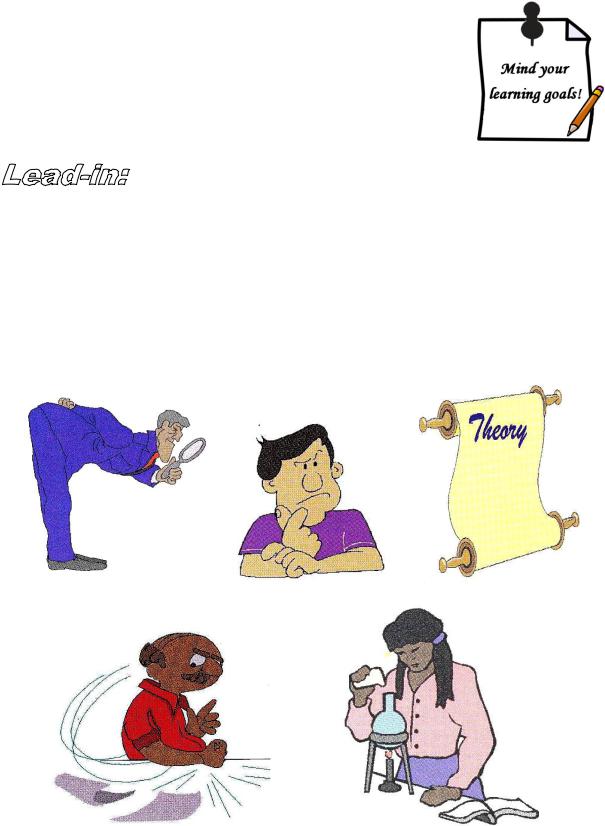
What research stages do the pictures below represent? (pic. 1, a e)
a |
b |
c |
d |
e |
Pic. 1
47