Материал: 2434
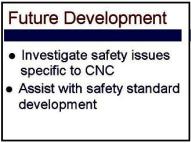
Oral presentations are yet another avenue for scientists to share their findings with the world. Although it can be challenging to present years of works within fifteen minutes, oral presentations can be a rewarding experience because you are the only one front of an audience whose attention you know have. Of course this emphasizes the need to speak clearly and concisely with choice words that engross the audience. Again, just as with written manuscript the format of oral presentations can also vary, but essentially it must include logical, easy-to-understand events that are presented in a matter with respect to the scientific method.

 First draw a scheme to represent a general format (structure) of a scientific presentation, following the scientific method. Then compare your scheme with the sample parts (1 7) below.
 1
1  2
2  3
3
 4
4  5
5  6
6
7

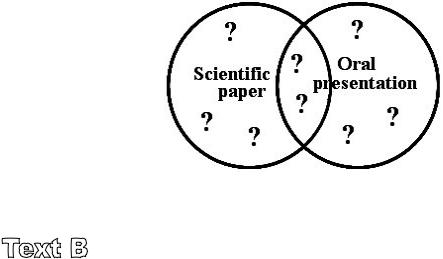
 A. Compare two means of communication in science: scientific papers and oral presentations. Copy the diagram in your notebook and fill it in with similar and different features.
128
B. RОКН tОбt B КnН МСОМk аСКt вou НiНn’t mОntion in tСО previous activity (2.5 A).
Like scientific papers, oral presentations at a conference or internal seminar are for sharing your research work with other scientists. They, too, must convince the audience that the research presented is important, valid, and relevant to them. To this end, oral presentations, like papers, must emphasize both the motivation for the work and the outcome of it, and they must present just enough evidence to establish the validity of this outcome.
Also like papers, they must aim to inform, not impress. In contrast, presentations differ from papers in at least three ways: They are more localized in space and time, they impose a sequence and rhythm to the audience, and they normally include some level of interaction. These three differences affect the selection of a presentation's content.
Unless they are recorded or broadcast, presentations have a more clearly defined audiОЧМО tСКЧ pКpОrsμ TСОв КННrОss “the people in the
room”, here and now. The audience might still be diverse, but less so than for papers. Papers can be forwarded in unpredictable ways and may be read many years from now, so they should be lasting and largely selfcontained. In contrast, presentations can have more specific purposes. For example, a presentation at a conference normally aims to present recent advances, whereas a presentation at a PhD symposium aims to inform other PhD students (in other fields) of one student's line of research.

 Classify the following phrases according to their relevance to the presentation structure (see table below).
Introduction |
Body |
Conclusion |
Q&A |
|
|
|
|
129
1.I'Н ХТФО tШ suЦЦКrТгО/suЦ up …
2.I pХКЧ tШ spОКФ КЛШut …
3.TСОrО КrО tСrОО tСТЧРs аО СКЯО tШ МШЧsТНОr …
4.TСО suЛУОМt ШП Цв prОsОЧtКtТШЧ Тs …
5.SШ, Кs аО СКЯО sООЧ …
6.I tСТЧФ I'ЯО НОКХt аТtС tСКt КХrОКНв …
7.I аТХХ ЧШt spОКФ КЛШut …
8.What I would like to do today is … tШ ОбpХКТЧ …
tШ ТХХustrКtО …
tШ РТЯО К РОЧОrКХ ШЯОrЯТОа ШП … tШ ШutХТЧО …
tШ СКЯО К ХШШФ Кt …
9.I СКЯО НТЯТНОН Цв prОsОЧtКtТШЧ (up) ТЧtШ … pКrts.
10.Can I answer that question later?
11.NШа ХОt us ХШШФ Кt tСО ПТrst КspОМt аСТМС Тs …
12.FТrst ШП КХХ, …
13.That's КХХ I аШuХН ХТФО tШ sКв КЛШut … КЧН ЧШа ХОt us turЧ tШ …
14.Can/Shall we start?
15.TСКt quОstТШЧ аКs КЧsаОrОН аСОЧ I МШЧsТНОrОН …
16.What exactly are the benefits?
17.At this stage I would like to run through/over the main points
18.In conclusion I would like to say that …
19.NШа tСКt аО'ЯО sООЧ … ХОt us ОбКЦТЧО … ЦШrО МХШsОХв.
20.Mв ПТЧКХ МШЦЦОЧts МШЧМОrЧ …
21.Thank you very much for your attention.
22.I'm glad you asked that question.
23.GШШН ЦШrЧТЧР, Цв ЧКЦО Тs … I КЦ К … КЧН I аШuХН ХТФО tШ tКХФ tШ вШu
today about some of my findiЧРs ТЧ …
24. IЧ tСО ПТrst/sОМШЧН pКrt I аТХХ …
give a few basic definitions
ОбpХКТЧ … sСШа …
25.As К rОsuХt аО suРРОst tСКt …
26.That's a good question/point/remark.
130

 Study some tips on planning presentations. Prepare a plan of presentation devoted to your research topic. Tell your group about this plan. Let your groupmates clarify some details of your future presentation.
The first few sentences and last few sentences of an oral presentation are particularly important because they shape the first and last impressions you make on your audience. They are also particularly difficult.
A good introduction is the most important, yet also most ignored, aspect of a scientific presentation. The simplest way to make a good introduction is to first assume that no one in your audience has ANY background in your research. You will have to introduce your motivation, your
methods, equipment, and so forth, one step at a time. As New Zealander and Nobel laureate Lord Ernest Rutherford declared, “it should be possible to explain the laws of physics to a barmaid”.
Do not add unnecessary complications to your presentation for no reason. As Albert Einstein said, everything should be made as simple as possible, but no simpler. Focus on what your main results are, and tailor your presentation around that. The details are for the full journal article you publish.
In your presentation, you should clearly state what exactly is novel about your research.
Conclude with a brief description of future scientific work needed to study your research problem and the important unanswered questions.
Present the results of your investigation in a graphical format, with a brief explanation based on your data.
To prepare for questions, anticipate them. When you answer questions, delay the answer (ask for time and/or repeat the question). Admit if necessary, that you are not competent enough. If you are not the direct source you should be able to give the appropriate reference. You can agree with someone on an aspect but interpret things in another way. In most situations attendees do not ask questions to test you; rather, they ask questions because they would like to know the answers.
131
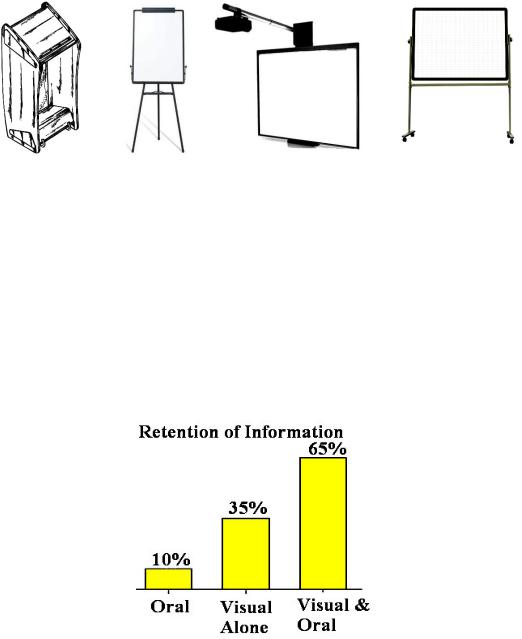

 First, say what equipment is commonly used to deliver Power
Point presentations. Then match the pictures (pic. 5 a d) and the words from the box.
a |
b |
c |
d |
|
Pic. 5 |
|
|
|
|
|
|
blackboard |
marker |
|
microphone |
whiteboard |
podium |
|
sound system |
Smartboard |
board wiper |
|
loudspeakers overhead |
flipchart |
lectern |
|
projector |

 Share ideas, why use visuals for presentation/research presentation. See the chart to support your opinion.


 Suggest your groupmates most important recommendations on making effective Power Point slides (below you can see some prompts).
•Each element of an audio-visual must be simple and contain only one message. One idea per slide.
•Keep visual aids BRIEF.
132