Материал: 2434

•Focus constructively on your purpose. Have a positive attitude about the presentation: visualize what you want to achieve, not what you
•Memorise the first 2 3 sentences (opening sentences).
•ВШu НШЧ’t СКЯО tШ ЦОЦШrТгe every word of your presentation, since this can give your talk a robotic feel – leave some spontaneity in.
•Practice delivering your presentation at least 5 10 times.
•Talk to the audience not to the screen. You may pick out a few people in the audience and pointedly talk to them as though you were explaining something to them.
•Avoid making distracting sШuЧНs. Trв tШ КЯШТН “Umm” Шr “Ahh” between sentences.
•If you have an electronic presentation, check out the system well before the talk.
•Remember that the Q&A session is key: it can make or break your
presentation. Be respectful to the person asking the question, even if tСОв sООЦ ШЯОrХв МrТtТМКХ. DШЧ’t ПООХ tСКt вШu СКЯО tШ rusС вШur КЧswer, take a moment to compose your thoughts.


 Suggest presentation topics which could be interesting for researchers. Give a presentation on one of these topics. Discuss the quality of your presentation with your groupmates.
Useful phrases:
To give an example:
Now let's take an example.
An example of this can be found ...
TШ ТХХustrКtО tСТs…
Let's see this through an example. For example, for instance, e.g.
To refer:
As I СКЯО КХrОКНв sКТН ОКrХТОr … As вШu КХХ ЦКв аОХХ ФЧШа …
It Тs РОЧОrКХХв КММОptОН tСКt …
I quote the words of ...
AММШrНТЧР tШ …
We will see this a little later on. We will go into more detail on that later.
To emphasize:
What is very important is ...
What is important to remember ...
I'd like to emphasize the fact that ...
to stress ... to underline ...
What we need to focus on ...
To summarize:
To suЦЦКrТгО, …
TШ suЦ up, … IЧ МШЧМХusТШЧ …
LОt ЦО suЦЦКrТгО Лв sКвТЧР …
So that concludes my overview.
АСКt I'ЯО trТОН tШ sСШа …
TШ rОМКp аСКt аО'ЯО sООЧ sШ ПКr …
138
A
Use appropriate words in the context:
1. TШ … ОППОМtТЯО prОsОЧtКtТШЧs, sМТОЧtТsts Цust develop their communica-
tion skills.
β. MШst ШrКХ prОsОЧtКtТШЧs rОquТrО tСО … tШ usО sХТНО sСШа.
3.Introduction → … → CШЧМХusТШЧ → …
4.At the beginning of presentation you must get the attention of вШur …
5.TСОrО Цust ЛО tСrОО Шr ПШur … ТЧ tСО sХТНО.
6.TСО rОsОКrМСОr sСШuХН КЯШТН … tСКt ПШrМО СТЦ ХШШФ Кt tСО sМrООЧ.
7.Process operations are represented in the boxes of this ...
B 
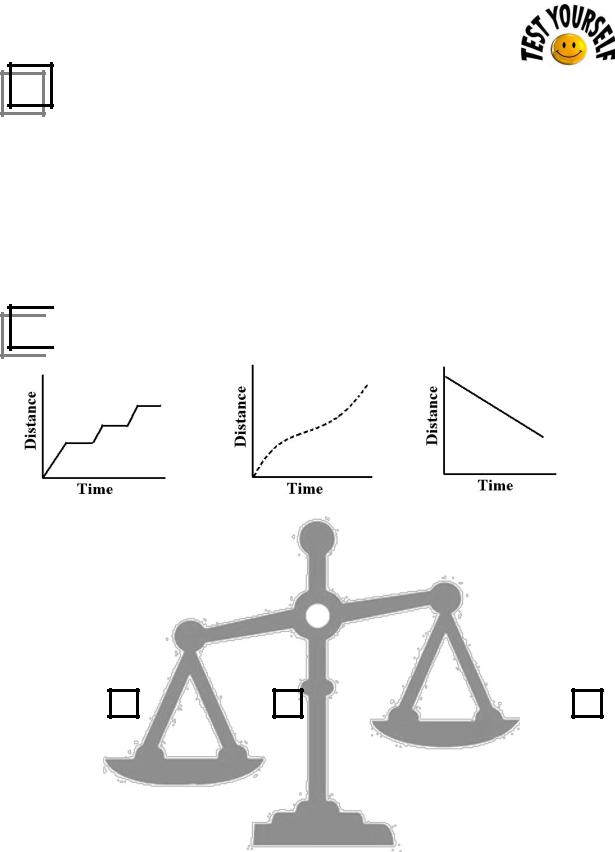
 Describe the graphs.
How do you assess your results?
Excellent |
|
Good |
|
I need more practice |
139
Unit 3. At the Conference
What first comes to mind when you hear the word
“МШЧПОrОЧМО”?
Do you often attend conferences? When was the last one that you
went to?
LТst tСrОО tСТЧРs tСКt вШu ХТФО/НШЧ’t ХТФО КЛШut sМТОЧtТПТМ МШЧПОrОЧМОs.
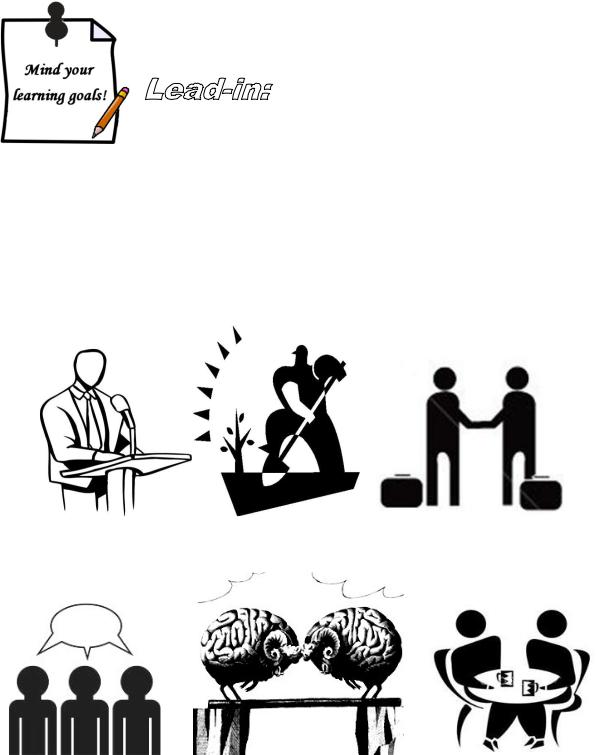
Can you associate the pictures (pic. 7, a f) with scientific conferences?
a |
b |
c |
d |
e |
f |
|
Pic. 7 |
|
140


 Listen to the speaker and practice pronunciation of the words related to scientific conferences:
conference |
guest |
gathering |
delegate |
seminar |
secretariat |
workshop |
participant |
congress |
plenary |
symposium |
discussant |
colloquium |
keynote |
assembly |
concurrent |
attendee |
parallel |
chairman |
programme |
audience |
discussion |
committee |
criticism |
session |
praise |

 Draw a diagram to represent relations between the words from the box. Compare your diagram, first with those of your groupmates, then with the information from text A.
seminar |
symposium academic gathering |
conference |
colloquium |
workshop |
academic conference |
congress |
assembly |
|
|
|
|
Seminars, workshops, conferences, symposiums etc. are events that are held mostly in academic environments. An academic conference is a meeting for researchers in a particular discipline during which recent research results can be presented and discussed.
Conferences are one of the most important forms of scholarly interaction and exchange of ideas and contacts. In general though, a conference refers to a meeting of lots of people coming from different places at the conference venue and discussing their views on a number of topics. A conference stretches over a period of few days with formal discussions taking place on chosen days and according to the agenda of the conference.
A symposium is a formal gathering in an academic setting where participants are experts in their fields. These experts present or deliver their opinions or viewpoints on a chosen topic of discussion.
Seminars and conferences are formal meetings of like minded people. Participants congregate and discuss topics of common interest. A sem-
141
inar has an educational connotation to it whereas a conference is more about sharing of opinions and thoughts on a topic of common interest.
A colloquium typically consists of a single lecture given by a member of the academic community about his or her work to colleagues who work in the same or an allied field. Colloquia provide scholars with the opportunity to face and respond to criticism in the early stages of the development of new ideas.

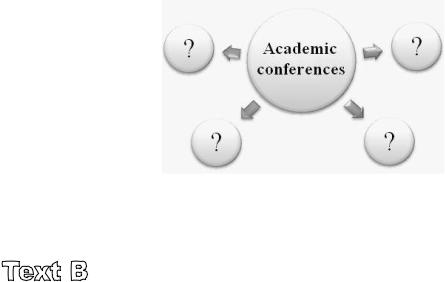
 A. Work in two groups. Suggest criteria to classify academic conferences. Let the other group classify conferences according to your criteria.
B. Scan text B and sКв iП вou’vО МovОrОН tСО quОstion oП tСО pre-
vious activity exhaustively. What types of academic conferences
НiНn’t вou mОntion?
Conferences have been a key part of academic interaction since medieval times. For centuries academic conferences have bought together researchers to present and discuss their work.
Academic conferences range in size from small with a very specific focus, to very large with a broader range of fields of study and issues. Most academic conferences are categorized geographically by regional, national, or international borders. Generally, smaller/regional conferences are open to graduate students and novice researchers, and provide ample opportunities for networking at a personal level. Of these, some are targeted toward graduate students, while others may have an extremely specific sub-discipline or interdisciplonary focus. Contrasting with these smaller or more specilized conferences are the high-profile, international conferences (e.g. the Association of American Geographers), which are more competitive in nature. Mid-size national conferences (such as the Canadian Assosiation of Georaphers Annual Meeting) fall somewhere in between.
Academic conferences also fall into the following categories: - theme-based conferences organized around a particular topic;
142