Материал: 2434
-general conferences that feature sessions on a wide variety of topics; (these conferences are often organized by regional, national, or international societies, and are held on a regular basis);
-professional conferences or any large conference not limited to academics, but with academically-related issues.
Accessibility to new media is the key to developing online academic conferences. Like a traditional conference an online conference can be organized into tracks and sessions. An online conference includes the same activities as in a classic physical conference such as presentations, speakers, Q&A session.

 In pairs make a list of valid reasons of why you should attend conferences. Try to convince your groupmates of going to an up-
coming academic conference (below you can see some tips).
It is the space where you can get feedback on your work.
It forces you to think on your feet as you are likely to face a few
unexpected questions. It gives you ideas for future research.
It is always interesting to see how your argument has been received.
It can help you to flesh out your ideas in a longer article or book
chapter.
It provides an opportunity for fellow academics to critique your work and in return you are expected to show that you know what you are
talking about.
It is a good opportunity to present papers and meet colleagues and old
friends.
It is a good opportunity to get a job or get your book published.
It is the best place to find most of the people you want to find.
It is a chance to learn about various types of research being conducted
in your field.
It is an opportunity to learn from and interact with the leaders and
greatest minds in the field.
It helps to gain an understanding of the types of presentation styles that
are common in your field.
Conferences typically host book fairs at the conference site. This is an excellent way to look at resources common to the field, find out who is publishing and once again, gain a better grasp of what is currently
occurring in your field.
It is a valuable chance to work on building your list of publications. In most cases, organizations publish the proceedings of each conference.
143
It can help you make a name for yourself and an impression on potential employers and colleagues. PhD/faculty positions are offered; reputations are made; ideas are hatched; professional partnerships, research collaborations and new projects are established; colleagues are transformed into friends (or enemies) at conferences.

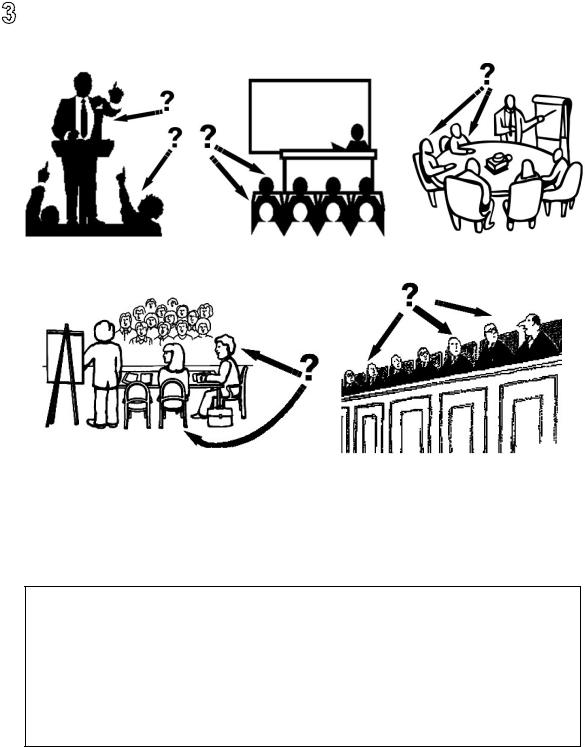
 A. Look at the pictures (pic. 8, a e) and say how you will call those people at the conference.
a |
b |
c |
d |
e |
Pic. 8
B. Match the pictures above and the words from the box. Describe the pictures.
a)attendee, deputy chairman, speaker, audience, conference committee, guest professor, conference officer, delegate, chairman, secretariat, participant, keynote speaker, discussant, panel, presenter;
b)plenary talks, round-table, session, academic discussion, workshop, parallel session, plenary session, hall, room.
144


 A. Study the conference programme sample and describe general format of academic conferences.
MAPPING THE GLOBAL DIMENSIONS OF POLICY 2013
Day 1 January 26
08:45 OPENING REMARKS Katie Boothe
09:00-10:30 PLENARY 2 SPEAKERS
CIBC Hall
Introduction of Guest Speakers and Chair of Plenary 1: Meagan Kinsella
Phil Triadafilopoulos (University of Toronto)
TТtХОμ “BОМШЦТЧР Multicultural: Postwar Norms and the Transformation of Membership Policy in Canada and Germanв”
Thaddeus Hwong (York University)
TТtХОμ “TrКЧsЧКtТШЧКХТsЦ КЧН PШХТМв PКrКНТРЦs”
10:30 COFFEE
10:45-12:00 CONCURRENT SESSIONS
ENVIRONMENT/ CLIMATE / ENERGY Chair: Kaelan Moat Rooms 311/313
Graeme Ball (McMaster University)
TТtХОμ “GХШЛКХ EЧЯТrШЧЦОЧtКХ GШvernance: Constrained Coalition-
BuТХНТЧР”
Olabanji Akinola (University of Guelph)
TТtХОμ “TКМФХТЧР ОЧОrРв pШЯОrtв КЧН uЧНОrНОЯОХШpЦОЧt ТЧ NТРОrТКμ tСО rШХО ШП ТЧtОrЧКtТШЧКХ НОЯОХШpЦОЧt pШХТМТОs КЧН ТЧstТtutТШЧs”
Discussant: Derek Hrynyshyn, Labour Studies
12:00-01:00 LUNCH
01:00-02:30 PLENARY 3 SPEAKERS 02:30 COFFEE
02:45-04:00 CONCURRENT SESSIONS
B. Share your ideas on the following questions.
What part of conferences is the most interesting? Why? What part of conferences is the most useful? Why? What part of conferences is of no importance? Why?
145

 A. Get acquainted with some experience of attending a conference (passage below). Do you think this conference was worth going to? Account for your opinion.
I presented at the Institute an hour-long paper based on three chapters from my PhD thesis. It was about two years worth of work that I had con-
densed down and tried to make engaging for a room full of people. For
КЛШut tаШ ЦШЧtСs ЛОПШrО I РКЯО tСО tКХФ I НТНЧ’t НШ ЦuМС ШtСОr tСКЧ scramble to get the research done, create the graphs, build the Power Point presentation, and craft the 8,000 words that I was to deliver. It was an incredible amount of work. I wore a jacket and tie, and I think I might have even gotten a haircut. Good thing because some of the most eminent scholars in the world happened to be in town and decided to come to my talk.
The talk was followed by a really engaging discussion – at least from my perspective. I had a number of people offer suggestions for improving my argument, or on sources and archives I should visit. A couple of scholars who also write on similar topics challenged my findings – though were collegial and offered their own suggestions. Afterwards we continued onto the pub to dinner as a group and over the course of the evening I must have heard ideas, criticisms, and praise from about 25 individuals on what I was doing.
B. Tell your group about your own experience of attending a conference. You should cover the following points (see question below). Let your groupmates clarify some details.
1. Conferences of what types have you attended?
3.How do you usually find out about conferences?
4.Did you join any conferences mailing list? Do you find it useful?
5.Do you know any sites where you can find calls for papers?
6.What procedures did you follow to attend the conference?
7.Did you fill in an application form?
8.Did you have any problems with submitting/accepting your abstract?
9.Did you fund your attendance yourself?
10.Did you get financial support from your institution?
11.How long did it take you to prepare for your presentation?
12.Was your presentation followed by a discussion? Do you think it was useful?
13.Did you talk to any prominent scholars about your research?
14.Did you get a lot of criticism/praise?
15.Did you meet/have a talk with a lot of people at the conference/during coffee brakes?
146

 Practise your writing skills.
A. Copy this conference application form in your notebook and fill it in.
Name_____________________________________________________
Institution__________________________________________________
Department ________________________________________________
Level
MA / PhD__________________________________________________
Contact details: email/ address/ phone____________________________
__________________________________________________________
Would you like to be considered for a travel subsidy?
Yes / No ___________________________________________________
Title_______________________________________________________
250 word abstract
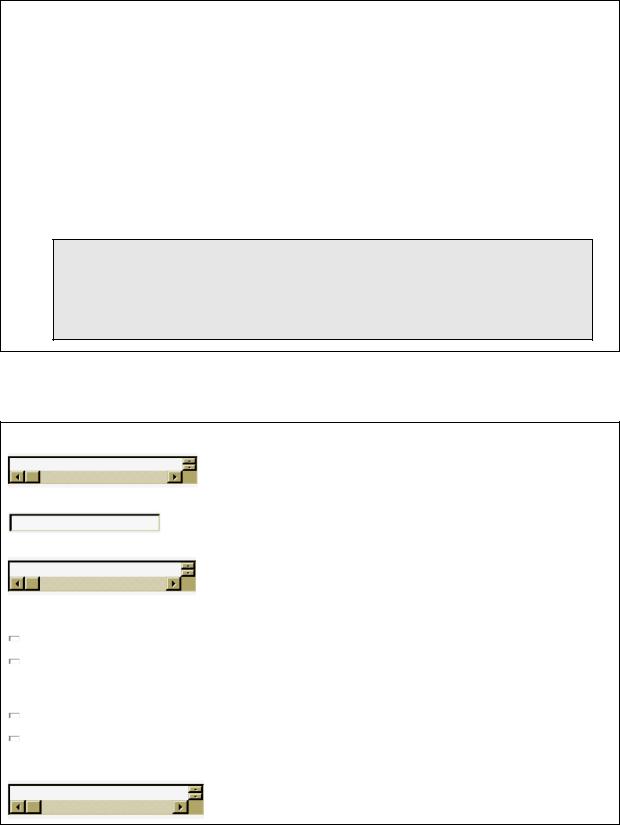
B. Copy this conference registration form in your notebook and fill it in.
Participant's Full Name (Required)
Subject (Required)
Special Needs or Requirements (please, specify)
Reception Registration (Day 1)
Yes
No
Lunch Registration (Day 2)
No preference
Vegetarian
Dietary restrictions (please, specify)
147