In A Nutshell
The lower respiratory tract, liver and biliary system, and pancreas all develop from an endodermal outgrowth of the foregut.
Development and Rotation of Foregut
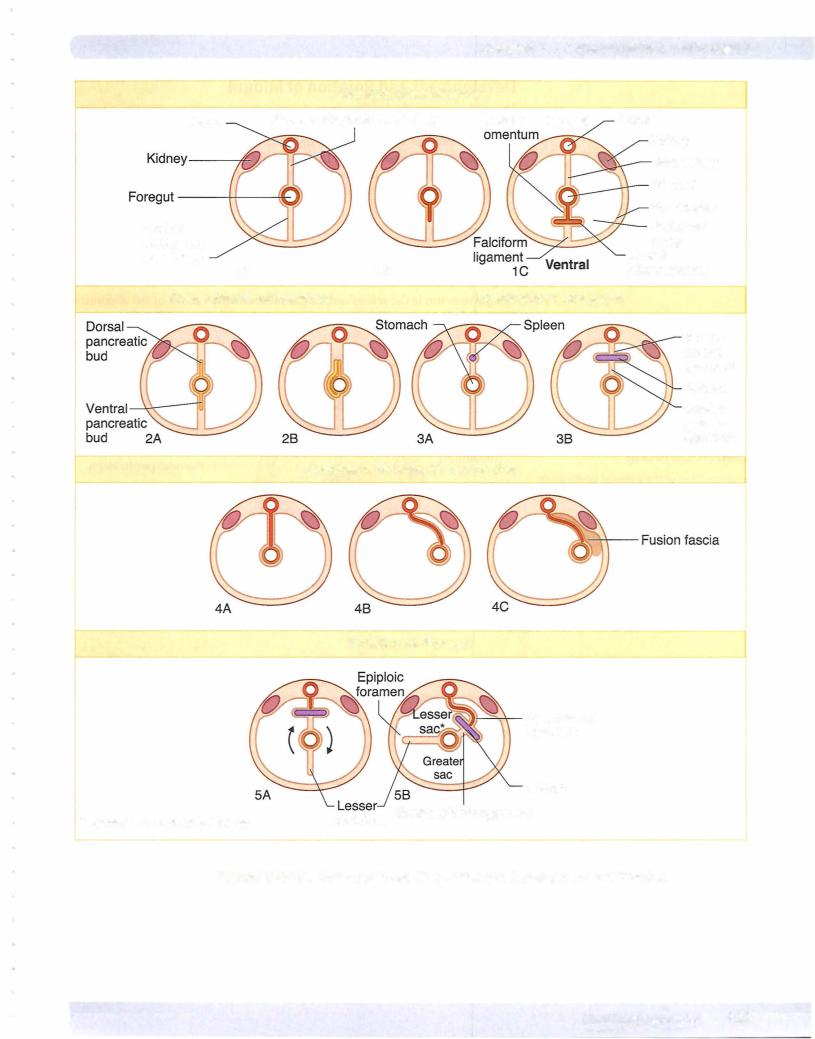
After body foldings and the formation of the gut tube, the foregut is suspended from the dorsal body wall by the dorsalembryonicmesenteryand from the ven tral body wall by the ventral embryonic mesentery (Figure III-3-7A). Note that the liver develops in the ventral embryonic mesentery, and the spleen and dorsal pancreatic bud develop in the dorsal embryonic mesentery.
•The abdominal foregut rotates 90° (clockwise) around its longitudinal axis. The original left side of the stomach before rotation becomes the ventral surface after rotation and its anterior and posterior borders before rotation will become the lesser and greater curvatures, respectively.
•Foregut rotation results in the liver, lesser omentum (ventral embry onic mesentery), pylorus of the stomach, and duodenum moving to the right; and the spleen, pancreas, and greater omentum (dorsal embryonic mesentery) moving to the left (Figure III-3-7A) .
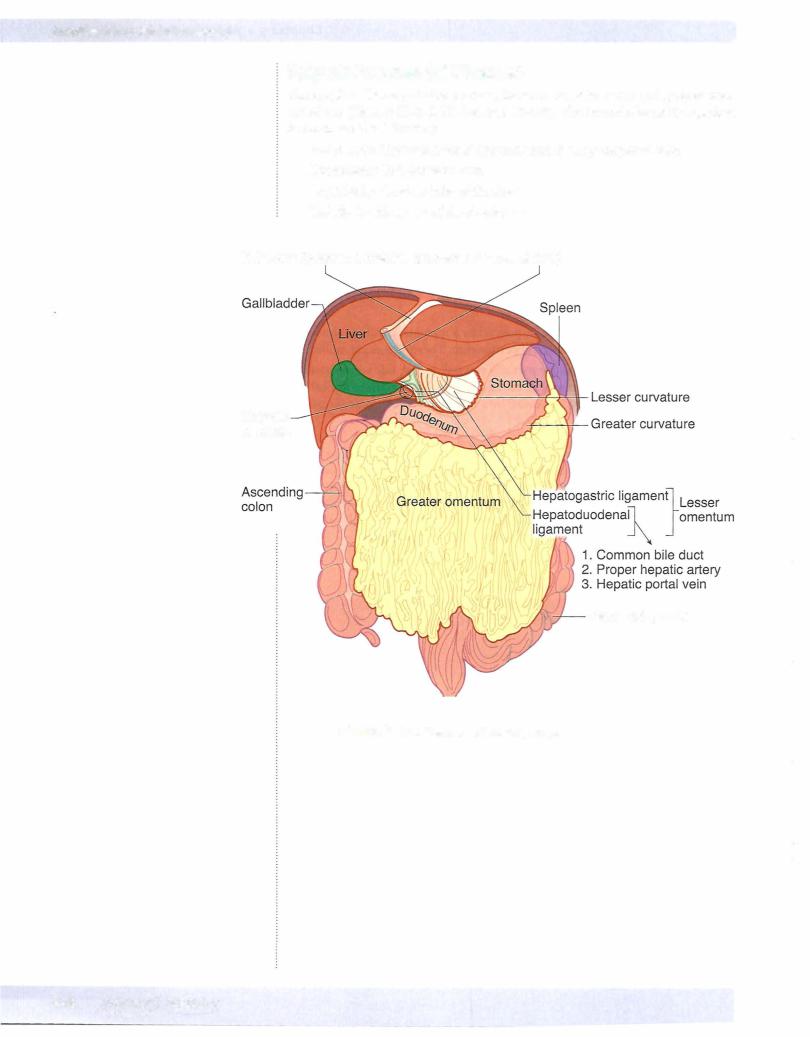
•The ventral embryonic mesentery will contribute to the lesser omentum
and the falciform ligament, both of which attach to the liver.
•The dorsal embryonic mesentery will contribute to the greater omen tum and the gastro-splenic and splenorenal ligaments, all of which attach to the spleen or the greater curvature of the stomach.