Материал: Scientific Herald of the Voronezh State University of Architecture and Civil Engineering

Scientific Herald of the Voronezh State University of Architecture and Civil Engineering. Construction and Architecture
Secondly, dynamic impact caused by non-calculated landing conditions give rise to shocks and local damages. Taxiing as well as the start and end of a takeoff lift when lifting force is not significant, there are oscillatory motions of aircraft causing inertia loads on a pavement. They cause oscillations (rolling) of pavements and base courses. These are vibrations and waving processes resulting in structural changes in a pavement material that cause hair cracks developing into open (visible) cracks that result in the base losing its stability when they are excessively saturated and thus slabs heaving [5].
Studies of impacts of mechanical loads of aircraft on rigid airfield pavements were conducted by V.F. Babkov, A.K. Birul, N.B. Vasiliev, A.P. Vinogradov, N.I. Volkhov, G.I. Glushkov, L.I. Goretsky, B.I. Demin and others [3, 4].
During the operation of cement concrete pavements there are continuous microcracks emerging which cause rigid waves read by external devices and made into acoustic emission waves for monitoring purposes. Increasing forces on a local area of a cement concrete surface of a runway or a highway cause concentrations of new sources of elastic waves in the cracks. These waves have certain characteristics influencing defects in a material structure and indicate these changes are happening. By measuring these characteristics, residual life cycle of a structure can be observed throughout a considerable amount of time [6].
Existing methods of monitoring do not allow for a comprehensive evaluation of the performance of a pavement. The authors are suggesting the acoustic emission method [9], based on reading elastic wave signals arising as microdefects occur in the structure of a material under loading. This method is more sensitive and capable of detecting defects as they start emerging.
The authors suggest that processes occurring in the structure of an airfield pavement material under the action of elastic waves arising as a result of mechanical impacts of wheel gears of aircraft during takeoff and landing operations and taxiing.
There is a lot to be studied experimentally and theoretically in the failure area under the effect of shock wave processes [13]. In order to predict changes in the properties of materials impacted by shocks processes occurring in these materials need to be further modeled [1], which seems impossible unless available equations of energy distribution in two-component media are comprehensively analyzed [4].
The theory of elasticity used in the linear case describes the process with a system of two wave equations of two functions [11] and two speeds. When solving a boundary problem of the theory of elasticity, non-stationary areas are of particular interest where some physical characteristics are disrupted. These creeping surfaces of these areas are shock elastic waves.
The structure and profile of an emerging elastic wave are intrinsically linked to attenuation of
56

Issue № 1(29), 2016 |
ISSN 2075-0811 |
these waves as they propagate. The analysis of the attenuation must be conducted while considering the physical nature of a propagation medium, kinetics of its plastic deformation. Based on the models of a plastic elastic solid with phase transformations put forth by R.I. Nigmatulin, propagations of shock waves of varying intensity in copper were numerically analyzed. It was noted that shock waves are always accompanied by phase transformations of high intensity and failure [7].
Different models of a medium describing the attenuation of waves were investigated by L.Ya. Kosachevsky, G.I. Bykovtsev, N.D. Verveiko [2], Yu. А. Rossikhin [8], М. А. Artemov, V. А. Baskakov, L. I. Slepyan. They make a conclusion that Maxwell attenuation (as a result of relaxation of tangential stress) is the most viable models for describing attenuation. The authors conducted numerical experiments, provided mathematical reasoning on mutual collision of slabs, present possibilities of mathematical description of the behavior of a medium in dynamic deformation both for plastic elastic and non-linear viscoelastic plastic models.
As the analysis suggests, the front of the density wave of mobile dislocation increases as so do loading and unloading waves. The authors conclude that attenuation of an elastic source is accounted for with the interaction of an elastic compression wave with an unloading wave arising immediately following the elastic source due to relaxation of stresses. Owing to the effect of a yield delay, plastic transition of a medium is made more difficult as the stress following the elastic source is larger than a yield point and changes in time.
It is rather daunting to describe actual physical processes in materials under the effect of an applied pressure pulse mathematically and thus models are designed that are more or less capable of representing the behavior of materials under specific conditions. Deformation and rheological properties of porous media are also modeled.
2. Physical and mathematical models of propagation of elastic waves in cement concrete.
Let us consider a cement concrete airfield pavement which is constantly subjected to static and dynamic loads during monitoring, takeoff and landing of aircraft. Physically cement concrete is a two-component porous gas-saturated medium.
Propagation of waves in a non-limit gas-saturated homogeneous elastic porous medium is given by a system of equations [1, 2, 8, 11]:
11 2иi(1)
t2
12
12
2иi(2)
t2
2ui(1)
t2
xi
22
|
и(1)j |
|
|
|
|
|
|
|
u(1) |
|
|
u(1)j |
|
|
|
|
u(2)j |
|
|
|||||||||
( |
|
|
) |
|
|
|
|
|
i |
|
|
|
|
|
|
|
|
|
Q |
|
|
|
, |
|||||
x |
|
x |
|
|
|
x |
|
x |
x |
|
||||||||||||||||||
|
|
|
|
|
|
|
x |
|
|
|
|
|
|
|
|
|
|
|
||||||||||
|
|
j |
|
|
|
|
j |
|
|
|
j |
|
|
|
i |
|
|
|
|
i |
|
|
j |
|
(1) |
|||
2u(2) |
|
|
|
|
|
|
|
u(1)j |
|
|
|
u(2)j |
|
|
|
|
|
|
|
|
|
|||||||
|
|
|
|
|
|
|
|
|
|
|
|
|
|
|
|
|
||||||||||||
|
i |
|
|
|
|
Q |
|
|
|
R |
|
|
|
|
|
|
, |
|
|
|
|
|
|
|
|
|||
|
|
x |
|
|
x |
|
|
x |
|
|
|
|
|
|
|
|
|
|
||||||||||
t2 |
|
|
|
|
|
|
|
j |
|
|
|
j |
|
|
|
|
|
|
|
|
|
|
||||||
|
|
|
|
i |
|
|
|
|
|
|
|
|
|
|
|
|
|
|
|
|
|
|
|
|||||
57

Scientific Herald of the Voronezh State University of Architecture and Civil Engineering. Construction and Architecture
are components of the displacement vectors of phases (elastic and gas); R mR0 ,
Q 1 m R0 are coefficients depending on the porosity of a medium m and compressibility of a gas (air) R0 ; , are Lamé coefficients; 11 , 22 are effective densities of the phases;
12 is a dynamic coefficient of the connection of phases.
Using the denotation |
1 m 2 |
R G equations of attenuation of longitudinal and transverse |
||||||||||||||||||||
|
|
|
|
|||||||||||||||||||
|
|
m |
0 |
|
|
|
|
|
|
|
|
|
|
|
|
|
|
|
|
|
||
|
|
|
|
|
|
|
|
|
|
|
|
|
|
|
|
|
|
|
|
|||
waves in breakages takes the following form |
|
|
|
|
|
|
|
|
|
|
|
|
|
|||||||||
( G)[U (1) |
] |
i |
[U (1) ] |
j |
[U (1) |
] |
j |
Q[U (2) |
] |
i |
c[V |
1 ] |
c[V 2 ] 0, |
|
||||||||
|
k ,k |
|
|
i, j |
|
|
j,i |
|
|
|
k ,k |
|
|
11 |
i |
12 |
i |
(2) |
||||
|
|
Q[U |
(1) ] |
|
R[U (2) ] |
|
|
c[V 1 ] |
|
c[V 2 ] 0, |
|
|||||||||||
|
|
i |
i |
22 |
|
|
||||||||||||||||
|
|
|
|
|
k ,k |
|
|
k ,k |
|
|
12 |
i |
|
|
|
i |
|
|
|
|||
where i , j are coordinates of a unit vector directed at an unexcited part of a porous medium; с is the velocity of a wave surface; Vi( ) , ( 1, 2) are components of the velocity of phase displacements.
As (t) goes through the wave surface, geometric and kinematic conditions of compatibility of the first order are met:
|
Ui( ) |
|
|
( ) |
|
|
|
i |
j , |
||
xj |
|
Ui, j |
|||
|
|
|
|
|
|
|
|
|
|
|
|
|
Ui( ) |
|
V ( ) |
c , |
(3) |
|
|
||||
t |
|
i, j |
i |
|
|
|
|
|
|
|
where i( ) are surges of the first derivatives of the velocity of the phase transformations.
As a result of using geometric and kinematic compatibility of the first order and a few transformations, the system of equations (2) takes the following form:
( G) (1) |
|
j |
(1) |
|
i |
(1) |
|
j |
Q (2) |
|
j |
|
|
c2 (1) |
|
i |
c2 |
(2) |
|
i |
0, |
|
||||||||||
j |
|
|
|
i |
|
|
|
j |
|
|
j |
|
|
11 |
|
|
i |
|
|
|
12 |
i |
|
|
(4) |
|||||||
|
Q (1) |
|
|
R (2) |
|
|
|
c2 (1) |
|
|
|
|
|
c2 |
(2) |
|
0. |
|
|
|
|
|||||||||||
|
j |
j |
i |
22 |
i |
|
|
|
|
|
||||||||||||||||||||||
|
|
|
j |
|
|
|
|
j |
|
|
12 |
i |
|
|
|
|
i |
|
|
|
|
|
|
|
|
|
||||||
In order to obtain a homogeneous system of equations of the propagation of longitudinal
waves in relation to |
, let us introduce the denotations |
( ) |
j |
|
( ) |
i |
|
, a = 1, 2. |
|||||
|
|
|
|
j |
|
|
|
i |
|
|
|||
|
( G 2 c2 ) (Q c2 ) 0, |
|
|
(5) |
|||||||||
|
|
11 |
1 |
|
12 |
|
|
2 |
|
|
|
|
|
|
|
|
|
|
|
|
|
|
|
||||
|
(Q c2 ) (R |
22 |
c2 ) |
2 |
|
0. |
|
|
|
|
|
||
|
12 |
1 |
|
|
|
|
|
|
|
|
|
||
58
Issue № 1(29), 2016 ISSN 2075-0811
Lamé coefficients λ and µ are expressed using the Poisson coefficient and Young modulus Е as follows [10]:
|
|
|
|
|
|
|
|
, |
|
. |
(6) |
||
1 1 2 |
2 1 |
|||||
Solving the system of equations (5) considering (6) we get:
с4 11 22 122 c2 |
|
|
|
|
E |
|
|
|
|
E |
|
|
|
|
|
|
||
R 11 |
|
|
|
G |
|
|
22 |
2Q 12 |
|
|
||||||||
|
|
|
|
|
|
|||||||||||||
|
|
|
|
|
(1 )(1 2 ) |
|
|
|
|
|
|
|
|
|
|
|
||
|
|
|
|
|
|
|
|
1 |
|
|
|
(7) |
||||||
|
|
|
E |
|
|
E |
|
|
|
|
|
|
|
|
|
|||
|
|
|
Q2 |
|
|
|
|
|
|
|||||||||
R |
|
|
G |
|
|
0. |
|
|
|
|||||||||
|
|
|
|
|
|
|
|
|
||||||||||
|
|
(1 |
)(1 2 ) |
|
|
|
|
|
|
|
|
|
|
|
|
|
||
|
|
|
1 |
|
|
|
|
|
|
|
|
|
||||||
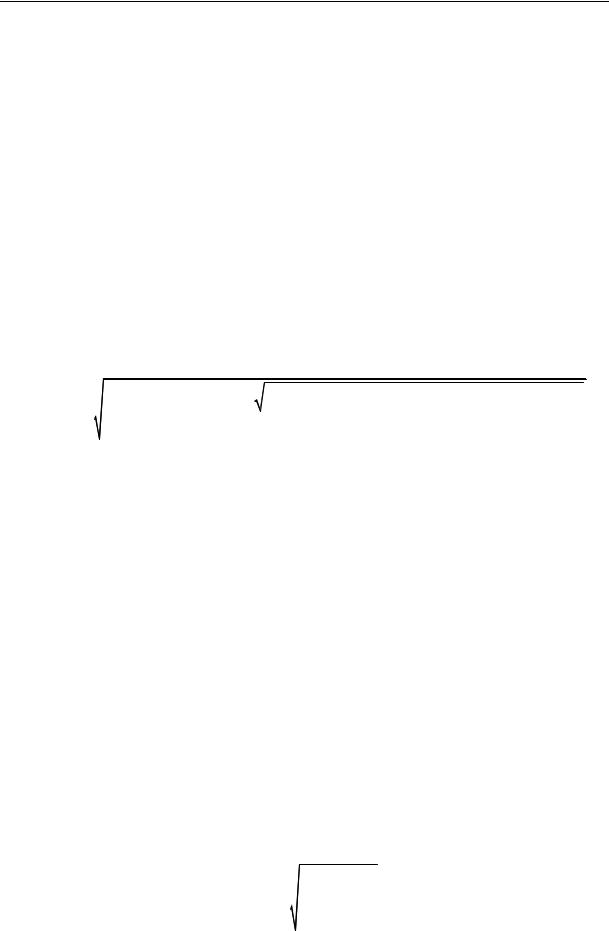
In a two-component elastic gas-saturated porous medium there are two types of longitudinal waves. The velocities of propagation of longitudinal waves are given by the formulas
ср1,2 |
R 11 k 22 2Q 12 |
R 11 k 22 2Q 12 |
2 4 11 22 |
122 Rk Q2 |
, |
|||||
|
|
2 11 22 122 |
|
|
|
|||||
|
|
|
|
|
|
(8) |
||||
|
|
|
|
|
|
|
|
|
|
|
|
|
|
E |
|
|
|
E |
|
|
|
|
k |
|
|
G |
|
|
|
. |
|
|
|
|
|
|
|
|
|
||||
|
|
(1 |
)(1 2 ) |
|
|
|
|
|
|
|
|
|
|
|
1 |
|
|
||||
From Equations (4) we get a system of equations of propagation of shear waves in relation to
i( ) |
on condition that (1)j |
j 0, |
(2)j j |
0 . |
|
|
|
|
|
|
|
|
|
|
|
||||
|
|
|
E |
|
|
|
2 |
|
(1) |
|
2 |
|
(2) |
|
|
||||
|
|
|
|
|
|
11c |
|
i |
|
12c |
i |
0, |
(9) |
||||||
|
|
|
|
|
|
|
|||||||||||||
|
|
2(1 ) |
|
|
|
|
|
|
|
|
|
|
|
|
|
||||
|
|
|
|
|
|
c2 |
(1) |
|
22 |
c2 (2) |
0. |
|
|
||||||
|
|
|
|
12 |
|
i |
|
|
|
i |
|
|
|
|
|
||||
Instead of µ in (9) the expression (6) was used. |
|
|
|
|
|
|
|
|
|
|
|
||||||||
Let us solve a system of equations (9): |
|
|
|
|
|
|
|
|
|
|
|
|
|
|
|||||
|
|
с4 11 22 |
|
122 |
c2 |
|
|
E |
|
|
22 |
0. |
(10) |
||||||
|
|
|
2 1 |
||||||||||||||||
|
|
|
|
|
|
|
|
|
|
|
|
|
|
|
|||||
In an elastic gas-saturated porous medium there is a transverse wave. The velocity of propagation of a transverse wave is
|
|
|
E |
|
22 |
|
|
||
с |
2 |
1 |
. |
(11) |
|||||
|
22 |
2 |
|||||||
|
|
|
|||||||
|
|
11 |
|
|
12 |
|
|
||
59
Scientific Herald of t he Voronezh State University o f Architecture and Civil Engineering. Construction and Architecture
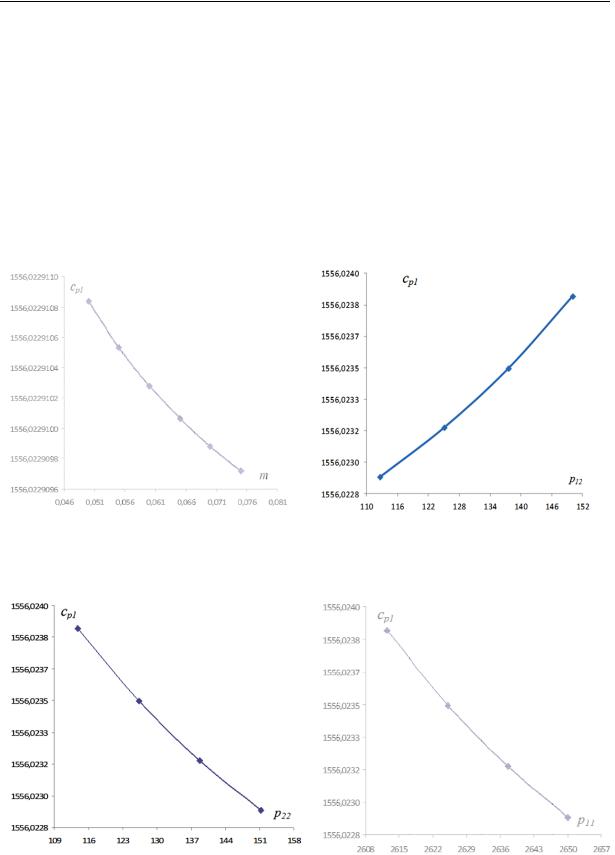
Analyzi ng the exp ressions (8 ) and (11), we conclude that propagation of longitudinal and transve se waves account for physical ch aracteristics of a medium. Using the Poisson coefficient and Young m odulus for cement con crete, we get the velo ity of propagation of waves in a ceme t concrete porous med ium.
Mathe atical mo deling of i mplications of dynamic loads for cement concrete pavements allows one to pred ict and im prove its pe rformance.
Fig. 1— 4 show dependencies of the velo cities of propagation of a longitudinal acou tic elastic wav e on different characte ristics of a pavement m aterial.
Fig. 1. Dependence of the velocity of propagation |
Fig. 2. Depend |
nce of the velocity of propagation |
of a longitudinal acoustic wave on the porosi ty |
f a longitudi |
al acoustic wave on the porosity |
of c ment concrete |
|
of cement co crete |
Fig. 3. Dependence of the velocity of propagation |
Fig. 4. Depend nce of the velocity of propagation |
of a longitudinal acou stic elastic wave on the density |
of a longitudinal acoustic elastic wave on the density |
of a gaseous ph ase of a pave ent material |
of a gaseou phase of a pavement mate rial |
60