Материал: Uchebnik_dlya_sud_expertov
H: Well, for one thing, I’d like to know what sort of people will attend the course. I mean, are they teachers or students, young or old? And where do they come from mainly? I don’t want to spend the time with a group from Germany. I’d prefer an international group, so I could practise my English.
L: Mmm, I can understand that. Why don’t you check? Also, have you thought about accommodation? I noticed there was a little about family-stay possibilities in the brochure, but not much else. What about accommodation in student hostel? It’s often cheaper and a lot better than living in a family.
H: Ok, I’ll check that too when I write to Linda Longfellow. You know, I don’t see anything about methods of payment for the course. The prices are all there, but nothing about how to pay. I’d like to pay by credit card if possible, when I arrive. I hope they accept them.
L: I’m sure they will. Another thing – when you write, why don’t you find out how the course will be organized? I mean, what methods will they use? Will it just be lectures, or will you have to make presentations, individually or in groups? And, erm… will there be a lot of discussion, videos, films, that sort of things? I don’t think you can get very much from just lectures.
H: Good point. One more thing – do you think I’ll get a certificate or something if I complete this course? That’d be useful. And are there any examinations? Oral or in writing? Actually, there are a lot of questions I need to ask.
3. , & $ < ; - !. #' . , ! ! -
.
UNIT 7. TEST YOUSELF
1..
1.to put off a meeting
2.to put somebody through to the Marketing Department
3.to meet the deadline
4.to pay cash
5.to take the minutes
6.to attend a meeting
7.to get feedback from the participants of the meeting
8.to prevent digressions
9.to get down to business
10.to dial an extension number
2.+ , - #' .
1.Remember to use the spell check in the future!
2.I want to speak with you in private!
3.Where can I plug this mobile in?
4.Check these figures again!
5.How does this computer work?
6.What’s the phone code for Greece?
7.You will have to work overtime this week.
3.( ! !. -
! ' .
126
1.A colleague wants you to sign something.
2.Your colleague leaves a few seconds later.
3.There is a lot of noise outside.
4.You boss wants to speak with you – immediately!
5.Someone else is trying to call you.
6.The caller gives you his name – it’s unpronounceable.
7.You think you have misunderstood the information the person gave you.
8.You gave the caller a lot of information very quickly.
9.The other person just won’t stop talking!
a.Sorry, could you speak up a little?
b.Sorry, I’ve got someone on the other line. Could I call you back?
c.Ok. Have you got all that?
d.I’ll have to go, I’m afraid. Something’s come up.
e.Sorry about that. Where were we?
f.Anyway, I won’t keep you longer.
g.Excuse me a moment.
h.Anyway, I won’t keep you any longer. Speak to you soon.
i.Sorry, could you spell that for me, please?
j.Can I just check it with you?
4.% !, ! 10 , - ! & !'. ( # "Could you…" & & .
Could you …
sendmemyflightdetailsgivemeacopyofthisreportcallmebackinanhourtakeaquicklookattheagendaarra ngeforsomabodytomeetthemattheairportarrangeameetingwiththeheadsofdepartmentsfixanappointme ntformebooktheconferenceroomfornextweekorganiseatourforsomevisitorssendawrittenrequestputme throuhgtosrvicedepartment?
5.#' . (True or False).
1.A formal letter should always have a date.
2.You put the address of the person you are writing to directly under your address.
3.You should begin a formal letter with Dear + first name + surname.
4.If you begin your letter with Dear + name, you should finish it with Yours faithfully not
Yours sincerely.
5.You should end your letter by signing it, then printing your name and position.
6.In formal letters you can use everyday language and short forms such as I’m and we’re.
6..
1. " # ? – - # .
2.& ? – > , & -) " .
3.- , , $ % . '& )$ .
4. |
@, & $, ) . + $ - |
- $ (R&D Department). |
|
5. |
A $") # , $ &$ . |
|
127 |
GLOSSARY
1. agenda –
create/ make an ~ - $ proposed ~ - & point on the ~ -
2. business – 1. ; 2. !,
~English – " " "
~communication -
~trip – , go on a ~ trip – $
~correspondence –
~relationships – )
line of ~ - # /# $ get down to ~ - "
3. conversation – , ! telephone ~ - # "
ongoing ~ - , " " start/ begin a ~ - $
keep a ~ going – & $ break off a ~ - $, $
take up ~ opportunities – $ $ &$ $
4. feedback – !
positive ~ - &$ $
get ~ - $ $
5. inquire – ,
inquiry – , make ~es –
6. line –
bad ~ - )$ , $
~ is engaged –
hold the ~ - ) $ , $
7. meeting – ', , !,
arrange a ~ - $ , attend a ~ - " , cancel a ~ - $ ,
hold a ~ - $ , postpone/ put off a ~ - &$ ,
run/ chair a ~ - $ , ( )
8. minutes – , , ! take the ~ -
circulate/distribute the ~ - $ ,
read out the ~ - $ ( )
9. number –
dial the wrong ~ - $ $ " extension ~ - "
128

MODULE 5
LAW IN OUR LIFE
UNIT 1. INTRODUCTION
1. & . * ( , ! « ». * & !' # # ?
A B
B C
C
D  E
E  F
F 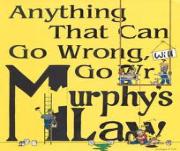
G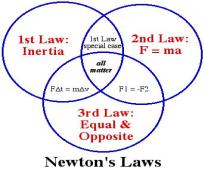 H
H
2. «law»,
« , ». * ( , ! & -
?
129

1.A rule of conduct or procedure established by custom, agreement, or authority.
2.A set of rules or principles dealing with a specific area of a legal system.
3.A way of life.
4.A statement describing a relationship observed to be invariable between or among phenomena for all cases in which the specified conditions are met.
5.A principle of organization, procedure, or technique.
6.A generalization based on consistent experience or results.
7.The collection of rules imposed by authority.
3., , .
In my opinion –
I can’t make up my mind, but – $ ),
I am keeping an open mind for the moment –%
I’m (not) sure that – ( ) , Firstly, (secondly) – - , ( - ) Finally -
1.Can we live without laws?
2.Why do we need the law?
3.What spheres of life are regulated by law?
4.Must people obey laws?
5.What rules of behaviour are accepted in the society?
6.Do you share the idea that people should look only after themselves and take no care about others?
7.What rules do you obey willingly?
8.What rules would you abolish if you could?
9.Do laws limit your personal freedom?
10.Must all people study law at school?
11.Do you feel that laws protect you?
12.What law would you suggest if you were a Member of Parliament?
4.«law». -
. (+ – -
$ # , - #' $# $ .)
1.law and order -
2.the law of the jungle – & "
3. to lay down the law- $ , # $
4.necessity knows no law – &
5.& , $ ( -
( . ).
1.to make laws – $, $
130