Материал: Uchebnik_dlya_sud_expertov
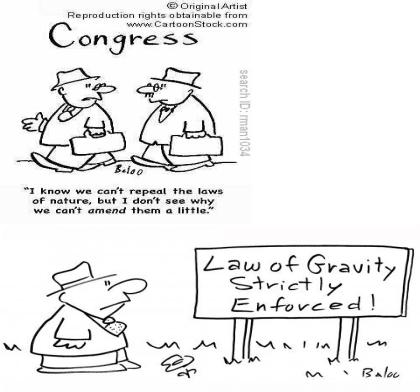
2.to repeal laws – $
3.to break laws – ) $
4.to obey laws – $
5.to enforce laws – $ ( $ )
6.to apply laws – $
7. to be against the law – $
8.to study law – $
9.to amend the law – $
10.to turn to the law – $ ( )
6. ' 5.
1.The State Duma of the Russian Federation ___________ laws.
2.The government ___________ laws and _____________ them if they are bad.
3.The police ____________ laws.
4.Courts and judges ___________ laws.
5.Law-abiding people _____________ laws.
6.Criminals ______________ laws.
7.The students of universities ___________ law.
7., ! ' , - # $ . (state - , ( .) -
, ( ) , judge – ( .) ( .) , ( ) , force
( .) , ( ),
( ) , claim – ,
– ( .) ( ) , rule – , right – ( .) ( .) ).
1. A judge is a court officer authorized to decide legal cases. But who are they to judge us? The judge may also rule on motions made before or during a trial. Don't judge a book by its cover.
131

2.In this office, hard work is the rule, not the exception. When a court rules, the decision is called a ruling. The high destiny of the individual is to serve rather than to rule.
3.The state is distinguished from other institutions by its purpose (establishment of order and security), methods (its laws and their enforcement), territory (its area of jurisdiction), and sovereignty. Another standard question is “What's the state of the world?” meaning “What's new?” or “What's going on?”. The Bill of Rights is stated in 463 words.
4.What we now call gravity was not identified as a universal force until the work of Isaac Newton. Nobody can force me to do it.
5.After the storm, the Johnsons filed a claim against their home insurance in order to repair damage to the roof. He claimed he won the race, though the video showed otherwise.
6.In folk beliefs, good luck is regularly associated with the right side: it is lucky to see the new moon to one's right, to put the right stocking or shoe on first, while in each case the left is unlucky. Each legal right that an individual possesses relates to a corresponding legal duty imposed on another.
UNIT 2. WHY DO WE NEED LAW?
: .
1. , -
.
will have finished, alter, in favor of, unlike rules, should not do, to pay, may be forced, would not be necessary, did not live, so special, to drive on, help to safeguard, claims to, ensuring, do not want, applies to, might not be able to go, to speak out publicly, has kept, are regulating, a great deal of order, like, do not use, will choose, is speaking, should do, must obey, have to provide, should respect, must carry out.
2. , ) '
!) & & ) ! ' .
$# .
will begin, have protected, is speaking, had taken, made, seek to do, shall have, are driving, has felt, were keeping, ensured, is going to take, will be necessary, deals with, am doing, flaws, was regulating, had chosen, have resolved, are arising, are going to do, will settle, drive, keeps, are applying, rejected, shall respect, imposed.
3. , # ) -
& !) ! & .
. ( & !$ .
We should and should not d …; you may be forced to pay a fine…; everyone must obey…; we must drive our cars…; people were allowed to choose at random…; the law must provide…; it may provide a great deal of order…; the legal system should respect individual rights…; society should believe in…; the police and other public officials must carry out their public duties…; they will not be able to go to university…; the law should recognize and protect…; laws must reflect the chang-
132

ing needs of society…; the laws of all countries are to be found in written records…; they were allowed to sell…; you may wish to take legal action…; the police have to concentrate on certain crimes…; certain people are able to escape justice…; this relationship can be demonstrated…; they have to break…, people had to obeyed …, the case is to be heard…, the player might be sent to prison .
/)07,91 80)8 09 |
.*(+()01, 9 /)07,9; |
||
|
|
80)8 0 ( |
|
/ |
( |
/ |
( |
|
|
|
|
|
|
|
|
|
|
|
|
|
|
|
|
|
|
|
|
4. / !$ #' , , . , -
! ! # .
Past |
Present |
|
Future |
|
|
|
|
|
|
shall |
|
|
|
|
be able to do smth |
|
|
will |
|
|
|
|
|
had to do smth |
must |
|
|
|
|
|
|
|
|
shall |
|
might |
|
|
be allowed to do smth |
|
|
will |
be permitted to do smth |
|
|
|
|
|
have to |
|
|
|
|
|
|
was to |
|
|
|
were to |
|
|
|
|
|
|
|
|
should |
|
|
|
|
|
|
5. , ' 3- $ -
. .
1. We could convince the police that we were innocent.
133
2.I saw the accident but fortunately I didn’t have to give evidence as there were plenty of other witnesses.
3.If you said that, we might be very offended.
4.Different people might have different understanding of the laws.
5.Laws, together with their judicial interpretations, must be simple enough so that people know what laws are and how to comply with them.
6.When all five properties are satisfied, we can say that the positive legal order is "just."
6.# !' . .
1.If you break a law you may be forced to pay a fine, pay damages, or go to prison.
2.The law must provide a way to resolve these disputes peacefully.
3.The legal system should respect individual rights.
4.Some lawyers have to prepare defences for clients accused of crimes.
5.A client is to know that what he says will not be passed on to someone else without permission.
7..
TEXT
WHY DO WE NEED LAW?
Almost everything we do is governed by some set of rules. There are rules for games, for social clubs, for sports and for adults in the workplace. There are also rules imposed by morality and custom that play an important role in telling us what we should and should not do. However, some rules -- those made by the state or the courts -- are called "laws". Laws resemble morality because they are designed to control or alter our behaviour. But unlike rules of morality, laws are enforced by the courts; if you break a law -- whether you like that law or not -- you may be forced to pay a fine, pay damages, or go to prison.
Why are some rules so special that they are made into laws? Why do we need rules that everyone must obey? In short, what is the purpose of law?
If we did not live in a structured society with other people, laws would not be necessary. We would simply do as we please, with little regard for others. But ever since individuals began to associate with other people -- to live in society --laws have been the glue that has kept society together. For example, the law in our country states that we must drive our cars on the right-hand side of a two-way street. If people were allowed to choose at random which side of the street to drive on, driving would be dangerous and chaotic. Laws regulating our business affairs help to ensure that people keep their promises. Laws against criminal conduct help to safeguard our personal property and our lives.
Even in a well-ordered society, people have disagreements and conflicts arise. The law must provide a way to resolve these disputes peacefully. If two people claim to own the same piece of property, we do not want the matter settled by a duel: we turn to the law and to institutions like the courts to decide who the real owner is and to make sure that the real owner's rights are respected.
We need law, then, to ensure a safe and peaceful society in which individuals' rights are respected. But we expect even more from our law. Some totalitarian governments have cruel and arbitrary laws, enforced by police forces free to arrest and punish people without trial. Strong-arm tactics may provide a great deal of order, but we reject this form of control. The legal system should respect individual rights while, at the same time, ensuring that society operates in an orderly manner. And society should believe in the Rule of Law, which means that the law applies to every per-
134

son, including members of the police and other public officials, who must carry out their public duties in accordance with the law.
In our society, laws are not only designed to govern our conduct: they are also intended to give effect to social policies. For example, some laws provide for benefits when workers are injured on the job, for health care, as well as for loans to students who otherwise might not be able to go to university.
Another goal of the law is fairness. This means that the law should recognize and protect certain basic individual rights and freedoms, such as liberty and equality. The law also serves to ensure that strong groups and individuals do not use their powerful positions in society to take unfair advantage of weaker individuals.
However, despite the best intentions, laws are sometimes created that people later recognize as being unjust or unfair. In a democratic society, laws are not carved in stone, but must reflect the changing needs of society. In a democracy, anyone who feels that a particular law is flawed has the right to speak out publicly and to seek to change the law by lawful means.
8. ! .
1. purpose of law |
a) & $ $ |
||
|
|
||
2. to live in society |
b) & $ |
||
|
|
||
3. to choose at random |
c) $ # |
||
|
|
||
4. to safeguard our personal property |
d) $ |
||
and our lives. |
|
|
|
5. to have disagreements and con- |
e) $ |
|
|
flicts |
|
|
|
6. to resolve disputes peacefully |
f) ( $) |
||
|
|
|
|
7. to turn to the law |
g) $ |
$ |
|
|
|
|
|
8. to respect individual rights |
h) &$ |
|
|
|
|
|
|
9. to arrest and punish people with- |
i) |
$ - |
|
out trial |
|
|
|
10. to believe in the Rule of Law |
j) $ $ - |
||
|
|
|
|
11. in accordance with the law |
k) |
$ $ " |
|
|
|
|
|
12. to protect basic individual rights |
l) $ ) $ &$ |
||
and freedoms |
|
|
|
13. to reflect the changing needs of |
m) |
||
society |
|
|
|
14. to have the right to speak out |
n) $ ( ) |
||
publicly |
|
|
|
15. to seek to change the law by law- |
o) ) $ |
|
|
ful means |
|
|
|
9. .
1.Almost everything we do is governed by _____________
a)rules imposed by morality
135