Материал: Uchebnik_dlya_sud_expertov
Внимание! Если размещение файла нарушает Ваши авторские права, то обязательно сообщите нам

)

, # ,

& , ,


. % % $ -


%


)

.


*, %, * —

%

, " (('3 @). (

*

, ,

, , , -

-

. % % -

. > $

" & *,

$

& .


,


%-

, $ " .


- %


%

,

-


$ , &

, - %-

. (

$

-


,


& ,


,


) . 3- %


, " $ $ &.


- %

, ,

, $


, -

. 2 - %

-

(

, ), " ).


&- % - %-

,

& %

,

$ - , %

.

" % "

,

:

)


; ) &- );

)

) $ %.


# -% % "

- % .

) -

-&

",

$ , "

, $ " " & -

- % ) % -

, -

%

-

.


UNIT 5. TEST YOURSELF

1. % & . , .

:

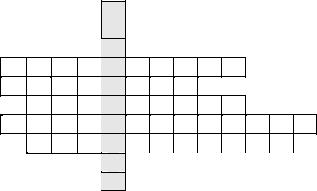
1)A big picture man who can help to reconstruct a crime.

2)Something legally submitted to a tribunal to ascertain the truth of a matter.

3)Science deals with production, distribution and use of wealth.

4)Solving crimes, examination.

5)Practical use of sciences in industry and building.

: globally accepted misnomer to forensic science.

271

G

E

E

I

E

2. .

Forensic science dates as far back as 212 BC, and the earliest account of using fingerprints for the purpose of establishing identity, as far back as the 7th century.

During the Roman Empire, a criminal charged had to plead their case before a group of their public peers. Both the accuser and the accused would give their side of the story. The individual with the best debate (argumentation and delivery) skills would determine the case's outcome. The person with the best forensic skills won, much like lawyers and attorney do, today.

The first written account of combining entomology and medicine for acquiring an analyzing criminal evidence to solve cases has been attributed to a Chinese book, written in 1248, by Song Ci which translated in English to "Collected Cases of Injustice Rectified".

In one account, the case of a sickle murder was solved by a forensic science investigator of the time who instructed everyone to bring their sickles to a specific location. Flies gathered on the sickle with the blood, and ultimately the killer confessed and was brought to justice.

3. , .

The earliest report on the application of special knowledge in medicine and entomology for investigation of crimes was given in a Chinese book, written in 1248.

a)true

b)false

c)there is no information in the text.

4., # # .

1.There are a lot of historical examples proving the fact that forensic science can help in solving crimes.

2.Forensic science has a long history.

3.The word “forensic” originated from Latin.

5. ! -.

In the ancient Roman Empire, the Senate used to conduct its meetings in (1. ) called the forum. Anyone who wanted could listen to the great (2. ) of the day and watch government in action. The term (3. ") means "of the forum." In the broadest sense, then, (4. ) can be defined as the methods of science applied to public matters. Today we

272
use the term to mean the methods of science applied to matters involving (5. ). In the United States and most other countries, the justice system deals with either (6.& ). Forensic science has its most important applications to the (7. ), and this has been the fuel for the current media type seen in books, TV shows, and movies.

GLOSSARY

1. degree -

Associate ~ - ) $ # $

Bachelor’s degree – $ Master’s degree – $

MSFS ~ (Master of Sciences in Forensic Science) – $ " %

law degree – $ undergraduate ~ - $

to earn a degree – $ $

to pursue a degree – $ $ $

2. forensic science - #. ! ,

Forensic science laboratory - -" % Forensic Science Center - %- "

Forensic Sciences Foundation - %

Office of Forensic Sciences - %-

3.forensics - ; ! $

computer forensics - $ - % forensics analyst - %-

Internet Forensics - $ % @

Windows Forensics - % % " " Windows

4.forensic - !;

~accounting expert examination - - %

~analysis - "

~anthropologist - -"

~audit - - %

~engineer - &

~document examination - %

~expert - " %

~expert institution - -% &

~facial reconstruction - -%

~ information - %

~laboratory - " %

~pathology -

~photography - # #

~psychiatric examination - - %

273

~psychiatric expert examination - - %

~psychiatry -

~psychology -

~report - " %

~science laboratory - -" %

~statistics -

~testimony - %

computer ~ analysis - $ - %

5.generalist - ; ; & ! ,

$ & ; & ; ( ) - !' -

; ; !'

6.record (#) =; ( -

, , ); ; =

forensic ~ - %

7. sample – !$, !

blood ~ - by ~ -

collect ~s – $ describe a ~ - $ handle a ~ - $ process a ~ - $ store ~s – $

contamination of the ~ - origin of the ~ - &

8. technician – $

engineering- ~ - &-"

evidence ~ - " $

9. technique – !, ,

classification ~s – #


criminalistics ~s – " %

microscopic examining ~s –


psycholinguistics ~s - -

274

MODULE 10

LAW AND SCIENCE

UNIT 1. ETHICS AND MORALS

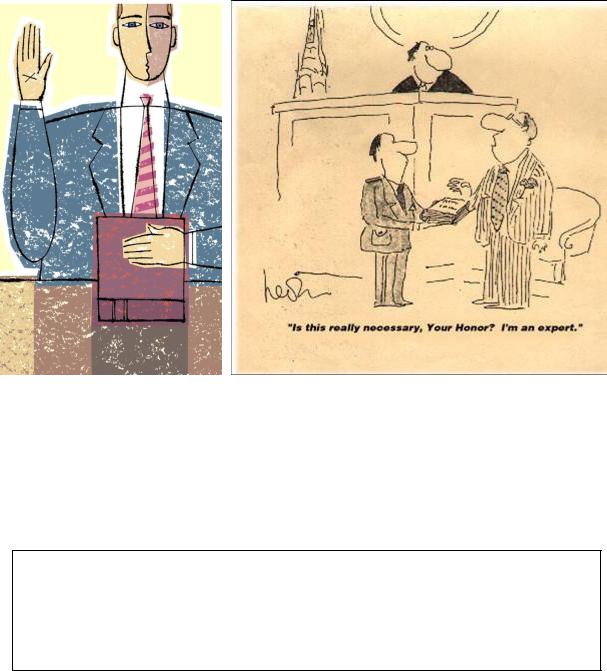
“I swear to tell the truth”.

“Is this really necessary, Your Honour? I’m an expert. “

1. , ! $ -

, ! #' ! . ,

. % & , (- & #.

1. , 2. , 3. -

, 4. ! & ,

5. 6. , 7. -

, 8. ! 9. ,

10. ,

Empathy: the ability to communicate understanding of another person’s experience from that person’s perspective.

275

Источник: https://studfile.net/preview/16694066/