Материал: Апсе ENVIRONMENTAL PROTECTION 2014
Thus, the strictest criterion of the implosive HNED efficiency is the thermal dissociation of 2% HE molecules. It is obvious also that the implosive HNED becomes unsuitable for any practical applications if the HNED fails within the time interval needed for its assemblage and transportation. As the HNED assemblage and transportation times can not be evaluated exactly, it seems reasonable to determine the range of the HNED lifetime.
|
|
Pu |
U |
Al |
ВВ |
|
|
|
|
400 |
386 |
|
|
|
|
|
|
|
|
|
|
|
|
|
|
|
|
|
361 |
|
347 |
|
|
710 W |
|
|
|
Equilibrium |
|
|
||||
|
|
|
|
|
|
|||
ºC |
300 |
|
(two days) |
Self-ignition |
|
|
||
Temperature, |
|
261 |
|
|
point |
|
|
|
|
235 |
|
221 |
|
|
Natural air |
||
|
|
|
|
|
|
|||
|
|
|
|
|
|
convection and |
||
200 |
|
T(r, 5 hours) |
|
|
|
|||
179 |
|
|
|
thermal |
||||
|
|
|
|
|
|
|
radiation |
|
|
|
151 |
|
|
|
|
||
|
|
|
136 |
|
|
|
||
|
|
|
|
|
|
|
|
|
|
100 |
|
T(r, 2 hours) |
|
|
112 |
||
|
|
|
|
|
|
|
|
|
|
|
|
|
|
|
|
66 |
|
|
|
T(r, 0) |
|
|
|
39 |
|
|
|
|
|
|
|
|
|
27 |
|
|
0 |
5,8 |
10,8 |
13,8 |
19,8 |
21 |
r, cm |
|
|
|
|||||||
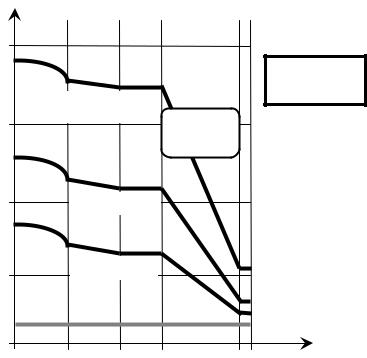
Fig. 6.15. Time evolution of radial temperature profile in the implosive HNED
The necessity to trace the non-stationary warming-up process is illustrated by the curves presented in Fig. 6.15. These curves, timedependent radial temperature profiles in the high-technology implosive HNED, were calculated under the following assumptions:
206
∙Initial temperature of all the HNED components - 270С.
∙Plutonium isotope composition corresponds to 710 W of the thermal power generated by plutonium charge.
∙External heat removal is provided by natural air convection and thermal radiation only.
∙Criterion of the HNED failure is an initiation of the TATB selfignition process at 3470С.
As is seen, when radial temperature profiles have reached their equi-
librium states (in about two days), maximal TATB temperature has increased up to 3470С, i.e. the TATB self-ignition could be initiated. However, after the shorter time intervals (two and five hours) the TATB temperatures were well below the self-ignition point. As a consequence, the HNED could keep its efficiency during a relatively long time (almost two days).
HNED lifetime, day
Without / with countermeasures for prolongation of the HNED lifetime (criterion - dissociation of 2% HE)
3
2
1
|
|
|
Heat source power, W |
0 |
1000 |
2000 |
3000 |
0 |
14 |
27 |
Content of 238Pu, % |
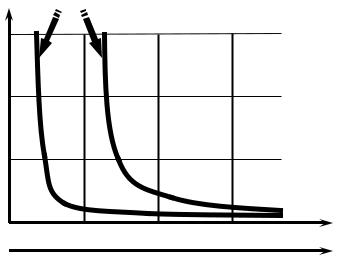
Fig. 6.16. HNED lifetime as a function of heat source power
207
So, it can not be stated that the denatured plutonium with total thermal power of 710 W is the proliferation-proof fissile material because the HNED failure occurs only at its thermal equilibrium state.
The asymptotic model, which analyzes equilibrium temperature profiles only, can underestimate the thermal power of internal heat source needed to provide proliferation protection of the denatured plutonium.
How short time must elapse prior to the HNED failure for the denatured plutonium to be regarded as a material completely unsuitable for military applications? In other words, how short the HNED lifetime is acceptable from nuclear non-proliferation point of view? Evidently, the countermeasures capable to prolong the HNED lifetime can increase substantially the required intensity of internal heat source, i.e. 238Pu content in the denatured plutonium.
Efficiency of measures for prolongation of the HNED lifetime
Preliminary cool-down of the HNED components
The preliminarily cooled HNED can keep its efficiency for the longer time interval as compared with the HNED without preliminary cool-down. However, heat capacities become very small at cryogenic temperatures. So, the utmost possible cool-down of the HNED components makes no sense for prolongation of the HNED lifetime. For example, if the HNED was preliminarily cooled down to liquid nitrogen point (77 K) instead of liquid helium point (4 K), then the power of internal heat source required for plutonium proliferation protection increased very insignificantly, on 3% only.
The following scenario of preliminary cool-down was studied numerically. All the HNED layers were cooled down to liquid nitrogen point (77 K) with exception of central plutonium charge which was cooled down to 198 K only. At temperatures below 198 K, plutonium in δ-phase (stabilized with molybdenum, for instance) transforms into α- phase, and this irreversible transition is accompanied by remarkable enlargement of plutonium volume. So, such a phase transformation can lead to a partial or full HNED failure. The scenario presumes that, after preliminary cool-down, the HNED is completely isolated from the environment for the utmost long maintenance of the cooled state.
208
Such a preliminary cool-down resulted in a considerable increase (on 50%) of the heat source power needed for plutonium proliferation protection as compared with the HNED without any cool-down.
Application of additional heat-conducting layer
The option of ideal heat removal can be practically provided by encircling the HNED with a heat-conducting layer that contains a material able to undergo phase transformations. Indeed, such a layer can absorb all the ingoing heat without remarkable warming-up.
The heat-conducting layer can consist of a material with high heat conductivity (aluminum, for instance) and a material with phase transformation at temperatures near to the initial HNED temperature (77 K, liquid nitrogen point).
Numerical evaluations revealed that the heat-conducting layer (22 cm thick) consisting of 25% Al and 75% N2 can absorb all the ingoing heat without remarkable warming-up. The ideal heat-removal option can increase on 15% the heat source power required for plutonium proliferation protection.
Introduction of heat-isolating layers for re-distribution of temperature profile
As is seen from Fig. 6.15, when the HNED fails due to the unacceptable warming-up of chemical HE, other HNED components (plutonium, uranium, aluminum) are far from their acceptable temperatures. So, it seems reasonable to undertake some measures that could put obstacles in the way of heat transport from inner layers to chemical HE. For example, thin layer of a material with low heat conductivity could be placed between aluminum and chemical HE.
The heat-isolating materials must be characterized by low heat conductivities and high acceptable temperatures. Probably, quartz aerogel is the most attractive material for the heat-isolating layers. Quartz aerogel is characterized by very low heat conductivity (0,004 W/m·К) and sufficiently high acceptable temperature (up to 1200 0С).
Numerical evaluations revealed that introduction of the heatisolating layers into the HNED structure for the desirable re-distribution
209
of radial temperature profiles could lead to the higher (up to 50%) heat source power required for plutonium proliferation protection.
Thus, it may be expected that all three countermeasures on prolongation of the HNED lifetime are able to toughen substantially the requirements to the heat source power (see Fig. 6.16).
Recommendations on proliferation protection of the denatured plutonium
If all the aforementioned countermeasures (preliminary cool-down to cryogenic temperatures, encircling the HNED by the heat-conducting layer, introduction of the heat-isolating layers into the HNED structure) on prolongation of the HNED lifetime are undertaken simultaneously, then some recommendations can be worked out on 238Pu content in the denatured plutonium. 238Pu must provide so intense internal heat source that the HNED lifetime becomes unacceptably short for potential proliferators. For example, 5-hour lifetime may be adopted as a target value because it quite improbable that the HNED assemblage and transportation could be performed for so short time interval.
Radial temperature profiles in the high-technology implosive HNED are presented in Fig. 6.17 for the following two cases:
1.Plutonium melting leads to the HNED failure. One heat-isolating layer is introduced into the HNED structure by such a way that plutonium melting and thermal dissociation of 2% HE molecules would occur simultaneously.
2.Plutonium melting does not lead to the HNED failure. Three heatisolating layers are introduced into the HNED structure by such a way that maximal acceptable temperature of the inmost heatisolating layer, uranium melting, aluminum melting and thermal dissociation of 2% HE molecules would occur simultaneously.
If plutonium melting is not a reason for the HNED failure, then the required heat source power must be equal to 3100 W (maximal evalua-
tion, see Fig. 6.17, b). This means that only plutonium containing above 42% 238Pu can be regarded as a proliferation-proof material.
If the target value of the HNED lifetime prolonged up to five days, then minimal content of 238Pu for plutonium proliferation protection dropped down to 18%.
210