Материал: Апсе ENVIRONMENTAL PROTECTION 2014
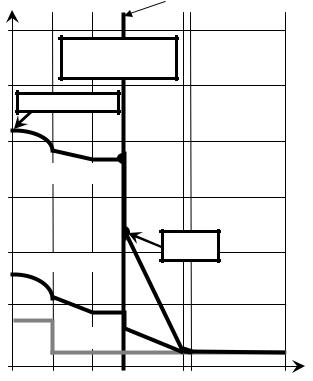
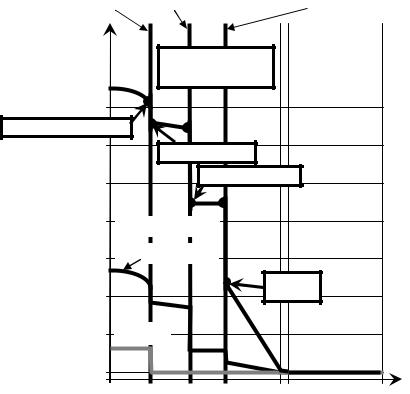
Evidently, the numerical evaluations obtained for the hightechnology implosive HNED are quite correct for the lowand mediumtechnology HNED with relatively thicker layers of aluminum and chemical HE. The weaker capabilities of heat removal from these HNED allowed us to conclude that the lower contents of 238Pu (in comparison with the high-technology HNED) could be sufficient to provoke the HNED failure.
|
|
|
|
|
|
|
λ = 0,12 W/m·К |
|
||
|
1000 |
Pu |
|
U |
Al |
HE |
25%Al+75%N2 |
|||
|
|
|
|
|
|
|
|
|
|
|
|
|
|
|
|
2100 W |
|
|
|
||
|
800 |
|
|
|
|
|
|
|
|
|
|
|
Pu melting |
|
|
|
|
|
|||
|
|
640 |
|
|
|
|
|
|
|
|
|
600 |
570 |
|
|
|
|
|
|
|
|
|
|
|
|
|
531 |
|
|
|
||
ºC |
|
T(r, 5 hours) |
|
|
|
|
|
|||
400 |
|
|
|
|
|
|
|
|
|
|
Temperature, |
|
|
|
|
|
|
|
|
|
|
|
|
|
|
|
280 |
|
|
|
||
200 |
T(r, 0,5 hour) |
|
ε=2% |
|
|
|||||
|
|
|
|
|
|
|||||
|
|
|
|
|
|
|
|
|
|
|
|
|
113 |
20 |
|
|
|
|
|
|
|
|
0 |
|
|
|
|
|
|
|
||
|
-75 |
|
|
|
-32 |
|
|
|
||
|
|
|
|
|
|
|
|
|||
|
|
|
|
T(r, 0) |
-100 |
|
|
|
||
|
-200 |
|
|
|
|
-192 |
|
|
||
|
|
|
|
|
|
|
|
|
||
|
|
|
|
|
|
|
|
|
|
|
|
|
5,8 |
|
10,8 |
13,8 |
19,8 |
21 |
r, cm |
43 |
|
|
|
|
|
|
|
(29% 238Pu) |
|
|
|
|
a)
Fig. 6.17. Radial temperature profiles in the HNED, when all the measures on prolongation of the HNED lifetime were undertaken
a) Plutonium melting leads to the HNED failure
211
λ = 4,8 W/m·К |
|
λ = 0,17 W/m·К |
|
λ = 0,08 W/m·К |
||||
|
|
Pu |
U |
Al |
HE |
25%Al+75%N2 |
||
|
|
1300 |
|
3100 W |
|
|
|
|
|
|
|
|
|
|
|
|
|
|
1200 |
|
1200 |
|
|
|
|
|
|
|
1132 |
|
|
|
|
||
|
|
|
|
|
|
|
||
Melting of aerogel |
|
1085 |
|
|
|
|
||
|
|
|
|
|
|
|||
|
1000 |
|
|
U melting |
|
|
|
|
|
|
|
|
|
|
|
||
, ºC |
800 |
|
|
Al melting |
|
|
|
|
|
|
|
|
660 |
|
|
|
|
Температура |
600 |
T(r, 5 hours) |
|
|
|
|
||
|
|
|
|
|
||||
400 |
T(r, 0,5 hour) |
|
|
|
|
|||
|
|
|
284 |
|
|
|
||
|
|
|
|
|
|
|
||
200 |
345 |
244 |
|
ε=2% |
|
|
||
|
179 |
134 |
|
|
||||
|
|
|
|
|
|
|||
|
|
|
|
|
|
|
||
|
0 |
T(r, 0) |
-87 |
|
|
|
|
|
|
|
|
|
|
|
|
|
|
|
|
|
|
-142 |
-193 |
|
||
|
-200 |
|
|
|
|
|
||
|
|
|
|
|
|
|
|
|
|
0 |
|
5,8 |
10,8 13,8 |
19,8 |
21 |
r, cm |
43 |
|
|
|
||||||
|
|
|
|
(42% 238Pu) |
|
|
|
|
b)
Fig. 6.17. Radial temperature profiles in the HNED, when all the measures on prolongation of the HNED lifetime were undertaken
b) Plutonium melting does not lead to the HNED failure
According to the IAEA documents, plutonium containing above 80% 238Pu.is regarded as a proliferation-protected material. Discrepancy be-
tween the IAEA-declared value (80% 238Pu) and the results of previous numerical evaluations (18-42% 238Pu) can be explained by the following
considerations:
1. The adopted criterion for thermal stability of chemical HE, i.e. dissociation of 2% HE molecules.
212
2. The adopted criterion for the HNED failure, i.e. the HNED lifetime
must be no longer than five hours. By the way, if plutonium contains 80% 238Pu, then the HNED fails in two hours.
3.The chosen geometrical model of the implosive HNED.
4.The chosen chemical HE with the highest heat conductivity and maximal acceptable temperature.
6.4.5. Higher fuel burn-up in denatured (Np-U-Pu) NFC
Good neutron-multiplying properties of 238Pu and its neutron predecessor 237Np make it possible to extend substantially time period for continuous reactor operation without refuelings. As a consequence, unauthorized extraction of plutonium from SNF becomes practically unfeasible. Indeed, neutron irradiation of (Np-U-Pu) fuel initiates the following “non-traditional” transition chain:
237Np(n,γ)238Pu(n,γ)239Pu(n,γ)...
A successive transition of these nuclides leads to enhancement of neutron-multiplying properties.
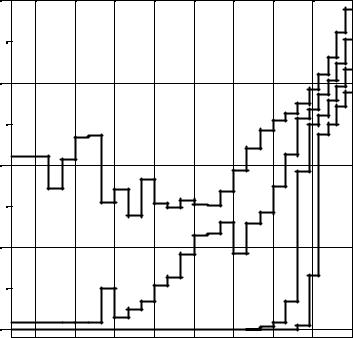
Actually, as it can be seen in Fig. 6.18, excess neutron generation per one absorption (νeff-1) in 237Np is negative for neutrons of all energy range (excepting fast neutrons), positive for neutrons with En > 1 keV for 238Pu and, as is known, essential positive one for 239Pu. So, for (Np-
U-Pu)-fuel the nuclides we are dealing with can be characterized as follows: 237Np plays a role of “burnable poison", 238Pu is a moderately fissile nuclide by fast neutrons (En > 1 keV), and 239Pu is a well-known fissile nuclide with excellent neutron-multiplying properties.
At the same time, during irradiation in the reactor core, FP accumulation results in growth of neutron absorption. So, these tendencies can be counterbalanced, and such fuel will be characterized by stabilized neutron-multiplying properties over long fuel lifetime and, as a consequence, high fuel burn-up.
213
3.00
absorption |
- 1) |
(ν |
|
|
eff |
|
2.00 |
one |
|
per |
|
number |
1.00 |
|
|
neutron |
|
Excessive |
0.00 |
|
|
|
-1.00 |
Pu-239
Pu-238
Np-237
U-238
0.1 1 eV 10 100 1 keV 10 100 1 MeV 10.5
Neutronenergyenergy
Neutron energy, eV
Fig. 6.18. Dependencies of excessive neutron number per one absorption (νeff-1) on neutron energy for nuclides of (Np-U-Pu) fuel.
Burn-up calculations for mono-nitride (Np-U-Pu) fuel in elementary cell of PWR-type reactor with heavy water as a coolant were performed by using code GETERA. The cell parameters are presented in Table 6.7 (they were similar to those of VVER-1000 cell).
214
Table 6.7
Cell parameters of PWR-type reactor
Diameter of fuel rod, mm |
9.1 |
|
Thickness of steel cladding, mm |
0.4 |
|
Coolant |
D2O |
|
Volume of D2O / Volume of fuel |
1.6 |
|
Fuel |
(Np-U-Pu )N |
|
(porosity - 30%) |
||
|
||
Specific heat generation, kW/l |
110 |
The dependencies of K∞ on fuel burn-up are shown in Fig. 6.19 for various fuel compositions. For comparison it is demonstrated also a similar curve of K∞ for a standard LWR-UOX reactor. It can be seen that, actually, there is a possibility to attain fuel burn-up of 25-30%HM (corresponding fuel lifetime is about 20-25 years). It is worth-while mentioning that vibration-packed MOX fuel in stainless steel cladding was irradiated in fast reactor BOR-60 (Russia), and it was obtained burn-up of 26% HM on standard fuel assemblies and burn-up of 32% HM in experimental fuel rods. No thermal-mechanical and physicalchemical fuel-cladding interactions were observed in any of the analyzed spent fuel rods.
The results mentioned above referred to so-called "ultimate" fuel compositions which didn't contain 238U at all. Actually speaking, these results can be considered as preliminary ones to demonstrate scale of benefit. Undoubtedly, it is needed to analyze impact of wide fuel compositions (including 238U) on stabilized multiplication properties of ultra long-life cores taking into consideration reactor safety in both critical and sub-critical operation modes. Anyway, application of ultra long-life core concepts based on the denatured (Np-U-Pu) fuel can lead to essential decrease of SNF flow rate, reduction of reprocessing, remanufacturing and shipping operations.
215