Материал: Крючков Фундаменталс оф Нуцлеар Материалс Пхысицал Протецтион 2011

Внимание! Если размещение файла нарушает Ваши авторские права, то обязательно сообщите нам

Gamma ray spectrometry and neutron coincidence count are complementary techniques a combination of which enables determination of plutonium content in NM. Another example is when standards are made by titrimetry to calibrate nondestructive measurement systems by densitometry and XFA.

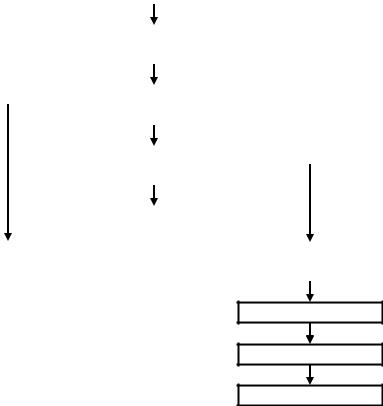
Simultaneous use of more than one technique to measure any NM parameter makes it possible to improve the confidence of the overall result thanks to mutual compensation of potential methodological errors (see Fig. 5.28 for the flowchart of a coupled plutonium analysis at a Sellafield facility).

Simultaneous use of more than one technique leads to the integration of their respective equipment in one facility and the creation of measuring systems in the form of stations.


Portion of PuO2


Gamma neutron


counter


Dissolution


( 50 mg of Pu/g)


Dilution


( 10 µg of Pu/g)


Titration


KED/gamma-


Dilution

counter


( 10 µg of Pu/g)

Chemical treatment

Alpha spectrometry

Mass spectrometry

Fig. 5.28. Flowchart of a coupled plutonium analysis

281


Table 5.16

Basic NM analysis technique used at analytical laboratories


Analysis technique

Analyzed

Material type


Error, %


element or


random

systematic


isotope


Element analysis


Titration by Davis-

U

U, U–Pu,

0.05

0.05


Grey method

U–Th


Titration by


McDonald-Savage

Pu

Pu material

0.1

0.1


method


Coulometry

Pu

Pure Pu material

0.05

0.05


Gravimetry with

U, Pu

U oxides, Pu

0.05

0.05


combustion

oxides


K-edge densitometry

U, Th, Pu

U, Pu, U–Pu,

0.2

0.2


U–Th


XFA

Pu

Pu material

0.2

0.2


XFA with photon


Pure U and Pu


wavelength

Pu, U

oxides, МОХ-

0.3

0.3


separation


fuel


Isotopic analysis


Isotope dilution


Spent fuel


U, Pu

solutions, Pu and


0.1

0.1


mass spectrometry


U–Pu material


Thermal ionization

U and Pu

All Pu and U


material, spent


0.05

0.05


mass spectrometry

isotopes


fuel solutions


Gamma ray


spectrometry with

Am, Np, Pu

Pure U and Pu


high-resolution


0.5–2.0

0.5–2.0


isotopes

material


detectors (Ge-


detectors)


Gamma ray

235U

Low-enriched U


spectrometry (NaI-


0.2–0.5

0.2–0.5


detectors)


material


Alpha spectrometry

238Pu

Pu material


0.2

0.3


Laser fluorometry

Np

Pu material


2.0

2.0


Pu

Pu

Pu, U–Pu


0.2

0.2


spectrophotometry


282

CHAPTER 6

MAIN ACCOUNTANCY PROCEDURES

6.1. NM transfer procedures

Shipper/receiver difference

A classic problem exists: let there be a 28-kg bar of butter. It is required to divide this butter into 280 pieces of 100 g each using scales measuring 100-g weights with an accuracy of plus or minus 5 g. The question is: can it be done? That is, can 28 kg of butter be cut into 280 pieces of 100 g each with the aid of such scales.

Many higher schools of commerce in the world use this problem to demonstrate the existing difference in the shipper’s and the receiver’s data.

Solutions to the problem were searched for experimentally involving both skilled salespersons and beginners. The answer to the question is that, provided both of them use the scales with a division of 5 g, the beginner normally cuts the butter into 274-278 pieces, which is slightly less than it ought to be. Contrary to this, the one with professional skills cuts a bit more than required, that is, from 282 to 286 pieces.

The explanation to this discrepancy is that the people involved are inclined to behave differently when addressing the problem. A skilled salesperson knows that weighing is sure to involve errors, systematic errors included, because measuring equipment tends to have their characteristics changed over time. Scales are prone to aging, rusting (e.g. through oxidation) and so on. Understanding this leads to skilled persons getting 280 pieces of butter exactly by putting into each piece a bit less than 100 g, which is, still, within the acceptable tolerance of 5 g.

A beginner tries to get pieces of exactly one hundred grams each by making them initially a bit heavier because making them weighing less than 100 g is subject to penalty. So this results in the above statistics.

The experiments of the kind serve to confirm that an uncertainty in data (say, a scale division of 5 g), if any, makes the measurement result dependent on secondary factors, including the mentality of the person doing measurements. The mentality of a skilled salesperson is not to sell at a loss.

This problem (with respective experiments) is exactly the one concerned with the concept of the shipper/receiver difference. An accurate shipper normally ships more than an accurate receiver receives. They have different mentality.

283

In the given context, things stand like this. No bookkeeping system takes account of the existing shipper/receiver difference. Yet, this difference is taken into account by any measured material balance system. The material concerned is not, quite naturally, stolen or has anything done with it en route. This simply shows to what extent our knowledge about what is really going on is uncertain. We should remember that our knowledge is far from being absolute, the difference being a random quantity and depending on how perfect the shipper’s and the receiver’s measurement systems are. It should be also noted that multiple transfers of large NM quantities may lead to the uncertainty of data on the total material accumulating and reaching significant values.

Tolerable shipper/receiver differences

So what shipper/receiver difference is allowed in Russia?

The shipper/receiver difference in the mass of the nuclear material being transferred is determined as the difference between the values of the masses shown by the shipper (certificate data) and those obtained in verifying measurements.

Let S and R be respectively the shipped and the received NM quantities. S and R are random quantities as measured by the shipper and the receiver and have respective errors of σS and σR.

For the shipper/receiver difference (S–R) , the mean-square deviation from its mathematical expectation is

σS–R = (σ 2S + σ 2R)1/2,

if the measurements of S and R are assumed to be independent.

It should be remembered that the confidence interval is the one that covers the parameter of interest (random quantity) with a given probability. The following confidence intervals are used in accounting for and control of NM:

∙0.95 – insignificant statistical straggling interva l;

∙0.99 – permissible statistical straggling interval.

If S–R is a normally distributed random quantity and М(S– R) is its mathematical expectation, then the interval М(S–R )±2.58·σS–R makes a 99% confidence interval.

The General Rules specify that where the difference (S–R ) is other than zero within its 99% confidence interval, this may be believed to be the sequence of the shipper and receiver NM measurement errors. The NM

284

concerned is booked by the receiver subject to the shipper data. This is normally explained by the shipper data having been obtained by accounting NM measurements and the receiver data by verifying NM measurements.

Where the difference (S–R ) is beyond the 99% confidence interval, respective measures should be taken either to have this data agreed or, if the shipper/receiver discrepancy has been confirmed to be great, to identify the causes for the NM loss or surplus. In this case, the receiver shall send special reports to the state atomic energy management authorities and the nuclear safety regulator.

How nuclear material is transferred

NM transfers involve the following as the General Rules define.

1.A transfer of NM shall be authorized only if the shipper and the receiver have been licensed to handle NM and have contracted with Rosatom for transfers of NM for use (for federally owned NM).

2.The shipper shall give the receiver a prior notification of NM to be shipped (this is the binding requirement because any NM dispositions entail nuclear and radiation safety/security issues).

3.The shipper shall condition and measure the material and prepare respective account and cover documents. Cover documents give NM container data (seal types and identifiers, gross weights of containers, etc.). These attributes are used for the initial acceptance of cargo. Data on NM characteristics (certificate data) shall be dispatched by special mail or together with cargo.

4.NM shall be transferred in the presence of the shipper and receiver representatives. The receiver representative shall check the attributes of NM, including:

∙external examination and quantity check of the NM containers;

∙integrity check of the tamper indicating devices applied to the vehicle and the NM containers;

∙conformity of the container identifiers and the tamper indicating devices to respective invoices.

∙verifying measurements of the NM container gross weight.

5.Where required, the receiver shall implement verifying measurements for other NM parameters.

The receiver shall define the necessity, form and volume of verifying measurements given that, after these are done, NM should be booked within the NM A&C system of the receiving organization which shall take over, from that time onwards, the entirety of the legal responsibility for the
285

Источник: https://studfile.net/preview/16708779/