Материал: Крючков Фундаменталс оф Нуцлеар Материалс Пхысицал Протецтион 2011
А
|
|
Б |
|
Б |
|
Б |
|
|
B |
|
B |
|
B |
|
|
|
|
|
|
|
|
|
|
|
|
|
|
А
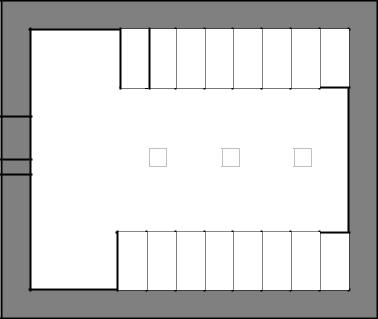
Fig. 10.3. An example of NM storage facility: A – c ontainer racks; B – NM safes
Storage facilities offer the best NM control solutions. The major elements of the storage facility structure (floors, walls, roofing and doors) normally satisfy to top-level material localization requirements, including reinforced-concrete floor, ceiling, roofing and walls of the thickness not less 20 cm. Any openings in storage facilities that permit unauthorized intrusion thereto are equipped with barriers. It is forbidden to process material and handle same other than for the purposes of NM storage (say, for experiments involving NM) within storage facilities. It is also forbidden to lay routes to other areas of operations through storage facilities.
NM access controls
An important feature of current accounting and control systems is the maximum use of access controls. All developed countries, including Russia, have their NM accounting and control systems relying on measured material balance. Furthermore, a measurement of NM inventory is in fact a
426
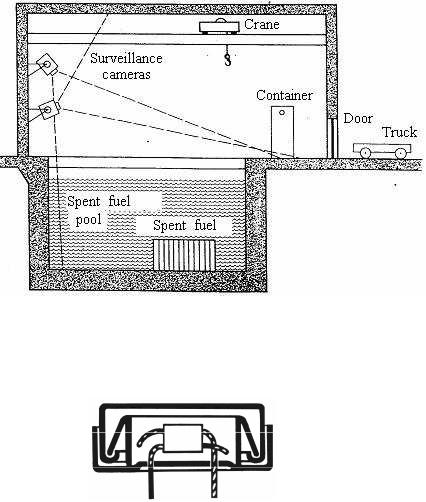
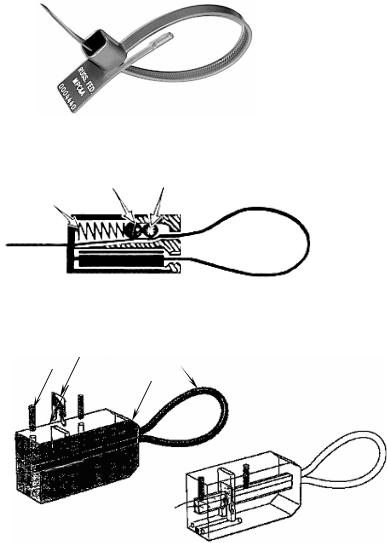
Fig. 10.6. A plastic loop seal (PS360 model)
2 3
1
Fig. 10.7. Multi–Lock seal design: 1 – spring; 2 – aluminum ball; 3 – steel ball
1 |
2 |
3 |
|
||
|
4 |
|
|
|
Fig. 10.8. Cobra seal design:
1 – compression rod; 2 – shearing razor; 3 – fiber optic cable; 4 – seal body
429
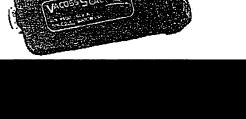
Fig. 10.9. Reusable Vacoss seal design by Aquila, the USA
Adhesive seals (stamps). These seals have a paper, vinyl or lavsan base with an adhesive applied to it on the inside. Adhesive seals may contain one or more base layers.
Paper or vinyl adhesive seals have a single-layer base. After placement, these seals are hard to remove without traces of the tamper left because:
∙paper seals are based on rice paper so they can be broken easily when removed;
∙vinyl seals have cross cuts made along the entire base length, which makes it much more difficult to remove a seal without breaking it.
A lavsan seal has a transparent outer layer and a colored metallized inner layer. The inner layer bears a drawing and the ordinal number. The colored base layer of a lavsan seal has a seal breaking sign (the words Void or Open for example) preprinted across the base length on the adhesive side. When a seal is removed, this sign appears on the container surface and the stretched colored base fails to match the image left on the container.
Adhesive seals are used to seal containers with NM.
Hybrid containment techniques
Access control techniques include also US-developed hybrid methods used now also in Russia. These are gamma image memorization techniques. A detector is placed beneath a container with NM (e.g. HEU) for continuous gamma ray detection. The gamma ray spectrum comes further to the computer and is compared to the reference spectrum, i.e. the spectrum that was recorded when the material was placed under control. If the comparison fails to confirm the identity of the spectra, an alarm is on. A gamma image technology is used, which also ensures the confidence of knowledge about the status of nuclear material.
430