Материал: Маслов ИНТРОДУЦТИОН ТО ПХЫСИЦС ОФ СЕЦОНД-ОРДЕР МАГНЕТИЦ 2015
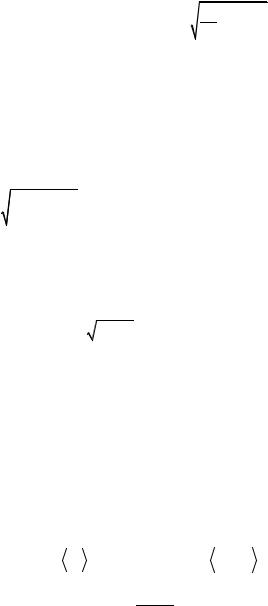
We have three solutions: ∆ = 0 and ∆ = ±
 2ab (TC −T ). Let us check the minimum condition, i.e., the positivity of second derivative
|
|
|
|
∂2 F (∆,T ) |
= 2a(T −T |
)+12b∆2 |
. |
|
(19.5) |
|||||
|
|
|
|
|
|
|
||||||||
|
|
|
|
∂∆2 |
|
|
C |
|
|
|
|
|
||
А. |
∆ = 0 |
|
∂2 F (∆,T ) |
= 2a(T −T |
)= |
> 0 at T |
>TC ; |
So, |
∆ = 0 is |
|||||
|
|
|
|
< 0 at T |
<T . |
|||||||||
∂∆2 |
||||||||||||||
|
|
|
|
C |
|
|
|
|
||||||
|
|
|
|
|
|
|
|
|
|
C |
|
|
||
the solution at |
T >TC (minimum), and it is not the solution at T <TC |
|||||||||
(maximum). |
|
|
|
|
|
|
∂2 F (∆,T ) |
|
|
|
B. ∆ = ± |
|
a |
(T |
−T ) |
= 4a(T −T )> 0 |
at T <T . So, |
||||
2b |
∂∆2 |
|||||||||
|
|
C |
|
|
C |
C |
||||
∆ ≠ 0 is the solution at T <TC (minimum). As this takes place, both ∆ > 0 and ∆ < 0 are the solutions, i.e., the ground state of the system at
T <TC is doubly degenerated. Therefore |
|
|||||||
|
( |
T |
) |
|
|
|
C |
|
∆ |
|
|
= |
0 at T >T ; |
(19.6) |
|||
∆ |
(T )− |
|
|
at T <TC , T →TC−. |
||||
T −TC |
||||||||
|
|
|
|
|
|
|
|
|
Finally, for all second-order phase transitions the temperature dependence ∆(T ) at T →TC has the same form, but ∆ has its own different physical meaning for each type of second-order phase transition.
20. Heat capacity of the Ising ferromagnet in the mean-field approximation
By definition |
|
|
dE (T ) |
|
|
|
|
|
||
|
C (T )= |
. |
|
|
|
(20.1) |
||||
|
|
|
|
|
||||||
At H = 0 |
|
|
dT |
|
|
|
|
|||
|
|
|
1 |
|
|
|
|
|
|
|
ˆ |
|
(T )− |
∑ |
/ |
Jij |
|
≈ |
|||
E (T )= H |
= E0 |
|
|
σiz σjz |
||||||
T |
|
|
|
2 i, j |
|
|
|
(20.2) |
||
≈ E0 (T )− x2 2(T )kBθN.
51
Therefore
C (T )= |
∂E |
0 (T ) |
− |
1 |
kBθN |
∂(x2 (T )) |
= C0 |
(T )+CS (T ), |
(20.3) |
|
∂T |
2 |
∂T |
||||||||
|
|
|
|
|
|
|||||
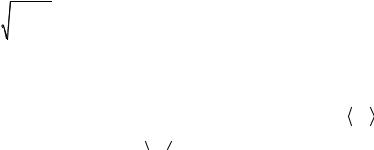
where C0 (T ) is the contribution to heat capacity which is not associated with magnetic ordering, and CS (T ) is the spin (magnetic) component. At T > θ the order parameter is x = 0 , therefore CS (T )= 0 C (T )= C0 (T ). At T < θ (T → θ− ) the order parameter is
|
|
|
|
|
|
|
|
|
|
|
|
|
|
|
|
|
|
|
x |
|
= 3 |
θ−T |
, thus x |
2 |
|
T |
. In this case |
|
|
||||||
|
|
|
|
||||||||||||||
|
|
θ |
|
= 3 1− |
|
|
|
|
|||||||||
|
|
|
|
|
|
|
|
θ |
|
|
|
|
|
|
|
||
|
|
|
|
|
|
CS |
(T )= − |
1 |
|
|
− |
3 |
|
3 |
kB N. |
(20.4) |
|
|
|
|
|
|
|
2 |
kBθN |
θ |
= |
2 |
|||||||
|
|
|
|
|
|
|
|
|
|
|
|
|
|
|
|||
Abrupt jump of heat capacity at T =θ |
is concerned with the appearance |
||||||||||||||||
new degrees of freedom in the system. So, at T > θ we have |
µˆ iz = 0 |
||||||||||||||||
i , and at T < θ we have  µˆ iz
µˆ iz  ≠ 0 i : the nonzero mean magnetic moments of all atoms are appeared. Every degree of freedom has, asso-
ciated with it, on an average, energy of |
|
1 kBT . At T →0 (T θ) the |
|||||||||||||||||||||||
|
|
|
|
|
|
|
|
|
|
|
|
2 |
|
|
|
|
|
|
|
|
|
|
|
|
|
|
|
|
=1− 2e−2 |
θ |
|
≈1− 4e−2 |
θ |
|
|
|
|
|
|
||||||||||||
order parameter is |
x |
T |
, thus x2 |
T |
. In this case |
||||||||||||||||||||
|
k |
|
θN |
|
−2 |
θ |
|
|
|
|
1 |
θ2 |
−2 |
θ |
|||||||||||
|
|
|
|
|
|
|
|
||||||||||||||||||
CS (T )= − |
|
B |
|
|
−4e |
|
|
T (−2θ) |
|
− |
|
|
|
|
= 4kB N |
|
|
e |
|
T . (20.5) |
|||||
|
|
|
|
T |
2 |
|
T |
2 |
|
||||||||||||||||
|
|
2 |
|
|
|
|
|
|
|
|
|
|
|
|
|
|
|
|
|
||||||
Therefore CS (T ) exponentially tends to zero at T →0 . |
|
|
|
|
|
|
|||||||||||||||||||
Generally speaking, |
C0 (T )≠ 0 |
|
thus |
total |
heat |
|
capacity |
||||||||||||||||||
C (T )= C0 (T )+CS (T ) |
takes the form as it is shown on Fig. 20.1, i.e. at |
||||||||||||||||||||||||
T = θ the abrupt jump takes place ∆C = |
3 k |
B |
N. |
|
|
|
|
|
|
||||||||||||||||
|
|
|
|
|
|
|
|
|
|
|
2 |
|
|
|
|
|
|
|
|
|
|
|
|
||
52
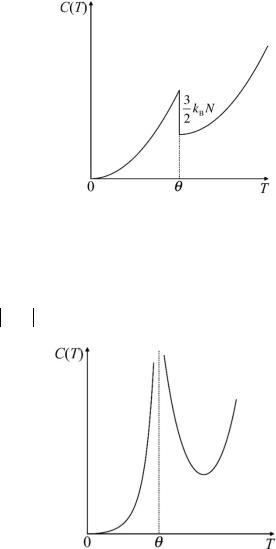
Fig. 20.1. Temperature dependence of ferromagnet heat capacity in the mean-field approximation
Note that for the heat capacity the mean-field approximation gives qualitatively wrong result. As we can see, mean-field approximation predicts the abrupt jump for heat capacity, but in fact it has divergence
C (T )− T −θ−α (see Fig. 20.2).
Fig. 20.2. Realistic temperature dependence of ferromagnet heat capacity
Such characteristic feature of the Ising ferromagnet heat capacity is called lambda point.
53

21. Magnetic susceptibility of the Ising ferromagnet in the mean-field approximation
Recall |
the definition of the differential magnetic |
susceptibility |
||
χ = (∂M ∂H )H →0 . In |
paramagnetic |
state (T > θ) the |
magnetization |
|
M = 0 at |
H = 0 and |
M ≠ 0 only at |
H ≠ 0 . In this case “conventional” |
|
magnetic susceptibility χ = M H coincides with the differential one.
Earlier we showed that at |
T θ magnetic susceptibility could be de- |
||||
scribed as χ = |
NµB2 |
1 |
|
(Curie-Weiss law). Let us find the expression |
|
V |
|
T −θ |
|
||
for χ(T ) in all temperature range 0 <T < +∞. What should we do? We must obtain the M (H ) dependence and differentiate it with respect to
H . We know that M = NVµB x (see Eq. (12.6)), thus we should find the dependence x(H ). It can be found from the Curie-Weiss equation with
regard to magnetic field |
|
x = tanh |
h + xθ |
. Since in this equation we |
|||||||||||||||||||||||||||||
|
|
T |
|
|
|
||||||||||||||||||||||||||||
|
|
|
|
|
|
|
|
|
|
|
|
|
|
|
|
|
|
|
|
|
|
|
|
|
|
|
|
|
|
|
|
||
have h rather than H , let us make the following conversion |
|
||||||||||||||||||||||||||||||||
|
|
|
|
|
|
|
|
|
|
|
|
|
∂M |
|
|
|
Nµ2 |
∂x |
|
|
|
|
|
|
|
|
|||||||
|
|
|
|
|
|
χ = |
|
|
|
= |
|
|
|
B |
|
|
|
. |
|
|
|
|
|
(21.1) |
|||||||||
|
|
|
|
|
|
∂H |
|
|
V |
|
∂h |
|
|
|
|
|
|||||||||||||||||
|
|
|
|
|
|
|
|
|
|
|
|
|
|
|
|
|
|
|
h→0 |
|
|
|
|
|
|
||||||||
Considering that we do not know the dependence x(h) |
let us differenti- |
||||||||||||||||||||||||||||||||
ate the both sides of the Curie-Weiss equation |
|
|
|
|
|
|
|
||||||||||||||||||||||||||
∂x |
|
2 h + xθ |
|
|
|
|
1 |
|
|
θ ∂x |
|
|
1 |
− x2 |
|
θ |
(1− x |
2 |
) |
∂x |
|
||||||||||||
|
= 1− tanh |
|
|
|
|
|
|
|
|
|
+ |
|
|
|
|
|
|
= |
|
|
|
+ |
|
|
|
; |
|||||||
∂h |
T |
|
|
|
T ∂h |
|
T |
T |
|
∂h |
|||||||||||||||||||||||
|
|
|
|
|
T |
|
|
|
|
|
|
|
|
|
|
|
|||||||||||||||||
|
|
|
∂x |
1 |
− |
|
θ |
|
(1− x2 ) = 1− x2 |
; |
|
|
|
|
|
|
(21.2) |
||||||||||||||||
|
|
|
|
|
|
|
|
|
|
|
|
||||||||||||||||||||||
|
|
|
∂h |
|
|
T |
|
|
|
|
|
|
|
|
|
|
|
|
|
T |
|
|
|
|
|
|
|
|
|
||||
|
|
|
|
|
∂x |
|
= |
|
|
|
|
|
1 |
− x2 |
|
|
. |
|
|
|
|
|
|
|
|
|
|||||||
|
|
|
|
|
∂h |
|
|
|
|
|
|
( |
|
|
|
|
) |
|
|
|
|
|
|
|
|
|
|||||||
|
|
|
|
|
|
|
|
|
|
|
|
|
|
|
|
|
|
|
|
|
|
|
|
|
|
|
|
||||||
|
|
|
|
|
|
|
|
|
T −θ 1− x |
|
|
|
|
|
|
|
|
|
|
|
|
||||||||||||
|
|
|
|
|
|
|
|
|
|
|
|
|
|
|
|
|
|
|
|
|
2 |
|
|
|
|
|
|
|
|
|
|
|
|
54

Here we take into account that
∂tanh z |
= |
∂ sinh z |
= |
cosh2 z −sinh2 z |
=1− tanh |
2 |
z. |
|||||||
|
|
|
|
|
|
|
|
|
|
|
||||
∂z |
|
|
cosh |
2 |
z |
|
|
|
||||||
|
∂z cosh z |
|
|
|
|
|
|
|
|
|||||
Therefore the expression for χ(T ) takes the following form |
|
|
||||||||||||
|
|
|
χ = |
NµB2 |
|
1− x2 |
|
|
|
. |
|
|
(21.3) |
|
|
|
|
V |
|
|
T −θ 1− x2 |
) |
|
|
|||||
|
|
|
|
|
|
( |
|
|
|
|
|
|
||
Further we should tend the magnetic field to zero, i.e., take as order parameter the solution of the Curie-Weiss equation without H :
xθ |
. We already know this solution and in limiting cases at |
|||
x = tanh |
|
|
||
T |
||||
|
|
|
||
T →0 and at T < θ (T → θ− ). Let us analyze the Eq. (21.3).
A. At T > θ the order parameter is x = 0 χ = |
NµB2 |
1 |
. Thus we |
|
V |
|
T −θ |
||
obtain the Curie-Weiss law. Therefore the Curie-Weiss law is correct in all temperature range T > θ inclusive T = θ, i.e., the magnetic susceptibility is diverged at T → θ+ . So, the magnetization itself is finite, but its
rate of change becomes infinite at H → 0 and T →θ.
|
|
|
|
|
|
|
|
|
|
|
|
|
|
|
|
|
|
|
|
|
|
|
|
|
|
|
T |
||
B. At T → θ− |
the order parameter is |
|
|
x |
|
= 3 |
θ−T |
x |
2 |
|
− |
||||||||||||||||||
|
|
|
|
||||||||||||||||||||||||||
|
|
|
|
|
|
|
= 3 1 |
. |
|||||||||||||||||||||
In this case |
|
|
T |
|
|
|
|
|
|
|
|
|
|
|
|
|
|
|
θ |
|
|
|
|
|
|
|
|
θ |
|
|
|
|
|
|
|
|
|
|
|
|
|
|
|
|
|
|
|
|
|
|
|
|
|
|
|
|
|||
|
|
|
|
|
|
|
|
|
|
|
|
|
|
|
|
|
|
|
|
|
|
|
|
|
|
|
|
|
|
χ = |
NµB2 |
|
|
3 θ − 2 |
|
≈ |
NµB2 |
|
|
|
|
1 |
|
|
|
= |
NµB2 |
|
|
|
1 |
|
. |
|
|||||
V |
|
T |
|
T |
− 2 |
|
V T |
− |
3T |
+ θ |
V 2 |
( |
θ− |
T ) |
|
||||||||||||||
|
|
−θ 3 |
θ |
|
|
|
|
2 |
|
|
|
|
|
||||||||||||||||
|
|
|
|
|
|
|
|
|
|
|
|
|
|
|
|
|
|
|
|
|
|
|
|
|
|
|
|
|
|
So, at T → θ− |
|
magnetic susceptibility is also diverged, and the charac- |
|||||||||||||||||||||||||||
ter of divergence is the same that at T → θ+ . Let us unify our results at T → θ− and at T → θ+
χ(T )− |
1 |
|
|
at T → θ. |
(21.4) |
|
|
T −θ |
|
|
|||
|
|
|||||
|
|
|
|
|
|
|
55