DICOM PS3.17 2020a - Explanatory Information |
Page 605 |
Consider a modality that supports the appropriate modality-specific Enhanced Image Storage SOP Class, but which is faced with the dilemma of a PACS that does not. In this case, it will commonly "fall back" to sending images the "old" way as single-frame SOP Class Instances, either because it has been pre-configured that way by service personnel, or because it discovers this limitation during Association Negotiation. This strategy is also common amongst modalities for which there are different choices of single frame SOP Class (e.g., DX versus CR versus Secondary Capture, for Digital X-Rays). In some cases, this may be implemented formally using the ability during Association Negotiation to specify a Related General SOP Class (Section B.4.2.1 “SCU Fall-Back Behavior” in PS3.4).
If the PACS is upgraded to include multi-frame conversion capability, and no change is made in the configuration of the modality, or in the SOP Classes accepted by the PACS, then in this scenario, the PACS can potentially convert the single-frame instances into Legacy Converted Enhanced instances. The net result is continuing sacrifice of information compared to what the modality is actually capable of.
A better choice, since the PACS is now capable of handling Multi-frame Images, is to also reconfigure it to also accept the "true" En- hanced Image rather than just "transitional" Legacy Converted Enhanced Storage SOP Classes. Since the two SOP Class families usethesamestructureandcommonimportantFunctionalGroups,inalllikelihoodthePACSwillbeabletouseeitherclassofobjects, and in a future upgrade take advantage of the additional information in the superior object (perhaps for more complex processing or annotation or rendering). In any case, storing the modality's best output in the archive will benefit future re-use as priors and may enable greater functionality in external workstations.
A special consideration is when prior images need to be displayed on the modality before starting a new study (perhaps to setup a comparableprotocolorbetterunderstandtherequest).Inthiscase,careneedstobetakenwithrespecttowhichimagesareaccessible to the modality (either pushed to it or retrieved by it), and the question of "round trip fidelity" of conversion arises.
KKK.5 Query and Retrieval
The coexistence (either actually or logically) of two different representations of the same information creates a potential challenge in that the user must not be presented with both sets simultaneously.
A naïve conversion that added converted images to the study without an ability to distinguish or "filter" them from view would not only be confusing but would potentially result in twice as much data to transfer.
Accordingly, the Query/Retrieve mechanism is extended with an optional extended negotiation capability to specify which "view" of the information is required by the SCU:
•A"classic"view,whichincludeseitheroriginal(asreceived)classicsingleframeimagesorenhancedMulti-frameImagesconverted to single frame.
•An "enhanced" view, which includes either original (as received) enhanced Multi-frame Images, or classic single frame images converted to true or legacy converted enhanced multi-frame.
KKK.6 Referential Integrity
Often instances within a Study will cross-reference each other. For example, a Presentation State or a Structured Report or an RT Structure Set will reference the images to which they apply, cross-sectional images may reference localizer images, and images that were acquired with annotations may contain references to Presentation States encoding those annotations.
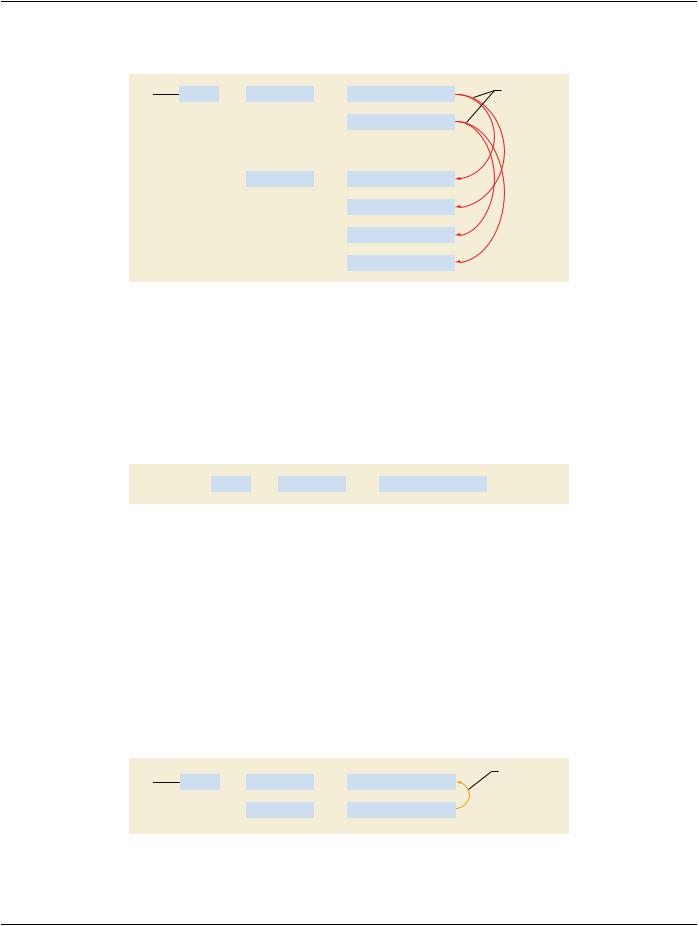
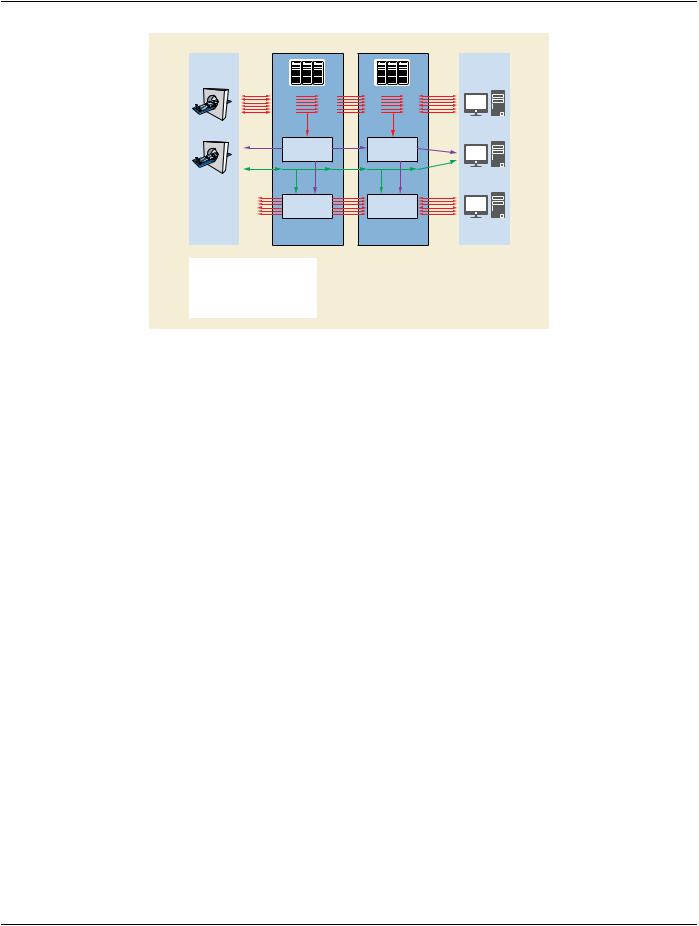
Accordingly, when there are multiple "views" of the same study content (classic or enhanced), the instances will have different SOP InstanceandSeriesInstanceUIDsforconvertedcontentineachview.Henceanyreferenceswithinaninstancetoaconvertedinstance needs to be updated as well. In doing such an update of references to UIDs, instances that might not otherwise have needed to be converted do need to be converted, and so on, until the entire set of instances within the scope of the conversion for the view has referential integrity.
In practice, the only instances that do not need to be converted (and assigned new UIDs) are those that contain no references and are not classic or enhanced images to be converted.
Whether or not assignment of a converted instance to a new Series triggers the need to convert all instances in that Series to the new Series, even if they would not otherwise be converted, is not defined (i.e., it is neither required nor prohibited, and hence a Series can be "split" as a consequence of conversion).


 Classic Single Frame
 Legacy Converted Multi-Frame
 True Enhanced Multi-Frame