Материал: Практикум по грамматике, чтению и переводу с английского языка Новосибирск 2008 Оглавление
СОДЕРЖАНИЕ
Государственное образовательное учреждение высшего профессионального образования
«Сибирский государственный университет
телекоммуникаций и информатики»
по грамматике, чтению и переводу
Предисловие………………………………………………………………………05
Текст «The electronic age»…………………………………………………...09
Конструкции as…as, such…as, not so …as…………………………………17
Условные предложения……………………………………………………..76
Значения слова provide……………………………………………………...79
Значения союзов unless, suppose, in case, on condition that, but for……….79
Словообразование. Префиксы. …………………………………………….80
Сослагательное наклонение (The Subjunctive Mood)……………………...85
Сослагательное наклонение после безличных предложений…………….86
Сослагательное наклонение после глагола wish…………………………..88
Конструкции would rather и had better……………………………………...89
III. Fill in the verbs to be, to have in the right form.
1. The Moon … a natural satellite of the Earth.
2. There ….two kinds of electricity, positive and negative.
3. The second half of the 19th century ….a period of rapid growth of electrical engineering.
4. Our university …old and new buildings.
5. Every faculty …its own computer center.
6. He …a wide experience in his speciality.
7. I…greatly interested in modern technology.
8. Mobile phones ….a great number of users nowadays.
9. In the past messages to and from Europe ….sent by ship.
10. Today the word “electronics” …in general usage.
XIX. Match the words with their definitions.
a) a piece of equipment that has been designed to do a particular job;
b) a device that can react to light, heat pressure in order to make a machine do something;
c) the branch of science or technology that studies electronic currents in electronic equipment;
d) a very small piece of a material that is used to carry a complicated electronic circuit;
e) the process of keeping information on a computer;
f) the complete path of wires and equipment along which an electric current flows;
g) a thing or an idea that has been invented;
i) the practical use of something, especially theory, discovery, etc;.
j) the gradual growth of something so that it becomes more advanced and stronger.
5. …………… rapidly transmit TV and radio programs to different towns, cities, and distant areas.
9. The signal is sent over the communication channel from the transmitter to the …………….
4. Semiconductors use such materials as ………….. , silicon and gallium arsenide.
5. The …………. of the water is tested regularly.
6. Gas and oil ……………. always increases in cold weather.
7. The two teams have always been …………... .
8. The .................. of the results depends on the modernization of the equipment.
XIV. Combine words from Box A with words from Box B to make collocations.
XV. Make nouns from the following verbs.
XVI. Find synonyms to the following words in the first part of the text.
Competitor, stage, to display, to need, difficult, to remove, feature, strong
XVII. Phrasal verbs: bring and turn. Fill in the correct particle.
XVIII. Make sentences out of two parts.
XIX. Translate the sentences, paying attention to the meanings of highlighted words.
XX. Discussion. In pairs discuss the following questions.
I. Define the forms of the Infinitives.
II. Comment on the forms and functions of the Infinitive. Translate the sentences into Russian.
III. Complete the sentences by using suitable infinitives.
8. Experiments helped Mendeleev …
10. One way to safe our environment is …
IV. Use to before the Infinitives where possible.
V. Complete the sentences using to or for.
VI. Use the right form of the Infinitive in brackets.
VII. Complete the sentences using either too or enough.
1. The river is … polluted to swim.
2. Erica is old … to make her own decisions.
3. The exam was … difficult for me.
6. This car is … expensive for me to buy.
8. The silicon-dioxide layer of transistors is … thin to be a perfect insulator.
9. I′m sorry I could not take your call before; the signal on my phone was … weak.
VIII. Make one sentence from two. Complete the new sentence using too or enough.
Example: I can′t buy this computer. It is too expensive for me.
This computer is too expensive for me to buy.
IX. Read the text. Express the main idea of the text. Translate it.
constituent – составная часть, составляющая
overall – полный, общий, предельный
minute – крохотный, мелкий, незначительный
heat sensor – тепло-чувствительный элемент
to embed – впитывать посторонние смеси, погружать, внедрять
acceptor – акцептор (тип примеси в полупроводнике)
X. Find the Infinitives in the text and define their functions.
XI. Read the text again and answer the questions.
XIII. Complete the sentences using the correct variant.
XIV. Combine words from Box A with words from Box B to make collocations.
XVII. Form the correct verb from the word in bold using suffixes: -en, -ise, -ify, or prefix en-.
1. I think you should … (large) some of the photographs.
2. The teacher should … (simple) the information so that everybody understands it.
3. They are planning to … (modern) the factory and buy new machinery.
4. They boiled the water in order to… (pure) it.
XV. Connect the words with their definitions.
a) a very small piece of a substance with a positive electric charge that forms part of the nucleus.
b) a very small piece of a substance with a negative electric charge found in all atoms.
c) a vacancy in the crystal structure of a semiconductor that is able to attract an electron.
e) the central and relatively small part of an atom that is made up of protons and neutrons.
h) the smallest particle of a chemical element that can exist alone.
i) the outer structure or layer of something.
j) a force that stops something moving or makes it move more slowly.
k) a very small piece of matter, such as an electron or proton, that is part of an atom.
3. A semiconductor without … is called a natural semiconductor.
8. The flow of … can be likened to the movement of an empty seat in a row of a theatre seat.
5. The council has decided to … (wide) the main road into the city centre.
6. The government promised to … (broad) access to higher education.
7. The study of science … (rich) all our life.
8. Please, ... (close) all translated words in brackets.
9. My parents always … (courage) me in my choice of career.
10. Nothing could … (weak) his determination to continue.
XVIII. Fill in the correct preposition (in, on, to, from, for, of, with).
XIX. Use the verbs in brackets in the required form of the Infinitive.
XX. Discussion. In pairs discuss the following questions.
I. Find the infinitives and translate the following sentences.
III. Translate the sentences paying attention to the for-to-infinitive construction.
IV. Translate the sentences paying attention to the Complex Subject.
X. Read the text. Express the main idea of the text. Translate it.
XI. Find the Infinitives in the text and define their functions.
XII. Find the sentences with the Complex Object and the Complex Subject in the text.
XIII. Read the text again and answer the questions.
XV. Combine words from Box A with words from Box B to make collocations.
XVI. Connect the words with their definitions.
XVIII. Translate the sentences into Russian, paying attention to the meanings of highlighted words.
IV. Translate the sentences paying attention to Participle II in the function of attribute.
V. Translate the sentences paying attention to Participle II in the function of adverbial modifier.
VI. Translate the sentences, define the types of Participles and their functions.
VII. Make sentences beginning with Having ….
Example: We finished our work. We went home.
Having finished our work, we went home.
1. He wrote the letter, then he sent e-mail.
2. The plane was delayed by technical problems. It took off one hour late.
3. I had seen photographs of the place. I had no desire to go there.
7. The substance was heated and it changed its properties.
8. New features were added and it changed the appearance of mobile phones.
VIII. Complete the sentences with Participle I or Participle II.
IX. Translate the sentences paying attention to Absolute Participial Construction.
X. Join two sentences using Absolute Participial Construction.
Example: a) The electric candle had been invented.
b) The problem of lighting was solved.
The electric candle having been invented, the problem of lighting was solved.
a) Lodygin was the first who thought of tungsten as a material suitable for the purpose.
b) The invention of the incandescent filament lamp belongs to him.
2. a) A series of attempts had been made.
b) He came to a successful solution of the problem.
3. a) Tungsten was used for the filament.
b) Lodygin solved the problem of the incandescent lamp.
4. a) Numerous experiments had been carried out at the orbital stations.
b) It became possible to develop new methods of industrial production of new materials.
5. a) Numerous experiments were over.
b) Newton was able to write his work very quickly.
XI. Read the text. Express the main idea of the text. Translate it.
flicker - короткая вспышка, мерцание
set-up - структура, система, настройка
free-space optics - оптическая система в открытом пространстве
car headlight – фара автомобиля
tail-light - задний габаритный фонарь
to alert – предупредить об опасности
to piggy-back on – использовать в своих интересах
broadband connection – широкополосное соединение
transceiver – приемопередатчик
to intercept – перехватывать, задерживать
directional transmitter – передающая радиопеленгаторная станция
incandescent bulb – лампа накаливания
XII. Find the Participles in the text and define their functions.
XIII. Read the text again and answer the questions.
XV. Combine words from Box A with words from Box B to make collocations.
XVI. Connect the words with their definitions.
a part of a radio or a piece of musical or computing equipment that the sound comes out of;
a light spread over a wide area;
a station which produces signals, sounds in one particular direction;
an optical system in which light is used to send information.
XVII. Find synonyms for the words and words combinations in the text.
XIX. Translate the sentences, paying attention to the meanings of highlighted words.
XX. Translate the sentences paying attention to the word since.
XXI. Discussion. In pairs discuss the following questions.
I. Translate the sentences paying attention to the forms of the Gerund.
II. Use the right form of the Gerund of the verbs in brackets.
III. Comment on the forms and functions of the Gerunds.
V. Complete the sentences. Add the necessary preposition.
6. Being a student he was interested …
10. You must take precautions …
VI. Translate the following sentences paying attention to the gerundial construction.
VIII. Use the Gerund instead of the Subordinate Clause.
IX. Comment on the difference between the following pairs of sentences.
1. I like playing computer games. I would like to play computer games.
2. The manager stopped speaking on the phone. The manager stopped to pick up the file.
7. Don`t forget to turn off your computer. I shall never forget visiting London.
XI. Complete the sentences with the Infinitive or Gerund of the verbs in brackets.
(Understand) many parts of electronics, we must know how electricity behaves at higher frequencies.
In 1920s the USA and Europe wanted (expand) the broadcast channels.
It is possible for vacuum tubes (convert) part of their energy into visible light.
I’m not used to (speak) in public so I need (practice) my presentation.
He was the first British physicist (award) the Nobel prize for literature.
I heard the phone (ring) twice and then stop.
The engineer suggested (use) an integrated circuit (amplify) a weak audio signal.
He offered (help) me (repair) my player.
While I was waiting for my plane, I watched other planes (take off) and (land).
XII. Read the text, translate it and comment on the –ing forms.
Turn on, turn in - to any station anywhere
а stand-alone device – независимое, автономное устройство
to cry out – настоятельно требовать, нуждаться
a subwoofer – динамик низких частот
a breeze – пустяк, легкая задача
XIII. Read the text. Express the main idea of the text. Translate it.
electron gun – электронный прожектор, электронная пушка
scanning coil – отклоняющаяся катушка
AF - audio frequency – звуковая частота
scanning – обследование, развертка изображения
field scan – полевая развертка
line scan – строчная развертка
glass envelope – стеклянная колба, баллон
flared – расширяющийся, расширенный на конус
to clamp – зажимать, фиксировать
bandwidth – ширина полосы часто, полоса частот
interlaced scanning – черезстрочная разверстка
intervening lines – промежуточные линии
XIV. Find Gerunds in the text and define their functions.
XV. Read the text again and answer the questions.
XVI. Combine words from Box A with words from Box B to make collocations.
XVII. Connect the words with their definitions.
A kinescope is a large vacuum tube used for ……………… and viewing the transmitted pictures.
All three electron guns scan the screen under the control of the same ……………… .
XIX. Translate the sentences, paying attention to the meanings of highlighted words
XX. Change the sentences, using the words in brackets according to the model.
Model: The attendants don’t permit the taking of photographs. (visitors)
The attendants don’t permit visitors to take photographs.
XXI. Discussion. In pairs discuss the following questions.
I. Translate conditional sentences and define their types.
II. Choose the right variant in brackets paying attention to the type of conditional sentences.
III. Put the verbs in the right form in the conditional sentences.
5. If we (have) to examine most solid substances, we should see that they are crystalline.
6. Would you mind if I (come) to work an hour later on Monday?
7. If the post were more reliable, we (not have to) depend on couriers.
11. What would you use if you (want) to measure air pressure?
12. If you (look) at the engine for a moment, you would have seen what was missing.
13. If there were no atmosphere, there (be) no clouds, no rain.
14. If you (melt) the snow you would get water.
IV. Put the verbs in brackets into the correct tenses.
V. Rewrite the sentences according to the model.
Model: I did not see the signal, so I did not stop.
If I had seen the signal, I would have stopped.
VII. Change the following sentences of real condition into sentences of unreal condition.
Model: If you put salt on ice it will melt.
If you put salt on ice it would melt.
VIII. Translate the sentences, paying attention to the word provide.
2. The introduction of …………….. (conductor) technology revolutionized the computer industry.
3. You mast not …………… (estimate) how difficult it is going to be.
6. Most people prefer a colour screen to a …………… (chrome) screen.
7. If a printer ………….. (function), you should check the interface cable.
9. His comments were ……………….. (interpreted) as a criticism of the project.
10. We ………………. (contracted) the work to a small engineering firm.
XI. Read the text. Express the main idea of the text. Translate it.
substrate Metal-Oxide Semiconductor
charge-coupled device 8. thermionic emission
e) a video camera and recorder combined in a portable unit;
f) a switching circuit based on a field-effect transistor;
h) a unit of electromagnetic energy;
XVII. Translate the following words, paying attention to prefixes then use them in sentences.
XVIII. Find synonyms to the following words in the text.
XX. Translate the sentences, paying attention to the meanings of highlighted words.
XXI. Put the verbs in brackets into the correct tenses.
XXII. Discussion. In pairs discuss the following questions.
“A discovery is said to be an accident meeting a prepared mind”. (Albert Szent-Gyorgyi).
II. Translate the sentences, paying attention to the Subjunctive Mood in subject clause.
IV. Open the brackets using the Subjunctive Mood.
Model: He (advise) them what to do, but he couldn’t get in touch with them.
He would have advised them what to do, but he couldn’t get in touch with them.
1. I (obtain) a datum quantity for direct current, but the galvanic element that I used failed.
2. The supply voltage must have been increased, more current (flow) through the regulator tube.
3. Why did not you ask them to discuss your problem then? They (not postpone) it.
4. It (be) wise of you to read scientific journals on your profession.
5. I think nobody (object) to discussing the results of our work tomorrow.
6. She (buy) the disk, but she had no money.
9. I (come) to the meeting, but I wasn’t informed about it.
10. This method is not efficient otherwise it (introduce) long ago.
V. Complete the given phrases using the Subjunctive Mood.
5. The professor strongly advised …
I wish my students were always in time for class.
XI. Translate the sentences paying attention to the phrases would rather and had better.
VIII. Open the brackets and use the correct form of the Subjunctive Mood.
IX. Comment on the use of tenses in the following sentences after wish and if only.
X. Paraphrase the following sentences using the Subjunctive Mood after the verb wish.
Example: My students are not always in time for class.
Model; Your record player is too loud.
XIII. Comment on the use of the Subjunctive Mood after the expression It’s high time.
XIV. Read the text. Express the main idea of the text. Translate it.
interference – взаимное влияние, помехи
eavesdropper – оператор перехвата (подслушивания) сообщений
fire hazard – источник пожароопасности
attenuation – ослабление, затухание
cladding – покрытие, оболочка, плакировка
refractive index – коэффициент преломления
armoured cable – армированный кабель
XV. Read the text again and find all sentences with the Subjunctive Mood.
XVIII. Combine words from Box A with words from Box B to make collocations.
XIX. Connect the words with their definitions.
XX. Translate the sentences paying attention to the Subjunctive Mood.
XXI. Practice the Conditional and the Subjunctive Mood while discussing the following ideas.
Кафедра иностранных и русского языков
Рецензент: кфн. Е.И. Мартынова
Рекомендовано РИС СибГУТИ в качестве практикума по грамматике, чтению и переводу.
© Сибирский государственный университет
телекоммуникаций и информатики, 2008г.
X. Complete the sentences with a word formed from the word in brackets. Use the following prefixes only once: over-, super-, under-, mono-, semi-, mal-, non-, sub-, out-, mis-.
1. Recent spectacular breakthroughs in …………… (conductor) may be compared with the physics discoveries that led to electronics and nuclear power.
2. The introduction of …………….. (conductor) technology revolutionized the computer industry.
3. You mast not …………… (estimate) how difficult it is going to be.
4. From the ……………. (set), Bill Gates was confident that his computer language, BASIC, would be a success.
5. To build a reliable hypersonic plane one has to ……………. (come) a whole set of technological and scientific difficulties.
6. Most people prefer a colour screen to a …………… (chrome) screen.
7. If a printer ………….. (function), you should check the interface cable.
8. The researchers used continuous superconducting crystals and shaped the gate in such a way that a central area of the organic material is less exposed to the electric field at the gate. This area remains ………………. (conducting).9. His comments were ……………….. (interpreted) as a criticism of the project.
10. We ………………. (contracted) the work to a small engineering firm.
XI. Read the text. Express the main idea of the text. Translate it.
The charge-coupled device
The charge-coupled device (CCD) is an integrated circuit comprising an array of minute semiconductor memory cells on a silicon chip that converts light received through a lens into a series of electrical charges that are directly related to the intensity of any given picture element (pixel). The CCD camera is a type of camera for converting light into electrical signals since it is based on semiconductors rather than on thermionic emission. The CCD comprises a light-sensitive array of metal-oxide semiconductors on a silicon chip. It is much more sensitive than the vidicon tube and it is also able to store images in such a way that each pixel (picture element) in the image is converted into an electrical charge the intensity of which is related to the colour in the colour spectrum. The charge is removed from the array and processed to form an image by electrodes attached to the surface of the chip. The longer the light falls on the array, the larger the charge stored. Thus, the CCD is more sensitive than photographic film and enables light to be gathered from faint sources. For example, both amateur and professional astronomers use CCD cameras in place of the eye and photographic film to record images in their telescopes. For surveillance purposes, CCD images can be gathered in near darkness, and CCDs are used in digital cameras, camcorders, scanners and bar code readers. The word megapixel refers to the remarkable resolution (the amount of detail) of images taken by CCDs in digital cameras, one megapixel being, say, an image comprising 1024 1024 pixel. On the surface of the semiconductor chip making up the CCD is a long row of tiny metal electrodes that overlay a thin oxide layer formed on the surface of a p-type substrate. A three-phase clock network alternately activates the electrodes in turn by being switched from 0V to say +10V. If an electrode is pulsed to a positive voltage, it is capable of attracting a negative charge to the underside of the oxide layer beneath it. It is as if the positively charged metal electrode creates a kind of “bucket” that can hold electric charge. Charge-coupling is the technique by which signal charge can be transferred from the bucket under one electrode to the next bucket. This is achieved by taking the voltage on the send electrode also to 10V then reducing the voltage to 0V on the first electrode. Hence by pulsing the voltages on the electrodes sequentially between high and low levels, charge signals can be made to pass down an array of very many electrodes. To achieve this, the electrodes are connected in sequence to a set of three-phase drive pulses. Charge signals can then be stored under every third electrode in the array and will be transferred together along the array under the control of the drive pulses. The use of three phases ensures that the charges move in the right direction. By letting the presence or absence of a charge represent digital values of 0 and 1, and by providing amplifiers for injecting and detecting these charges, a very simple and compact type of computer memory device is possible. If a CCD used as an electronic sensor is a camera, the metal electrodes will be overlaid by surfaces that are optically sensitive. A different type of light-sensitive semiconductor array is the Complementary Metal-Oxide Semiconductor (CMOS) sensor that is a rival to the CCD sensor. CMOS is a switching circuit based on the combination of n-channel and p-channel field-effect transistors.
resolution 6. Complementary
substrate Metal-Oxide Semiconductor
camcorder 7. electrode
charge-coupled device 8. thermionic emission
photon 9. bar code reader
10. pixel
a) an integrated circuit that converts light into a series of electrical charges that are related to the intensity of any given picture element;
b) the ability of a microscope or other optical instrument to produce separate images of closely placed objects;
c) any of a number of very small picture elements that make up a picture, as on a visual display unit;
d) the emission of electrons from very hot solids or liquids, used for producing electrons in valves, electron microscopes and X-ray tubes;
e) a video camera and recorder combined in a portable unit;
f) a switching circuit based on a field-effect transistor;
g) the semiconductor base on which other material is deposited, especially in the construction of integrated circuits;
h) a unit of electromagnetic energy;
i) a device which can read the information contained on a pattern of thick and thin lines that is printed on things you buy;
j) an element in a semiconducting device that emits, collects or controls the movement of electrons or holes.
XVII. Translate the following words, paying attention to prefixes then use them in sentences.
Underuse, outsource, overlay, misrepresent, undertake, overproduce, subdirect, supercharged, nonstandard, underachieve, mislay, misuse, outlay, outtake/
XVIII. Find synonyms to the following words in the text.
To include, to find, to put into, to join, to produce, susceptible, strength, to form, base, to place.
XIX. Complete each sentence with a word from the box.
| CCD, camcorder, pixel, surveillance, array, electrode, bar code reader, resolution, substrate, CMOS |
-
Each …………… is made up of three close dots of coloured phosphors of red, green and blue.
-
…………….. are widely used in security cameras, digital cameras and in telescopes for detecting faint sources such as galaxies.
-
A wide range of digital devices, such as digital watches and microprocessors, are based on ……………….. devices in integrated circuit form.
-
……………. is used to make electrical contact with a circuit.
-
To record pictures and sound amateurs usually buy a (an) ………….. that can be carried around.
-
Professional video cameras typically have multiple image sensors to enhance …………….. and colour gamut.
-
There is a vast …………… of networks that connect devices, including computer networks, public telephone networks, radio and television networks.
-
Closed-circuit TV cameras are used for ………… purposes and help to increase public safety.
-
A thin oxide layer is deposited on the surface of a (an) ……….….. in the construction of integrated circuits.
-
A common alternative is the use of a (an)………………which may be capable of reading the information on price tags and transferring of data to the computer.
XX. Translate the sentences, paying attention to the meanings of highlighted words.
1. You should keep a record of you expenses. 2. Did you remember to record my favourite program for me? 3. She holds the world record for the 100 metres. 4. The airline has a good safety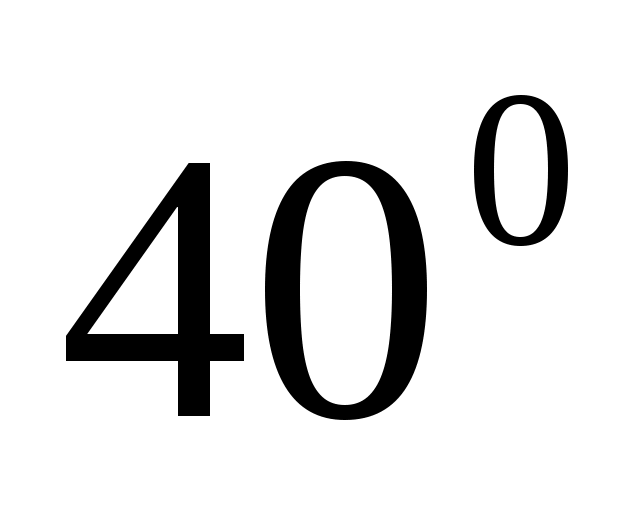 C. 10. The place was overlaid with memories of his childhood. 11. The roar of the engines was overlaid by a loud banging. 12. To protect wood from rotting we overlaid it with paint. 13. An overlay showing population can be placed on top of the map.
XXI. Put the verbs in brackets into the correct tenses.
-
If you camera (have) a good resolution its quality (be) high.
-
If the charge-coupled devices (have) a lower power consumption they (be) more popular.
-
If the charge-coupled devices (can) be made on any standard production line they (be) cheaper.
-
If digital cameras (not have) an extended depth of field, objects at a larger range of depth (not be) in focus.
-
The signal-to-noise ratio (decrease) if each pixel sensor (get) smaller, because in this case it catches fewer photons.
-
If the charge-coupled devices (not invent) cameras (not be able) to take images.
-
If the charge-coupled devices (not be) sensitive they (not can) gather light from faint sources.
-
The charges (move) in the right direction if they (transfer) under the control of the drive pulses.
XXII. Discussion. In pairs discuss the following questions.
-
Speak about different applications of the charge-coupled devices.
-
Paraphrase the following quotation. Express your opinion about it.
“A discovery is said to be an accident meeting a prepared mind”. (Albert Szent-Gyorgyi).
Unit 10
-
-
Сослагательное наклонение (The Subjunctive Mood)
-
Сослагательное наклонение после безличных предложений
-
Сослагательное наклонение после глагола wish
4. Конструкции would rather и had better
5. Текст: «Fibre optics communications»
-
I. Translate the sentences, paying attention to the Subjunctive Mood after the verbs should, would, could, might, must.
- Would you mind giving me your dictionary for a minute? 2. I would like to thank you for your help. 3. You could have done it in a different way. 4. One laser beam could carry all the radio, TV and telephone messages simultaneously. 5. It would be useful to read this article. 6. Many scientific problems might be solved with the help of mathematics. 7. There would be no life without atmosphere. 8. It would be a great discovery to find means to prolong man′s life. 9. There would be no progress in science without observations. 10. The material in this book is out of date. The book must have been written a long time ago.
II. Translate the sentences, paying attention to the Subjunctive Mood in subject clause.
- It is desirable that he should be present here. 2. It is essential that a superconductor should be a solid material. 3. It is necessary that superconductor should be cooled to -273
 C. 4. It is required that an airplane should be well-balanced dynamically. 5. It is possible that a compound should become a superconductor even if the chemical elements constituting it are not. 6. It is very important that we should discuss this problem. 7. It is suggested that we should realize this program. 8. It is required that all measurement be done beforehand. 9. It is necessary that the average acceleration of the moving body be determined accurately. 10. It is essential that the two rotors should be accurately spaced angularly, that is to say that they should be accurately at right angles to each other. 11. It is desirable that they should measure all the chemical substances they deal with. 12. It is extremely important that all the metal powders used during production should be uniformly mixed.