Материал: 2434


 A. Fill in the gaps in the table below to show some ways of using the Internet by researchers. What do you think about these resources? What is your own experience in this regard?
Tools |
|
Purpose |
1. Search engines, web directories, subject specif- |
… |
|
ic collections (advanced web search). |
|
|
|
|
|
2. Computer-based tasks, questionnaires. |
|
… |
3. On-line tutorials, Statistical Data |
Analysis |
… |
sites, on-line Statistical Calculators. |
|
|
|
|
|
4. A web site, preprint repositories, publishing |
… |
|
platforms. |
|
|
|
|
|
B. Practise searching the Internet, use the resources below. Enter the key words from papers relevant to your topic. Try snowball searching (start with a key document and use its references or citations to other resources). Answer the questions below.
http://scholar.google.co.id/
http://www.sciencedirect.com/
http://elibrary.ru/
http://www.uspto.gov/
http://worldwide.espacenet.com
103

Did you find many papers?
Did you download abstracts or full text documents? What information about these papers did you get?
Do you think these are valuable resources for you? Why?
Could you recommend any other resources for your groupmates?


 A. In pairs make lists of criteria for researchers to choose a journal for publication. Compare your lists and make a conclusion on the best three criteria.
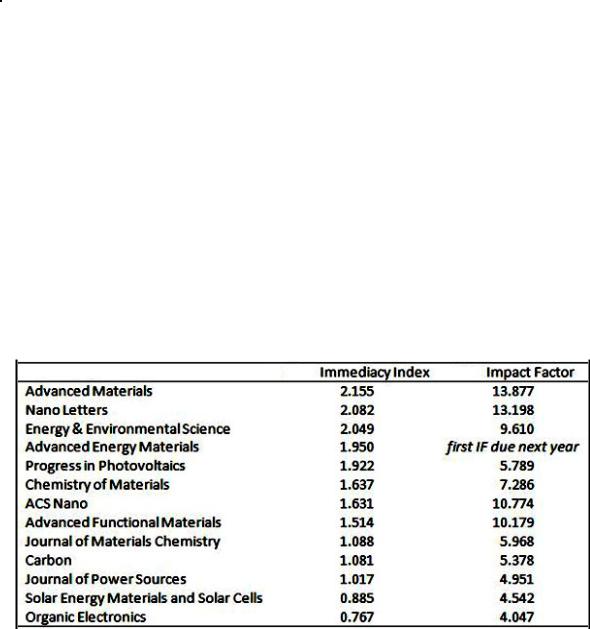
B. Tell what you know about the journal metrics in the box. Compare your ideas with the information from text B.
Impact factor
Immediacy index
H-index
The impact factor measures how often articles in a specific journal have been cited. The impact factor is frequently used as a proxy variable to indicate the relative importance of a journal within its field: journals with higher impact factors are thought to be more important than those with lower ones. The impact factor is calculated by dividing the number of citations by the total number of articles published in the two (or five) previous years.
The immediacy index is a measure of how topical and urgent work published in a scientific journal is. It is the average number of times an article is cited in the year it is published. The journal immediacy index indicates how quickly articles in a journal are cited. The immediacy index is calculated by dividing the number of citations to articles published in a given year by the number of articles published in that year. The aggregate immediacy index indicates how quickly articles in a subject category are cited.
The impact factor and immediacy index are calculated each year by the Institute for Scientific Information (ISI) for those journals which it indexes and are published annually in the Journal Citation Reports. This sort of information can be accessed via the e-Library.
The h-index was introduced to measure the productivity of an individual, group or institution. It can be applied to the productivity of a scholarly journal. The h-index is calculated by taking into account the balance
104
between the number of publications and the number of citations per publication. The h-index of a publication is the largest number h such that at least h articles in that publication were cited at least h times each. For example, an h-index of 3 tells us that an author has 3 publications which received 3 citations or more. To determine the h-index such databases as Scopus and the Web of Knowledge provide automated calculators.
C. Give your groupmates recommendations on choosing journals for their publications. Take into account the journal evaluation measures/metrics (see tables 3.1 3.3).
Table 3.1. Journals Ranked by Impact
Rank |
Economics |
Energy and Fuels |
Construction |
||
1 |
Journal of Economic |
Prog. Energ. Combust. |
Cement |
& |
Concrete |
|
Literature |
|
Research |
|
|
|
(6.92) |
(5.27) |
|
(3.75) |
|
2 |
Quarterly Journal of |
Renew. Sust. Energ. |
Cement |
& |
Concrete |
|
Economics |
Rev. |
Composites |
|
|
|
(5.65) |
(3.77) |
|
(3.36) |
|
|
|
|
|
||
3 |
Journal of Financial |
Fuel Cells |
Construction & Build. |
||
|
Economics |
|
Materials |
||
|
(4.02) |
(3.27) |
|
(2.82) |
|
|
|
|
|
||
4 |
Econometrica |
Bioresource Technol. |
Energy & Buildings |
||
|
(4.00) |
(3.10) |
|
(3.25) |
|
|
|
|
|
||
5 |
Journal of Economic |
J. Power Sources |
Automation in Con- |
||
|
Geography |
|
struction |
||
|
(3.94) |
(2.81) |
|
(2.04) |
|
Table 3.2. Journals Ranked by Impact & Immediacy Index
105
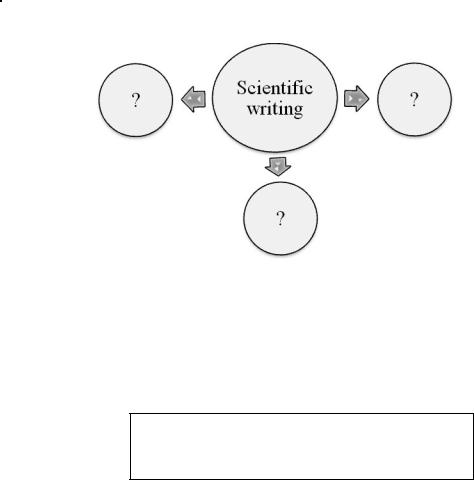
Table 3.3. Russian Journals Ranked by Impact (e-Library)
Herald of the Russian Academy of Sciences (Vestnik Rossiiskoi Akademii |
0.437 |
Nauk) |
|
|
|
Automation in Industry |
0.098 |
|
|
Automation and modern technologies |
0.135 |
|
|
Voprosy Economiki |
3.831 |
|
|
Russian Economics Journal |
1.198 |
|
|
Avtomobilnaya Promyshlennost |
0.081 |
|
|
Avtometriya |
0.472 |
|
|
Mashinostroenie i inzhenernoe obrazovanie |
0.167 |
|
|
Mashinostroenie |
0.079 |


 A. Brainstorming: what is scientific writing?
B. In pairs discuss the following questions. Compare your ideas with those of your groupmates.
Are writing skills important for a scientist? Why?
What is “good” scientific аriting?
C. Complete the following ideas. Use the words from the box.
writing, scientific, science, technical, general, peers, communication
1.Writing is the most common form of (a) _ _.
2.Scientific writing is (b) _ _ by a scientist, with the audience of (c) _.
3.Science writing is (d) _ _ _ for the popular media with the audience much more (e) _.
4.(f) _ _ is published in Scientific American or National Geographic.
5.Journals like Nature and Science publish (g) _ _.
106


 Below you can see examples of scientific writing. Evaluate the quКlitв oП аritinР Кs “РooН” or “poor”. AММount Пor вour opinion.
Sample 1
In this laboratory, we varied sampling rates, analog filters, and digital filters and looked at how these variables affected the QRS peaks. Finally, we wrote four different algorithms in MATLAB for detecting the QRS peaks, and we compared their resilience to different types of noise.
Sample 2
The information and skills I learned in this lab will certainly come in handy later in the course. Now, I know how to process biological signals, and how to read a PSD for further information on the signal.
Sample 3
As discussed, the second reaction is really the end result of a very large number of reactions. It is also worth emphasizing that the reactions do not represent a closed system, as r appears to be produced out of thin air. In reality, it is created from other chemical species within the cell, but we have chosen here not to model at such a fine level of detail. One detail not included here that may be worth considering is the reversible nature of the binding of RNAP to the promoter region. It is also worth noting that these two reactions form a simple linear chain, whereby the product of the first reaction is the reactant for the second.
Sample 4
As discussed, the second reaction is really the result of many reactions. The reactions do not represent a closed system, as r appears to be produced out of thin air. In reality, it is created from other chemical species within the cell, but we have chosen not to model at such a fine level of detail. One detail not included is the reversibility of the binding of RNAP to the promoter. These two reactions form a simple linear chain, whereby the product of the first reaction is the reactant for the second.
107